
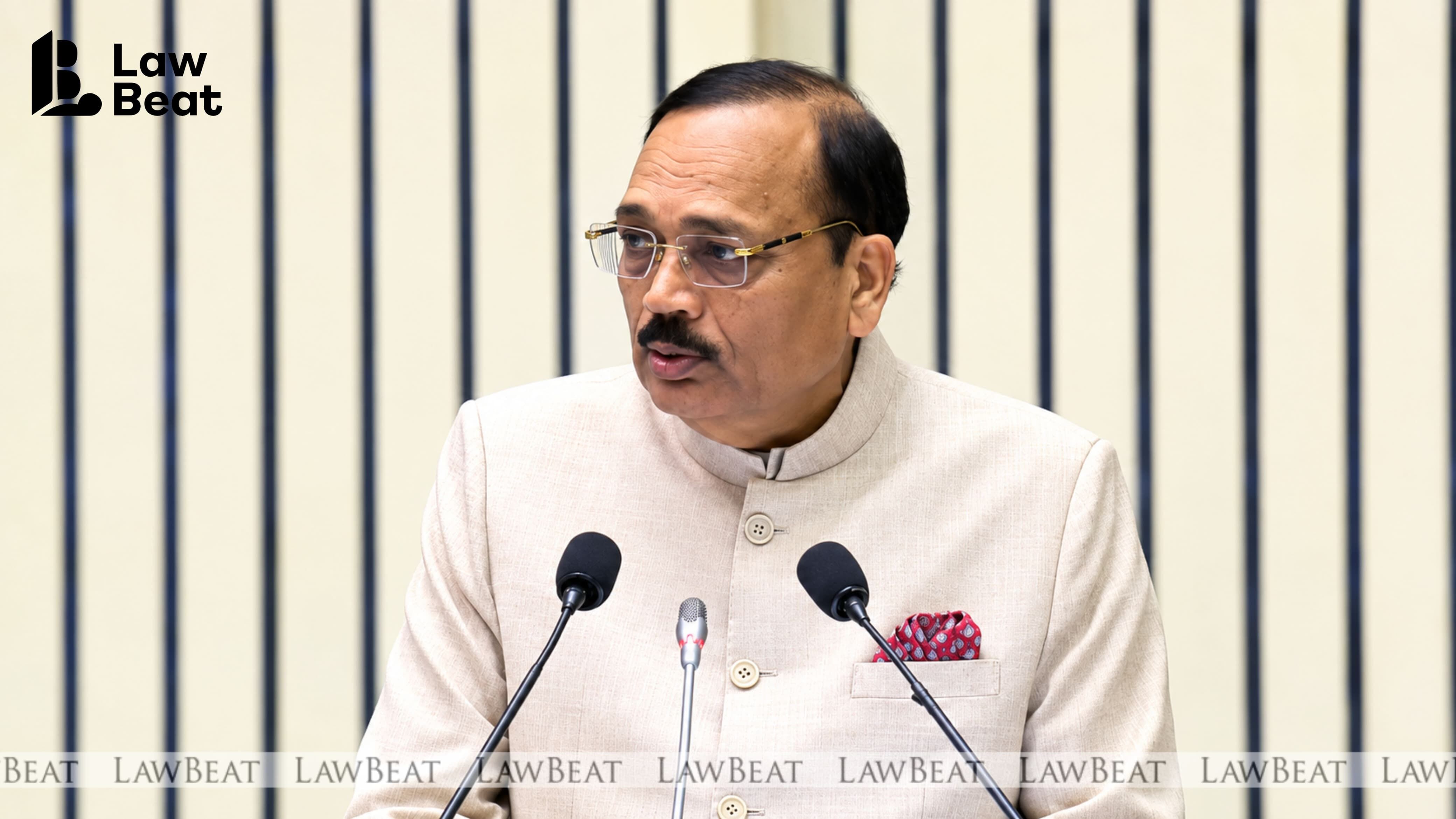
CJI Surya Kant: Climate Adjudication India Must Address Cumulative Harm
Summary
- CJI Surya Kant recently addressed an NGT-organized conference, advocating for climate adjudication in India to consider cumulative ecological harm beyond isolated environmental injuries.
- He emphasized the Indian judiciary's role in evolving environmental jurisprudence, linking environmental protection to constitutional provisions like Articles 48A and 51A(g).
- The Chief Justice highlighted the Supreme Court's development of principles such as the precautionary principle, polluter pays, absolute liability, and public trust doctrine.
- CJI Surya Kant noted a shift in legal discourse towards harmonizing conservation and development, introducing the concept of eco-centric proportionality.
- He underscored that climate change impacts fundamental rights, bringing constitutional climate rights in India into sharper judicial focus.
CJI Surya Kant on Evolving Environmental Law
The Constitution of India is therefore not a mere political charter. It is a moral covenant with past, present and future generations.
Chief Justice of India Justice Surya Kant recently addressed a significant international conference, emphasizing that climate adjudication in India must extend beyond addressing isolated environmental harms. Speaking at the inaugural session of the International Conference on “The Future of Environment and Climate Dynamics,” organized by the National Green Tribunal (NGT) in New Delhi on a Saturday, CJI Surya Kant highlighted the emerging constitutional dimensions of climate rights and the concept of cumulative ecological harm.
The conference served as a global platform, bringing together jurists, scientists, policymakers, and environmental experts from nearly 80 countries and institutions. During his address, CJI Surya Kant underscored the pivotal role of the Indian judiciary in shaping the nation's environmental jurisprudence, noting a crucial shift in legal discourse from a simple conflict between conservation and development to a more integrated approach. He articulated that environmental protection is deeply ingrained in India's heritage, subsequently finding robust expression within its constitutional framework and judicial pronouncements.
Constitutional Foundations and Judicial Evolution
CJI Surya Kant characterized the Constitution of India not merely as a political charter but as a profound moral covenant with past, present, and future generations, particularly in its environmental provisions. He specifically referenced Article 48A, which mandates the State to protect and improve the environment, and Article 51A(g), a fundamental duty requiring citizens to safeguard and enhance the natural environment. These constitutional principles, he asserted, necessitate ongoing judicial interpretation and implementation, a role the Supreme Court has consistently fulfilled in advancing India environmental jurisprudence evolution.
He likened the Supreme Court to a 'banyan tree of environmental justice,' with roots deeply embedded in India's civilizational ethos and branches providing shelter for the rights of future, unseen generations. The Chief Justice traced the development of environmental law through landmark Supreme Court rulings, beginning with interventions in the 1980s that recognized the right to sanitation and a healthy environment. This was followed by the explicit recognition of a pollution-free environment as an integral aspect of the right to life under Article 21. Further, the Court has been instrumental in evolving key principles such as the precautionary principle, the polluter pays principle, the doctrine of absolute liability for industrial harm, and the public trust doctrine. These advancements, he stressed, firmly establish environmental protection as far more than a mere administrative or regulatory concern, but rather an act of self-preservation and an investment in the continuity of life itself.
Harmonizing Development and Climate Rights
The Supreme Court has progressively adopted a more nuanced stance on development, ensuring that all projects are subjected to rigorous environmental scrutiny and accountability. This approach has led to the emergence of eco-centric proportionality in India, a concept where environmental protection remains stringent while acknowledging the realities of developmental needs. Consequently, the central question before Indian courts has transformed from a dichotomy of conservation versus development to how these two imperatives can be harmonized and sustained together.
CJI Surya Kant identified the transition from traditional environmental rights to climate-related rights as a significant development in India's legal landscape. He highlighted that the adverse consequences of climate change directly impact fundamental rights, including those pertaining to equality, livelihood, and health, as well as the essential conditions required for their meaningful enjoyment. Recent Indian jurisprudence on constitutional climate rights India has brought this critical issue into sharper constitutional focus, explicitly recognizing the far-reaching adverse effects of climate change on the populace.
Practical Implications
Lawyers and compliance officers in India should note the Supreme Court's evolving stance on environmental law, particularly the emphasis on cumulative ecological harm and climate rights as constitutional concerns. This signals a broadening scope for environmental liability and scrutiny, requiring clients to consider wider impacts and potential legal challenges beyond isolated incidents when planning projects or assessing compliance.
Source
How does this affect you?
Get an AI analysis of this article grounded in your jurisdictions, practice areas, and any policy documents you've uploaded to Wansom.
Finish Reading the Full Story and the Expert Analysis.
Get the latest legal & regulatory intelligence in India
Wansom is AI and can make mistakes.