
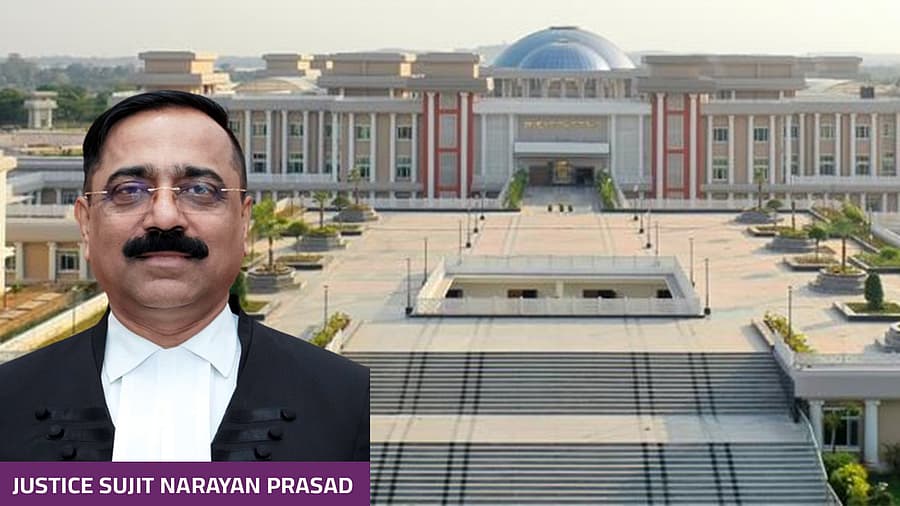
CJI Inquiry: Justice Sujit Prasad Faces Jharkhand High Court Fact-Finding
Summary
- Chief Justice of India Surya Kant has requested a fact-finding report regarding complaints against Justice Sujit Narayan Prasad.
- Justice Sujit Narayan Prasad is the senior-most puisne judge of the Jharkhand High Court.
- The nature of the complaints is currently unknown, and the inquiry is ongoing with no findings communicated yet.
- The report was sought from Jharkhand High Court Chief Justice MS Sonak, who is set to retire on November 27.
- Justice Prasad previously served as acting Chief Justice of the Jharkhand High Court on two occasions.
Judicial Inquiry Initiated
The decision by Chief Justice of India Surya Kant to seek a judicial fact-finding report regarding a sitting senior judge of a High Court carries significant weight for the integrity and public perception of the judiciary in India.
The Chief Justice of India, Surya Kant, has formally requested a detailed fact-finding report concerning allegations leveled against Justice Sujit Narayan Prasad, who currently serves as the senior-most puisne judge of the Jharkhand High Court. This directive signals a significant internal judicial process, as the CJI has acknowledged the receipt of these complaints. The request for this crucial report was directed to Jharkhand High Court Chief Justice MS Sonak, who is slated to conclude his tenure and retire on November 27.
At this juncture, the specific nature of the complaints that prompted this high-level judicial inquiry remains undisclosed to the public. The fact-finding process itself is actively underway, indicating that the investigation into the allegations is in its preliminary or ongoing stages. Consequently, no conclusions or official findings pertaining to the complaints against Justice Sujit Narayan Prasad have been released or communicated thus far. The initiation of a judicial fact-finding report in India by the Chief Justice of India underscores the gravity with which such matters are treated within the country's legal framework.
Justice Prasad's Judicial Journey
Justice Sujit Narayan Prasad, the subject of the ongoing inquiry, possesses a notable background within the Indian judiciary. Born on June 20, 1967, his judicial career began with his elevation as an additional judge to the Jharkhand High Court on September 26, 2014. This initial appointment marked the commencement of his service at the High Court where he now holds a senior position.
His career path included a temporary relocation, as he was transferred from the Jharkhand High Court to the Orissa High Court in March 2015. After a period of service there, Justice Prasad was subsequently repatriated to his original High Court in Jharkhand in November 2018. Demonstrating his seniority and experience, Justice Prasad has twice assumed the responsibilities of acting Chief Justice for the Jharkhand High Court. These interim leadership roles occurred between July and September 2024, and again in July 2025, highlighting his prominent standing within the court's hierarchy prior to the current Justice Sujit Narayan Prasad complaints.
Implications of High-Level Judicial Scrutiny
The decision by Chief Justice of India Surya Kant to seek a judicial fact-finding report regarding a sitting senior judge of a High Court carries significant weight for the integrity and public perception of the judiciary in India. While the specifics of the Justice Sujit Narayan Prasad complaints are not yet public, the very act of the CJI taking cognisance of such matters reinforces the internal mechanisms designed to uphold judicial accountability. This process, initiated by the Chief Justice of India Surya Kant, is a standard yet critical step when allegations surface against members of the higher judiciary.
The timing of the request, directed to Chief Justice MS Sonak who is nearing his retirement, suggests a deliberate effort to ensure that the inquiry proceeds under appropriate authority before a change in leadership at the Jharkhand High Court. The ongoing nature of the fact-finding exercise means that any conclusions are still pending, and the judicial system is following its prescribed course to ascertain the veracity of the complaints. This internal review, even without public disclosure of the allegations, serves as an important signal about the judiciary's commitment to self-governance and maintaining public trust in its institutions. The outcome of this CJI inquiry Justice Sujit Prasad will be closely observed, not just for its immediate implications for the judge involved, but also for its broader message about judicial oversight in India.
Practical Implications
This story has no direct actionable legal implication for lawyers or compliance officers, as it concerns an internal judicial inquiry process rather than a new law, regulation, or precedent affecting client matters.
Source
How does this affect you?
Get an AI analysis of this article grounded in your jurisdictions, practice areas, and any policy documents you've uploaded to Wansom.
Finish Reading the Full Story and the Expert Analysis.
Get the latest legal & regulatory intelligence in India
Wansom is AI and can make mistakes.