
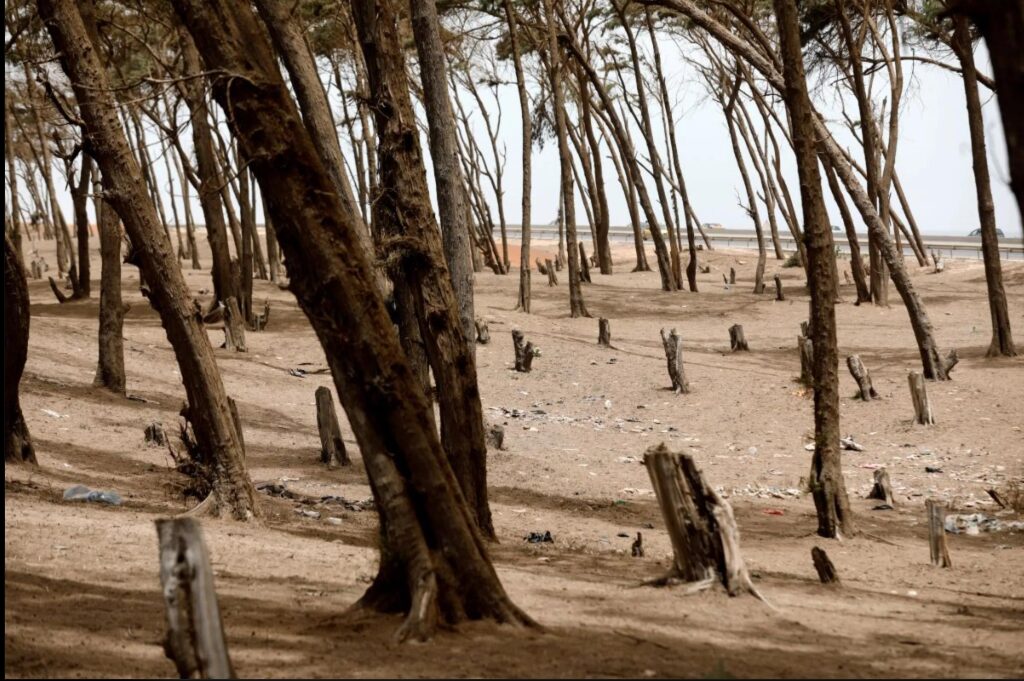
Cité SHS: Filaos Destruction Protest Erupts Over Green Belt Felling
Summary
- Residents of Cité SHS in Guédiawaye are protesting the felling of filaos trees in their green belt.
- Earthworks and tree removal began on October 25, 2026, without prior community notification or consultation.
- The community is demanding to know who is responsible for the destruction of their vital green space.
- The protest highlights the critical importance of public engagement and environmental adherence in urban development projects.
The Unannounced Destruction
The sustained "Cité SHS filaos destruction protest" thus stands as a powerful testament to the principle that truly sustainable urban development must inherently integrate community input and demonstrate profound respect for existing environmental assets.
A significant dispute has erupted in the Cité SHS neighborhood of Guédiawaye, centered on the destruction of a vital green belt composed of filaos trees. On October 25, 2026, earthworks commenced in the area, accompanied by the felling of these trees, an action locally referred to as "Guédiawaye filaos abattage." This sudden and unannounced intervention has triggered a strong "Cité SHS filaos destruction protest" from the local community.
Residents have voiced considerable outrage and concern regarding the initiation of these activities. They assert that no prior notification or public consultation was conducted with the affected population before the earthworks and tree removal began. This perceived lack of transparency and engagement has become a central point of contention, fueling the community's determination to challenge the ongoing environmental changes. The abrupt nature of the operations, without any preceding dialogue, has left many residents feeling blindsided and disrespected, prompting their collective action against the project.
Community Outcry and Environmental Significance
The core of the "residents protest Cité SHS" is rooted in a deep concern for their local environment and a strong sense of community ownership over the green spaces. Residents are actively questioning the motivations behind these actions, demanding to know who is responsible for the systematic removal of what they affectionately call the "ceinture verte Guédiawaye." This green belt, primarily characterized by its filaos trees, is not merely an aesthetic feature but is considered a crucial ecological asset by the local inhabitants.
The absence of any formal communication or opportunity for input before the tree felling commenced has fostered a profound sense of marginalization among the residents. They firmly believe that the "environnement Sénégal filaos" represents a collective resource, and any significant alteration to it should necessarily involve the community members who are directly impacted. The ongoing "Cité SHS filaos destruction protest" therefore underscores a broader commitment to preserving local ecological balance, safeguarding community well-being, and asserting their right to be informed and consulted on matters affecting their immediate surroundings.
Broader Implications for Urban Development
The unfolding situation in Cité SHS serves as a stark illustration of critical challenges inherent in urban development projects across Senegal, particularly emphasizing the indispensable need for adherence to environmental regulations and the implementation of robust public participation processes. The vigorous "contestation ceinture verte Guédiawaye" clearly demonstrates that local communities are increasingly proactive in safeguarding their immediate ecosystems and demanding accountability from both developers and governmental authorities responsible for urban planning.
Neglecting to engage meaningfully with local populations and failing to secure their informed consent for substantial environmental modifications, such as the "Guédiawaye filaos abattage," carries significant risks. Such oversights can readily escalate into widespread community opposition, potentially leading to project delays, legal challenges, and reputational damage for all parties involved. The sustained "Cité SHS filaos destruction protest" thus stands as a powerful testament to the principle that truly sustainable urban development must inherently integrate community input and demonstrate profound respect for existing environmental assets. This approach is crucial not only for mitigating conflict but also for ensuring the long-term viability and success of any development initiative within a community.
Practical Implications
Lawyers should advise clients involved in urban development projects in Senegal on the critical importance of adhering to environmental regulations and conducting proper public consultations, as failure to do so can lead to significant community opposition and potential legal challenges, as seen with the Cité SHS filaos destruction.
Source
How does this affect you?
Get an AI analysis of this article grounded in your jurisdictions, practice areas, and any policy documents you've uploaded to Wansom.
Wansom is AI and can make mistakes.