
Dakar Tribunal: Cissé COUD, Ndour Vigile Granted Liberté Dakar
Summary
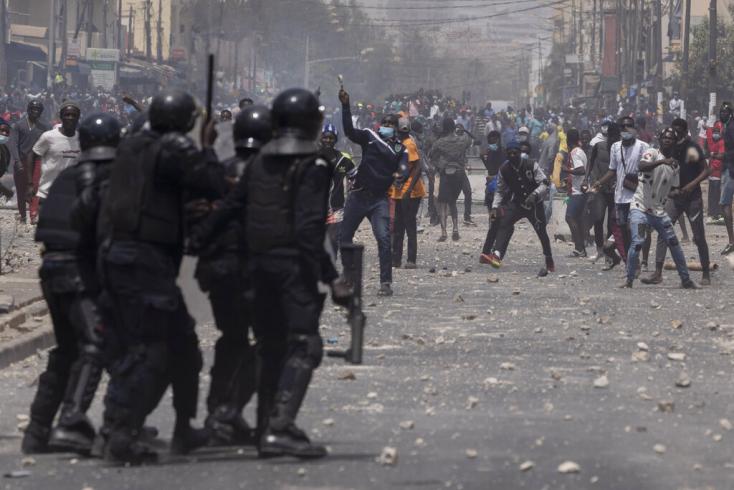
- Judges from the Dakar Tribunal's first and second chambers are continuing their investigation into events that occurred in Senegal between 2021 and 2024.
- Two new individuals, Amadou Tidiane Cissé (head of security for COUD) and Djibril Diaw (a security guard who worked at the residence of former minister Pape Malick Ndour), have been formally charged.
- Both Cissé and Diaw were released under various judicial control measures, thereby avoiding a direct detention order.
- This decision, reported by a judicial source, indicates the court's application of supervisory conditions rather than immediate incarceration.
Recent Judicial Actions in Dakar
This development is particularly noteworthy for legal observers, as it demonstrates the Dakar Tribunal's approach to applying control measures in lieu of immediate detention for certain defendants in politically sensitive or high-profile investigations.
The Dakar Tribunal's first and second chambers are actively pursuing their investigation into a series of events that transpired across Senegal between 2021 and 2024. This ongoing inquiry recently saw two new individuals formally charged, though they were subsequently granted provisional release under judicial control rather than being held in pre-trial detention. This decision means they avoided a direct detention order, a significant procedural outcome in the context of the broader investigation.
Among those recently implicated is Amadou Tidiane Cissé, widely known as "Kabakrou," who serves as the head of security for the Centre des Œuvres Universitaires de Dakar (COUD). Also charged was Djibril Diaw, a security guard who worked at the residence of former minister Pape Malick Ndour. Both individuals are now subject to various supervisory measures as the judicial process continues, allowing them a degree of liberty in Dakar while the investigation proceeds.
Legal Framework and Procedural Decisions
The decision by the Dakar Tribunal judges to charge these individuals, yet release them under judicial control, highlights a specific application of legal procedure. Being "inculpé" signifies that formal accusations have been leveled against them, marking a critical stage in the judicial process. However, the subsequent choice to grant "liberté sous contrôle judiciaire" indicates that the court deemed immediate incarceration unnecessary, opting instead for a system of oversight that can include restrictions on movement, regular reporting to authorities, or other conditions.
This procedural step, confirmed by a judicial source, underscores the discretion available to the judiciary in managing complex cases. The avoidance of a "mandat de dépôt" (detention order) for both Amadou Tidiane Cissé, the COUD security chief, and Djibril Diaw, the security guard, contrasts with more stringent measures that could have been imposed. It suggests that while the evidence warranted formal charges, the circumstances did not necessitate their immediate removal from society pending trial.
Broader Implications of the Investigation
The continued progress of the "Enquête événements 2021-2024 Sénégal" signals the judiciary's sustained focus on understanding and addressing the incidents that marked this period. The involvement of figures such as Amadou Tidiane Cissé from the COUD and Djibril Diaw, a security guard, broadens the scope of individuals being scrutinized in connection with these events. Their release under judicial control, rather than outright detention, offers a nuanced perspective on how the Dakar courts are balancing the need for accountability with individual liberties.
This development is particularly noteworthy for legal observers, as it demonstrates the Dakar Tribunal's approach to applying control measures in lieu of immediate detention for certain defendants in politically sensitive or high-profile investigations. Such decisions could potentially set precedents for how similar cases, involving public figures or individuals connected to significant public institutions, are handled in the future. The ongoing judicial scrutiny of individuals like Cissé and Diaw, coupled with the specific conditions of their liberty, provides insight into the evolving legal landscape surrounding the events of 2021-2024 in Senegal.
Practical Implications
This development signals the ongoing judicial scrutiny of individuals involved in the 2021-2024 events in Senegal, demonstrating the Dakar Tribunal's application of control measures rather than immediate detention for certain defendants. Lawyers should observe these procedural decisions as they may set precedents for handling similar high-profile cases involving public figures or politically charged investigations.
Source
How does this affect you?
Get an AI analysis of this article grounded in your jurisdictions, practice areas, and any policy documents you've uploaded to Wansom.
Finish Reading the Full Story and the Expert Analysis.
Get the latest legal & regulatory intelligence in Senegal
Wansom is AI and can make mistakes.