
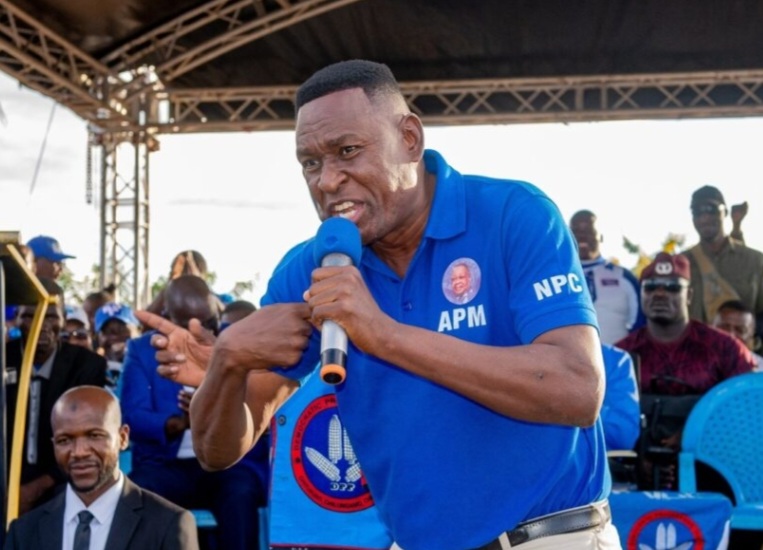
Chisale Threatens Malawi Opposition: Deputy Minister Sparks Outcry
Summary
- Malawi's Deputy Minister for Security, Norman Chisale, publicly threatened to physically punish opposition activists.
- Chisale also serves as President Peter Mutharika's personal bodyguard and is a Member of Parliament.
- He is widely regarded as the chief enforcer for the governing Democratic Progressive Party (DPP).
- His remarks, described as an extraordinary outburst, have drawn widespread condemnation.
- The threats raise concerns about political stability, human rights, and the rule of law in Malawi.
What Happened
The recent threats by Norman Chisale against Malawi opposition members could have far-reaching implications for the country's political stability and its adherence to human rights principles.
Norman Chisale, a prominent figure in Malawian politics, has recently drawn significant public criticism following his explicit threats against opposition activists. Chisale, who holds the position of Malawi's Deputy Minister of Homeland Security (Operations), publicly stated his intention to subject these opposition figures to physical punishment.
Beyond his official government and protection roles, Chisale is also a Member of Parliament and is widely perceived as the primary enforcer for the ruling Democratic Progressive Party (DPP). His remarks, described as an extraordinary outburst, have ignited a debate about political conduct and the rule of law within the nation.
This incident highlights the unusual nature of Chisale's influence, combining a ministerial portfolio with direct presidential protection duties, a combination that has been noted for its rarity in political structures.
Legal and Political Context
The pronouncements by Norman Chisale, particularly given his high-ranking government position as Malawi's deputy security minister and his direct association with the head of state as President Mutharika's bodyguard, carry considerable weight and raise serious concerns. Such public threats from an individual entrusted with national security and presidential protection could be interpreted as a significant escalation of political tensions.
His unique dual capacity as both a government minister and the president's close protection officer, coupled with his reputation as the DPP's chief enforcer, places his statements in a particularly sensitive light. This blend of official authority and perceived political muscle suggests a potential disregard for established legal norms and democratic processes, raising questions about the separation of powers and the appropriate conduct of public officials.
The nature of these threats, explicitly targeting opposition figures for physical punishment, underscores a troubling dynamic in Malawian politics. It signals a potential environment where political dissent might be met with intimidation or violence, rather than legitimate debate. This situation warrants close monitoring by legal professionals and international observers concerned with governance and human rights in the region.
Broader Implications
The recent threats by Norman Chisale against Malawi opposition members could have far-reaching implications for the country's political stability and its adherence to human rights principles. When a figure with such close ties to the presidency and control over security apparatus openly threatens political opponents, it creates an atmosphere of fear and could deter legitimate political activity.
This development raises serious questions about the rule of law in Malawi and the potential for increased political violence. For businesses and investors operating within or considering the Malawian market, such incidents contribute to an elevated political risk profile. Lawyers advising clients with operations or investments in Malawi should carefully assess these developments for their potential impact on business stability, compliance with international standards, and the overall investment climate.
The international community often scrutinizes nations where high-ranking officials make threats of physical harm against political adversaries. These actions could lead to increased scrutiny regarding Malawi human rights concerns and potentially affect diplomatic relations or aid. The incident highlights the critical need for all political actors to uphold democratic principles and ensure the safety and freedom of expression for all citizens, regardless of their political affiliation.
Practical Implications
The public threats by a high-ranking Malawian official could signal escalating political tensions and a potential disregard for the rule of law. Lawyers advising clients with operations or investments in Malawi should monitor these developments for increased political risk, potential human rights violations, and impacts on business stability or compliance with international standards.
Source
How does this affect you?
Get an AI analysis of this article grounded in your jurisdictions, practice areas, and any policy documents you've uploaded to Wansom.
Finish Reading the Full Story and the Expert Analysis.
Wansom is AI and can make mistakes.