
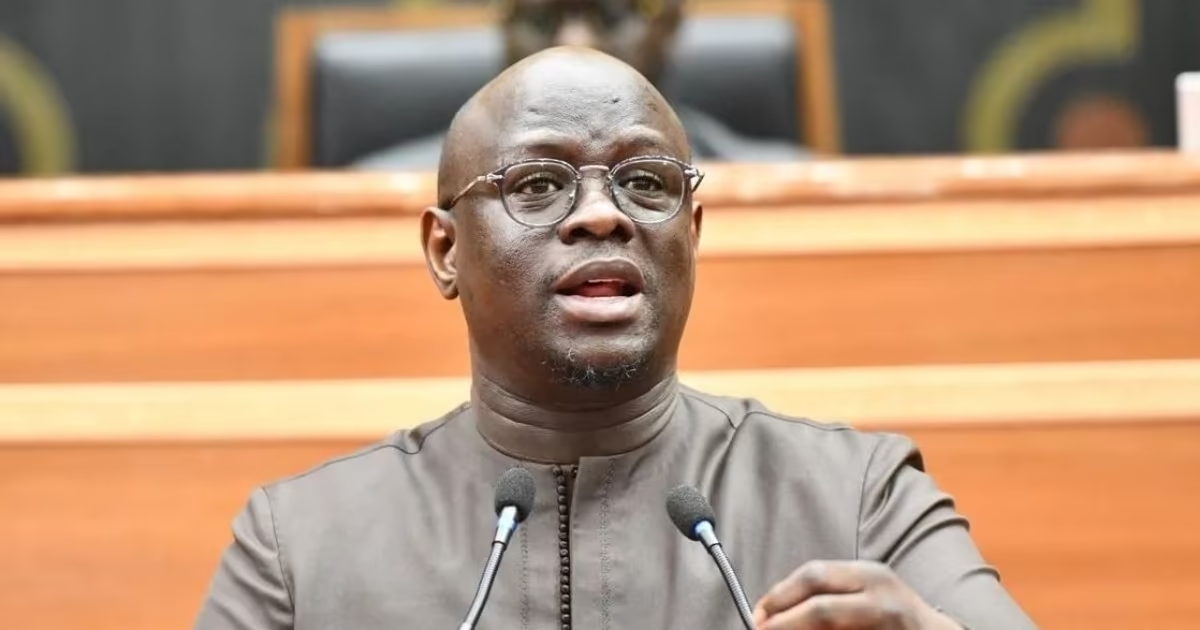
Cheikh Diba: Assemblée Nationale Budget Baisse de 1.2 Milliard FCFA
Summary
- The National Assembly's 2027 budget is proposed at 21.1 billion FCFA, a 1.2 billion FCFA decrease from 2026.
- Minister Cheikh Diba attributed this reduction to a general decrease in institutional expenditures, without specifying affected categories.
- The state faces declining revenues and rising costs, leading to a broader strategy of public expenditure reduction.
- The draft finance bill, which included 480 billion FCFA to settle arrears owed to the private sector, was rejected by the National Assembly's finance commission on November 7, 2026.
- The Constitutional Council's proposed budget increase from 1.3 billion FCFA to 1.5 billion FCFA, primarily to fund the 2027 elections, was part of the rejected finance bill.
National Assembly Budget Sees Reduction
The draft finance bill included a substantial provision of 480 billion FCFA specifically earmarked for settling outstanding debts owed to the private sector.
The proposed budget for the National Assembly in 2027 is set at 21.1 billion FCFA, marking a decrease of 1.2 billion FCFA from the 22.3 billion FCFA allocated in 2026. This adjustment reflects a significant shift in public expenditure planning for the legislative body. The Minister of Economy, Finance, and Plan, Cheikh Diba, appeared before the Commission des finances et du contrôle budgétaire to address this change, explaining that the reduction stems from a general decrease in the institution's overall expenditures.
Despite the explanation provided by Cheikh Diba regarding the budget Assemblée nationale baisse, specific details concerning the affected categories of spending were not disclosed. The presentation did not clarify whether the cuts would impact operational costs, personnel salaries, or other areas of expenditure. Furthermore, no precise projects or transfers between budgetary lines were identified to justify the exact nature of this reduction, leaving the specifics of the fiscal adjustment somewhat opaque, according to reports from senenews.
Broader Fiscal Strategy and Private Sector Support
This reduction in the National Assembly's budget is part of a broader fiscal strategy as the state grapples with a challenging economic landscape characterized by declining public revenues, increasing expenditures, and a growing accumulation of payment arrears. In response to these pressures, the `projet loi finances 2027 Sénégal` had included a substantial provision of 480 billion FCFA specifically earmarked for settling outstanding debts owed to the private sector. However, the Commission des finances et du contrôle budgétaire of the National Assembly rejected the draft finance bill for 2027 on November 7, 2026.
This significant allocation aimed to provide crucial relief to companies by improving their cash flow, safeguarding employment, and stimulating investment across various sectors. The `ministre économie finances Sénégal`, Cheikh Diba, had underscored the critical importance of approving the budget, cautioning that its rejection could severely undermine the state's credibility among its citizens, businesses, and international partners, highlighting the delicate balance between `réduction dépenses publiques Sénégal` and maintaining economic stability.
Constitutional Council Budget Boosted for 2027 Elections
While some institutions face budgetary constraints, the Constitutional Council was slated for an increase in its financial allocation within the rejected draft finance bill. Its budget was proposed to rise from 1.3 billion FCFA to 1.5 billion FCFA. This upward adjustment is primarily driven by the need to fund the organization of the upcoming 2027 elections.
The enhanced proposed budget for the `Conseil constitutionnel budget 2027` reflected the government's commitment to adequately resource the democratic process, ensuring the necessary infrastructure and operational capacity are in place for the electoral cycle. This strategic proposed increase contrasts with the general trend of expenditure reduction seen elsewhere, underscoring the priority placed on electoral integrity and administration.
Practical Implications
Lawyers advising businesses should note the government's plan to allocate 480 billion FCFA to settle arrears owed to the private sector, as this could significantly impact client cash flow and investment prospects. Additionally, the increased budget for the Constitutional Council for the 2027 elections signals resource allocation for upcoming democratic processes, relevant for electoral law practitioners.
Source
Source: Original reporting via senenews
How does this affect you?
Get an AI analysis of this article grounded in your jurisdictions, practice areas, and any policy documents you've uploaded to Wansom.
Finish Reading the Full Story and the Expert Analysis.
Get the latest legal & regulatory intelligence in Senegal
Wansom is AI and can make mistakes.