
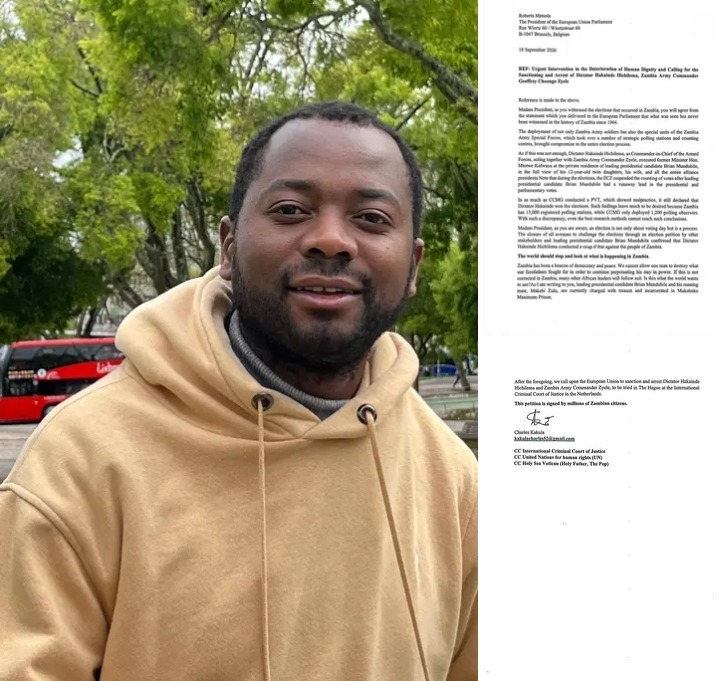
Charles Kakula: EU Parliament Sanctions Hichilema Sought
Summary
- Charles Kakula, a Zambian national in Europe, recently submitted a petition to the European Parliament.
- The petition demands sanctions against Zambian President Hakainde Hichilema and Army Commander Lt. Gen. Geoffrey Zyeele.
- Kakula's request is based on concerns related to Zambia's post-electoral crisis.
- The petition seeks direct intervention from the European Union against the named Zambian leaders.
Recent Developments
Lawyers and compliance officers should monitor the EU Parliament's response to this petition, as any potential sanctions against Zambian leadership could significantly impact international business dealings, investment, and compliance obligations for clients operating in or with Zambia.
A Zambian national residing in Europe, Charles Kakula, has recently taken a significant step by submitting a formal petition to the European Parliament. This action seeks to initiate punitive measures against key figures within the Zambian government. The petition specifically calls for the imposition of sanctions on President Hakainde Hichilema and Lieutenant General Geoffrey Zyeele, who serves as the Army Commander.
Kakula's appeal to the European Union's legislative body is rooted in concerns surrounding what he describes as Zambia's post-electoral crisis. By directly addressing the EU Parliament, the petitioner aims to draw international attention and intervention regarding the situation in Zambia, advocating for a robust response from European authorities against the named individuals.
The Petition's Demands
The core of Charles Kakula's submission to the European Parliament is a direct demand for sanctions targeting President Hichilema and Lt. Gen. Zyeele. This request underscores a desire for the European Union to implement restrictive measures against the Zambian leaders, signaling a serious concern over governance and human rights in the Southern African nation. The petition explicitly links these demands to the ongoing fallout from Zambia's recent electoral period, framing the situation as a critical "post electoral crisis" that warrants international scrutiny and action.
Such a petition, demanding sanctions against a sitting head of state and a high-ranking military official, represents a notable effort to leverage international political pressure. It highlights the petitioner's belief that the European Parliament possesses the authority and responsibility to address the alleged issues stemming from the post-electoral environment in Zambia through targeted punitive measures.
EU Parliament's Role and Potential Response
The European Parliament, as a key institution of the European Union, serves as a forum for citizens' petitions, allowing individuals to formally request action on matters falling within the EU's sphere of activity. Upon receipt, a petition like the one submitted by Charles Kakula regarding Zambia's post-electoral crisis would typically undergo an initial assessment by the Parliament's Committee on Petitions. This committee determines the admissibility of the petition and may then decide on further steps, which could include requesting information from relevant EU bodies or national authorities, or even initiating a debate within the Parliament.
While the EU has established frameworks for imposing sanctions on individuals or entities in third countries, such measures are usually adopted by the Council of the European Union, often based on proposals from the High Representative for Foreign Affairs and Security Policy. A petition to the Parliament, therefore, serves as a mechanism to raise awareness and exert political pressure, potentially influencing the broader EU foreign policy agenda concerning Zambia and the prospect of Hichilema Zyeele EU sanctions.
Broader Implications for Zambia and International Relations
The submission of the Charles Kakula EU Parliament sanctions Hichilema petition carries significant weight, potentially impacting Zambia's international standing and its relationship with the European Union. A formal request for sanctions against a nation's leadership, particularly citing a "post electoral crisis," can draw considerable attention to the country's internal affairs and governance practices. This Zambia EU sanctions petition could prompt heightened scrutiny from international observers and human rights organizations, adding pressure on the Zambian government to address the concerns raised.
For legal and compliance professionals, monitoring the EU Parliament's response to this petition is crucial. Any potential sanctions against Zambian leadership, including President Hichilema and Lt. Gen. Zyeele, could significantly impact international business dealings, investment flows, and compliance obligations for clients operating in or with Zambia. The outcome of the Kakula petition European Parliament could therefore have far-reaching economic and political consequences, making it a critical development for those engaged with the region.
Practical Implications
Lawyers and compliance officers should monitor the EU Parliament's response to this petition, as any potential sanctions against Zambian leadership could significantly impact international business dealings, investment, and compliance obligations for clients operating in or with Zambia.
Source
How does this affect you?
Get an AI analysis of this article grounded in your jurisdictions, practice areas, and any policy documents you've uploaded to Wansom.
Finish Reading the Full Story and the Expert Analysis.
Get the latest legal & regulatory intelligence in Zambia
Wansom is AI and can make mistakes.