
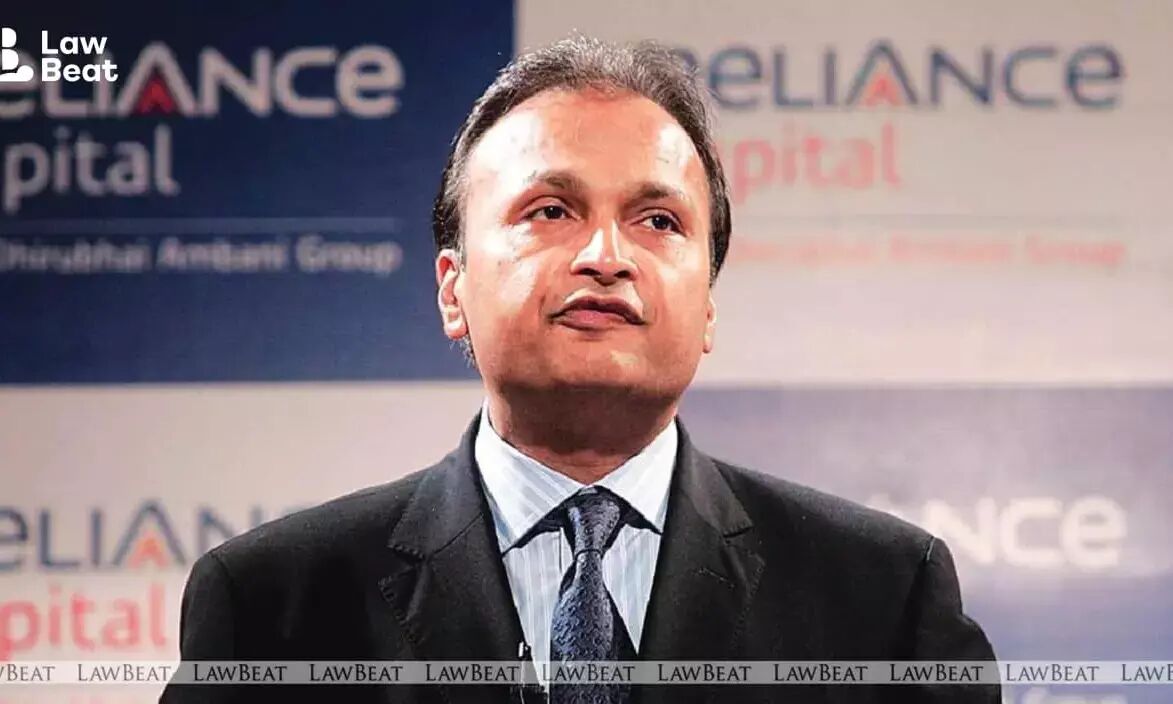
Centre Supreme Court: Seeks Transfer of Anil Ambani Fraud Cases to Delhi HC
Summary
- The Centre has filed a transfer petition in the Supreme Court to consolidate and move all bank fraud cases against Anil Ambani and Reliance Communications (RCom) to the Delhi High Court.
- A Supreme Court bench, including CJI Surya Kant, adjourned the matter for two weeks, requesting detailed information on pending cases from the government.
- The Centre argued for the transfer under Article 139A(2) of the Constitution, citing the Black Money Act and the need to prevent stays from defeating the recovery of black money.
- The cases involve allegations of diversion and misuse of bank funds, reportedly layered through group companies, conduit entities, and multiple bank accounts.
- Separately, the Supreme Court is also hearing a PIL seeking a court-monitored probe into ADAG's alleged financial irregularities, with the CBI having filed three chargesheets and an ADAG Managing Director arrested.
Centre Seeks Case Consolidation
The Centre's reliance on Article 139A(2) underscores its strategy to consolidate these multi-jurisdictional financial fraud cases, particularly those falling under the purview of the Black Money Act, to ensure a more unified and efficient legal process.
The Indian government has approached the Supreme Court with a transfer petition, aiming to consolidate and move all ongoing bank fraud cases against businessman Anil Ambani and Reliance Communications (RCom) from various High Courts to the Delhi High Court. This move seeks to centralize legal proceedings related to alleged financial irregularities. A Supreme Court bench, comprising Chief Justice of India Surya Kant, Justice Joymalya Bagchi, and Justice V Mohana, recently heard the petition.
Initially, Chief Justice Kant expressed reservations about the request, suggesting that since there was no reported delay in the Delhi High Court, the Centre should first seek a verdict there. He implied that a decision from one High Court could then inform proceedings in others, such as the Bombay High Court. However, Senior Advocate Zoheb Hussain, representing the Centre, countered by invoking Article 139A(2) of the Constitution, which permits the Supreme Court to transfer cases involving the same or substantially the same questions of law.
Hussain emphasized that the provision was specifically designed for central statutes like the Black Money Act, arguing that prolonged stays on these cases undermine the objective of repatriating black money held overseas. He highlighted that approximately 15 to 20 related matters in the Delhi High Court are ready for final hearing, with pleadings completed and written submissions filed. In contrast, he noted that proceedings in the Bombay High Court had effectively stalled, with a rule issued but the matter subsequently entering "cold storage." The Centre has been granted two weeks to submit comprehensive details of all pending cases across different High Courts and to formally request an expedited resolution, citing significant public interest.
Legal Basis and Allegations
The cases at the heart of this transfer petition stem from multiple investigations into alleged diversion and misuse of funds provided by banks to RCom. These allegations describe a complex scheme where funds were reportedly layered through various channels, including group companies, specially created conduit entities, numerous bank accounts, and liquid mutual funds. The Central Bureau of Investigation (CBI) has registered several First Information Reports (FIRs) concerning the alleged diversion of both fund-based and non-fund-based credit facilities.
Investigations by the CBI have indicated that new credit facilities were repeatedly utilized to repay, rotate, and "evergreen" existing domestic and foreign liabilities, rather than being deployed for their originally sanctioned purposes. The Enforcement Directorate (ED) has also alleged the intricate layering of these funds. The Centre's reliance on Article 139A(2) underscores its strategy to consolidate these multi-jurisdictional financial fraud cases, particularly those falling under the purview of the Black Money Act, to ensure a more unified and efficient legal process. This approach aims to prevent fragmented proceedings from hindering the recovery of illicit funds.
Broader Regulatory Scrutiny
Beyond the Centre's transfer petition, the Supreme Court is concurrently addressing a Public Interest Litigation (PIL) filed by former bureaucrat EAS Sarma. This PIL calls for a thorough, court-monitored investigation into alleged financial irregularities within the Anil Dhirubhai Ambani Group (ADAG). Sarma, a former union government secretary, has urged the court to assume supervisory control over the ongoing probes, contending that the current investigations are piecemeal and fail to adequately examine all implicated parties, including bank officials and public servants.
Further underscoring the gravity of the situation, the Central Bureau of Investigation informed the Supreme Court in July that it had filed three chargesheets in connection with the alleged Rs 40,000-crore ADAG loan fraud case. During a hearing before a bench led by Chief Justice Surya Kant, Solicitor General Tushar Mehta also confirmed that the Managing Director of ADAG had been arrested in relation to these matters. This broader context highlights the extensive legal and regulatory scrutiny faced by the ADAG group and its leadership.
Practical Implications
Lawyers and compliance officers involved in multi-jurisdictional financial fraud cases, especially those under the Black Money Act, should monitor this Supreme Court decision. The outcome will provide critical guidance on the viability and process of consolidating complex cases from various High Courts to a single jurisdiction, potentially impacting defense strategies or prosecution efficiency.
Source
How does this affect you?
Get an AI analysis of this article grounded in your jurisdictions, practice areas, and any policy documents you've uploaded to Wansom.
Finish Reading the Full Story and the Expert Analysis.
Wansom is AI and can make mistakes.