
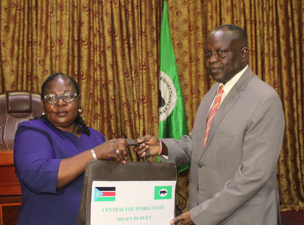
Central Equatoria State: 2026-2027 Budget Submitted, SSP 108.2 Billion
Summary
- Central Equatoria State Minister of Finance, Janet Aya Alex, submitted a proposed SSP 108.2 billion draft budget for fiscal year 2026-2027.
- The submission included the draft financial bill and draft appropriation bill for 2026-2027, initiating the legislative process.
- The proposed budget prioritizes key sectors including security, education, health, and agriculture, aligning with the Governor's vision.
- The draft budget will first be reviewed by the Appropriations and Budget Committee before being presented to the August House for its first reading.
- The Speaker of the State Legislative Assembly confirmed the submission adhered to timelines set by the South Sudan Public Financial Management Act.
Central Equatoria's Proposed Budget Unveiled
Lawyers and compliance officers should closely monitor the legislative developments surrounding this budget.
The Central Equatoria State Minister of Finance, Planning and Investment, Janet Aya Alex, recently submitted a comprehensive draft budget totaling SSP 108.2 billion for the upcoming fiscal year 2026-2027. This significant financial proposal, known as the Central Equatoria 2026-2027 budget submitted, was presented to the Speaker of the State Legislative Assembly for formal tabling, marking the initial step in its legislative journey. The submission ceremony, attended by various government officials and lawmakers, underscored the importance of this financial blueprint for the state's future.
Accompanying the substantial Janet Aya Alex budget were two critical legislative instruments: the Central Equatoria draft financial bill, 2026-2027, and the Central Equatoria draft appropriation bill 2026-2027. These documents collectively outline the state's projected revenues and expenditures, as well as the legal framework governing their management. Minister Aya emphasized that the proposed SSP 108.2 billion C. Equatoria budget is strategically designed to prioritize key sectors, specifically highlighting security, education, health, and agriculture as primary areas of focus.
Following its submission, the draft budget will undergo a structured review process. Minister Aya clarified that the proposal will first be directed to the Appropriations and Budget Committee (ABC) for thorough discussion and analysis. Only after this initial committee review will she receive an official invitation to present the budget to the August House for its first reading, initiating broader legislative debate. This procedural sequence ensures a detailed examination before the budget proceeds to a full parliamentary review.
Legislative Scrutiny and Strategic Priorities
The Speaker of the State Transitional Legislative Assembly, Taban Emmanuel Baya, commended Minister Aya for adhering to the established timelines for the draft budget's submission. He underscored the profound significance of the budget, describing it not merely as a collection of figures but as a fundamental policy document and a binding contract between the government and the populace of Central Equatoria. This perspective highlights the budget's role in transparently communicating the origins and destinations of public funds, as well as the services citizens can expect in return.
Speaker Baya further articulated that the budget's priorities align with the vision set forth by the Governor. He reiterated the critical importance of allocating resources to core sectors, specifically mentioning peace and security, health, education, roads, agriculture, and the effective delivery of services to citizens at the grassroots level. This consistent emphasis from both the Minister and the Speaker on similar key areas, such as security, education, health, and agriculture, signals a unified strategic direction for the state's development.
The legislative process will continue with the budget's formal presentation to the August House on a date yet to be announced. Upon its receipt by the Assembly, the next immediate step involves its tabling for the first reading. This crucial stage will be formally communicated to both the Honorable Members of the Assembly and the Executive, ensuring all relevant parties are prepared for the commencement of the legislative debate.
Adherence to Financial Governance Frameworks
The timely submission of the Central Equatoria 2026-2027 budget, along with its accompanying financial and appropriation bills, demonstrates compliance with established legal frameworks governing public finance. Speaker Taban Emmanuel Baya specifically acknowledged that the Minister of Finance submitted the draft ceiling within the stipulated timelines mandated by the South Sudan Public Financial Management Act. This adherence to legal requirements is crucial for maintaining fiscal discipline and transparency within the state's financial operations.
The Public Financial Management Act provides the overarching legal structure for how public funds are managed, from budgeting and appropriation to expenditure and accountability. By submitting the budget within these prescribed timelines, the Central Equatoria government signals its commitment to sound financial governance. The process of legislative review, including the initial scrutiny by the Appropriations and Budget Committee and subsequent readings in the August House, is integral to ensuring that the proposed SSP 108.2 billion C. Equatoria budget aligns with both legal mandates and the state's developmental objectives.
Implications for Legal and Business Stakeholders
The progression of the Central Equatoria 2026-2027 budget through the legislative process carries significant implications for legal professionals and compliance officers operating within or engaging with the state. The final approval of the Janet Aya Alex budget, alongside the Central Equatoria draft financial bill and draft appropriation bill, will definitively shape government spending priorities for the 2026-2027 fiscal year. This will directly influence potential procurement opportunities across various sectors, particularly those identified as priorities like security, education, health, and agriculture.
Lawyers and compliance officers should closely monitor the legislative developments surrounding this budget. Its ultimate approval will not only dictate the allocation of public funds but could also introduce regulatory changes impacting businesses and organizations operating within Central Equatoria. Understanding the final approved budget and its associated legislation is essential for advising clients on potential market shifts, compliance requirements, and strategic engagement opportunities within the state's evolving economic landscape.
Practical Implications
Lawyers and compliance officers should monitor the legislative process for the Central Equatoria 2026-2027 budget and associated financial/appropriation bills. Their final approval will dictate government spending priorities, potential procurement opportunities, and regulatory changes in key sectors like security, education, health, and agriculture, impacting clients operating within the state.
Source
How does this affect you?
Get an AI analysis of this article grounded in your jurisdictions, practice areas, and any policy documents you've uploaded to Wansom.
Finish Reading the Full Story and the Expert Analysis.
Get the latest legal & regulatory intelligence in South Sudan
Wansom is AI and can make mistakes.