
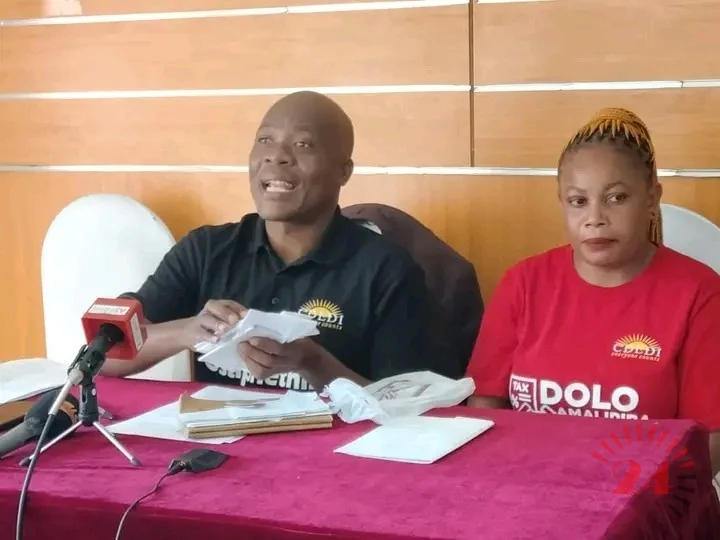
CDEDI Asks Mutharika: Overhaul Malawi Prisons System
Summary
- The Centre for Democracy and Economic Development Initiatives (CDEDI) has urged President Arthur Peter Mutharika to address issues within Malawi's correctional facilities.
- CDEDI specifically requested the issuance of Presidential Orders to improve conditions in these facilities.
- Executive Director Sylvester Namiwa made this appeal in Lilongwe, presenting a letter detailing serious challenges.
The Call for Prison Reform
The public nature of CDEDI's appeal, delivered in Lilongwe, signals a growing momentum for change that could translate into tangible policy shifts or even legislative amendments impacting the rights and conditions of those held in custody.
The Centre for Democracy and Economic Development Initiatives (CDEDI), a prominent civil society organization in Malawi, has formally called upon President Arthur Peter Mutharika to initiate comprehensive reforms within the nation's prison system. This significant appeal, aimed at overhauling Malawi prisons, specifically requests the President to issue Presidential Orders designed to improve the prevailing conditions across Malawi correctional facilities. The organization's executive director, Sylvester Namiwa, articulated this demand during an event held in Lilongwe on a recent Wednesday.
Context of Malawi's Correctional Facilities
The appeal from CDEDI emerges against a backdrop of ongoing concerns regarding the state of Malawi human rights detention facilities. While the specific details of the "serious challenges" outlined in CDEDI's letter were not publicly elaborated beyond that description, such calls for reform often stem from issues like overcrowding, inadequate sanitation, insufficient medical care, and general poor living conditions that can compromise the dignity and well-being of inmates. These systemic problems are frequently cited by human rights organizations globally when advocating for improvements in correctional systems.
Presidential Orders, as requested by CDEDI, represent a powerful tool within the executive branch for implementing policy changes or directing government agencies to take specific actions. In the context of prison reform, such orders could mandate immediate improvements in infrastructure, allocate emergency funding for essential services, or establish new oversight mechanisms. The efficacy of such directives, however, depends on their scope, enforcement, and the political will to see them through, making the President's response a critical factor in any potential overhaul of Malawi prisons.
The Centre for Democracy and Economic Development Initiatives Malawi's focus on this executive mechanism suggests a strategic effort to prompt a top-down approach to reform. Addressing the Malawi correctional facilities conditions through presidential decree could signal a strong commitment from President Arthur Peter Mutharika to prioritize the welfare of detainees and align the nation's detention practices more closely with international human rights standards. This public pressure is a key element in driving accountability and fostering a responsive governance framework.
Implications for Human Rights and Governance
The demand for President Arthur Peter Mutharika prison reform from a respected civil society group like CDEDI carries significant implications for human rights advocacy and governance in Malawi. It serves as a clear indicator of increased public scrutiny and pressure on the government to uphold its obligations towards incarcerated individuals. Such calls often galvanize broader public discourse and can influence policy agendas, potentially leading to a re-evaluation of existing laws and practices governing detention.
For legal professionals and human rights advocates in Malawi, this development warrants close monitoring. The public nature of CDEDI's appeal, delivered in Lilongwe, signals a growing momentum for change that could translate into tangible policy shifts or even legislative amendments impacting the rights and conditions of those held in custody. An executive response, whether through the issuance of Presidential Orders or other measures, could establish new precedents or strengthen existing frameworks for protecting detainees.
Ultimately, the Centre for Democracy and Economic Development Initiatives' intervention highlights the vital role of civil society in democratic oversight. By bringing the "serious challenges" of Malawi's correctional facilities conditions directly to the President's attention, CDEDI is not only advocating for immediate improvements but also contributing to a broader national conversation about justice, human dignity, and the rule of law. The outcome of this appeal will be closely watched as a measure of the government's commitment to human rights and effective governance.
Practical Implications
Lawyers and human rights advocates in Malawi should monitor this call for prison reform, as it signals increased public pressure that could lead to future policy changes or legislative amendments impacting the rights and conditions of incarcerated individuals, potentially influencing legal arguments or future litigation.
Source
Source: Original reporting via Malawi24
How does this affect you?
Get an AI analysis of this article grounded in your jurisdictions, practice areas, and any policy documents you've uploaded to Wansom.
Finish Reading the Full Story and the Expert Analysis.
Wansom is AI and can make mistakes.