
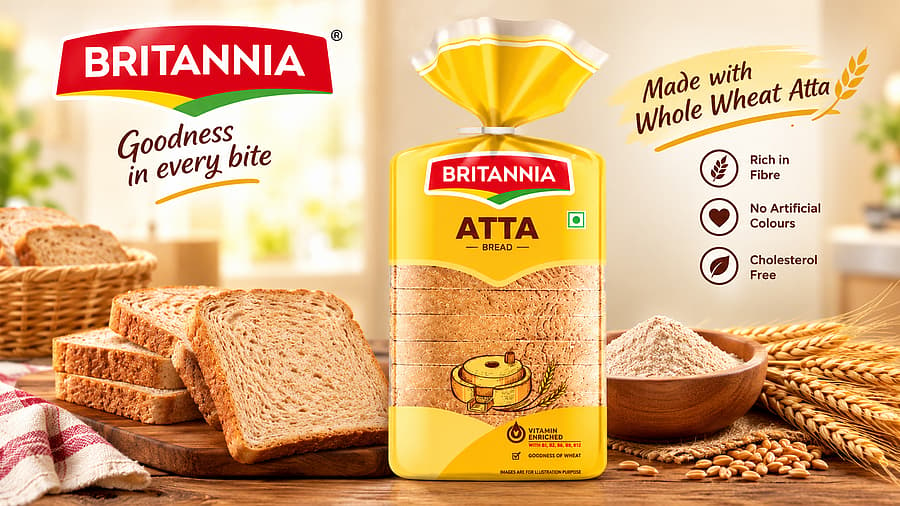
CCPA Fines Britannia 100% Whole Wheat Bread for Misleading Ad
Summary
- The Central Consumer Protection Authority (CCPA) has fined Britannia Industries Limited ₹1 lakh for misleading advertising.
- Britannia's "100% Whole Wheat Bread" was found to contain only 62% whole wheat flour, with the remainder being other ingredients.
- The CCPA initiated a suo motu investigation into Britannia's promotional claims, including the "100% Whole Wheat Bread" assertion.
- The Authority ordered Britannia to immediately discontinue the misleading advertisements and submit a compliance report within 15 days.
- Britannia's defense that "100%" referred only to the wheat component being entirely whole wheat was rejected by the CCPA.
What Happened
Any descriptor, particularly those implying complete or exclusive composition, must be rigorously aligned with the actual ingredient breakdown to avoid penalties.
The Central Consumer Protection Authority (CCPA) has levied a significant penalty against Britannia Industries Limited, imposing a fine of ₹1 lakh. This action, formalized in an order dated October 21, addresses the company's deceptive marketing of its "100% Whole Wheat Bread" product. The regulatory body determined that Britannia's advertising and packaging falsely represented the bread as being composed entirely of whole wheat flour, thereby misleading consumers.
An investigation into the product's composition revealed a discrepancy: the bread contained only 62% whole wheat flour. The remaining 38% of the product was made up of other constituents, including water, yeast, and wheat bran. Nidhi Khare, Secretary, Department of Consumer Affairs, and Commissioner Anupam Mishra, presiding over the case, concluded that Britannia's product nomenclature was inconsistent with its actual ingredient list, going beyond a mere overstatement of whole wheat proportion. Consequently, the CCPA has mandated Britannia to immediately cease all misleading advertisements related to this product and to submit a compliance report within a 15-day timeframe. This ruling underscores the CCPA's commitment to enforcing truth in advertising, particularly concerning food products, and highlights the consequences when the CCPA fines Britannia 100% Whole Wheat Bread claims.
Regulatory Scrutiny and Britannia's Defense
The proceedings against Britannia originated from a suo motu investigation initiated by the Central Consumer Protection Authority India. This proactive examination targeted various promotional claims made by Britannia, specifically scrutinizing statements such as "100% Whole Wheat Bread," "0% Maida," and broader assertions about the product's suitability for a healthy diet. The Authority's findings highlighted that the product's branding created an erroneous impression of its complete whole wheat content, leading to the Britannia misleading advertisement penalty.
In its defense, Britannia argued that the "100%" claim was intended to convey that the wheat component *within* the bread was exclusively whole wheat flour, without any inclusion of maida (refined flour). The company contended that this phrasing accurately reflected the purity of the wheat used, rather than the total proportion of whole wheat flour in the entire bread product. Furthermore, Britannia referenced existing food labeling regulations in India, which stipulate a minimum requirement of 75% whole wheat flour for products labeled as "whole wheat." This defense, however, did not sway the CCPA, which ultimately issued the penalty.
Why It Matters
This ruling by the Central Consumer Protection Authority India carries significant weight for the food industry and consumer protection India at large. It sends a clear message to manufacturers regarding the critical importance of precise and truthful food labeling regulations India, especially when making absolute claims like "100%." The CCPA's proactive suo motu investigation demonstrates its vigilance in monitoring market practices and holding companies accountable for misleading advertising.
For compliance officers and legal counsel within food manufacturing companies, this case serves as a crucial reminder to meticulously review all product labeling and advertising claims. Any descriptor, particularly those implying complete or exclusive composition, must be rigorously aligned with the actual ingredient breakdown to avoid penalties. The CCPA's stance emphasizes that product nomenclature must accurately reflect compositional requirements, ensuring that consumers receive transparent and accurate information about the food they purchase. This enforcement action reinforces the regulatory body's role in fostering an environment of trust and transparency in the marketplace.
Practical Implications
Compliance officers and legal counsel for food manufacturers should immediately review product labeling and advertising claims, particularly those using '100%' or similar absolute descriptors, to ensure strict alignment with actual ingredient composition and avoid penalties from the CCPA, which is actively conducting suo motu investigations.
Source
How does this affect you?
Get an AI analysis of this article grounded in your jurisdictions, practice areas, and any policy documents you've uploaded to Wansom.
Finish Reading the Full Story and the Expert Analysis.
Get the latest legal & regulatory intelligence in India
Wansom is AI and can make mistakes.