
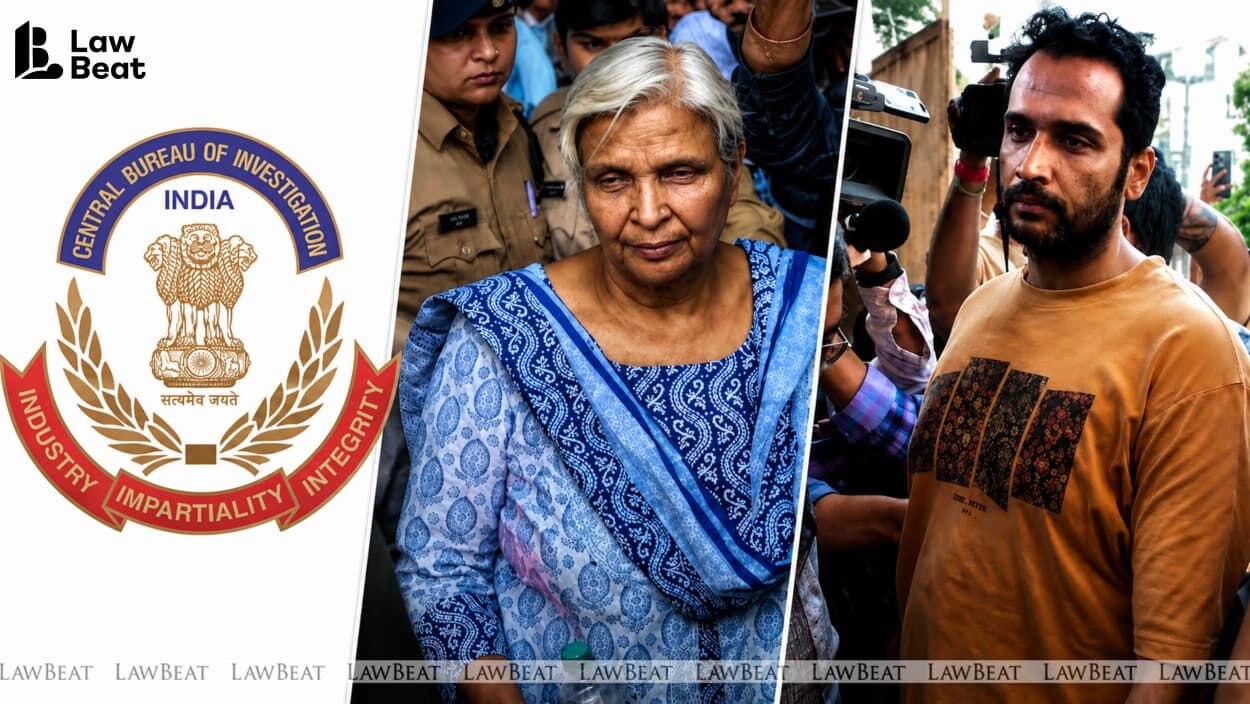
CBI Chargesheet: Samarth Singh, Giribala Singh Abetted Twisha Sharma's Suicide
Summary
- The CBI has filed a 636-page chargesheet in the Twisha Sharma death case.
- Samarth Singh and Giribala Singh have been booked under Sections 85, 108, and 3(5) of the Bharatiya Nyaya Sanhita.
- The chargesheet alleges that Twisha was subjected to sustained mental cruelty by her husband and mother-in-law.
- The CBI used WhatsApp messages, phone records, CCTV footage, medical records, counselling notes, and financial documents to reconstruct events leading up to Twisha's death.
What Happened
The chargesheet alleges that Twisha was subjected to sustained mental cruelty by her husband and mother-in-law, which ultimately led to her suicide.
The Central Bureau of Investigation (CBI) has filed a 636-page chargesheet in the Twisha Sharma death case, accusing her husband Samarth Singh and mother-in-law Giribala Singh of abetting her suicide. The chargesheet reconstructs Twisha's final hours through WhatsApp messages, phone records, CCTV footage, medical records, counselling notes, and financial documents. According to the CBI, Twisha met Samarth on a dating application in February 2025 and married him in December of that year. However, their marriage deteriorated sharply from March to April 2026, with Samarth repeatedly making sexually derogatory remarks and raising objections over relationships Twisha had disclosed before marriage. Giribala allegedly sided with her son whenever Twisha protested. The chargesheet describes the pregnancy as unplanned, with Twisha uncertain about continuing it given Samarth's alleged conduct.
Relevant Legal/Regulatory Context
The CBI has booked Samarth and Giribala under Sections 85, 108, and 3(5) of the Bharatiya Nyaya Sanhita (Corresponding to 498-A, 306, and 34 of IPC). The chargesheet alleges that Twisha was subjected to sustained mental cruelty by her husband and mother-in-law, which ultimately led to her suicide. The CBI's use of WhatsApp messages, phone records, CCTV footage, medical records, counselling notes, and financial documents is a significant development in dowry-related harassment cases. This approach highlights the importance of digital evidence in reconstructing events leading up to a crime. Lawyers and compliance officers should take note of this chargesheet as it sets a precedent for using technology to investigate and prosecute such cases.
Why It Matters
The Twisha Sharma case is a stark reminder of the need to address dowry-related harassment in India. The CBI's chargesheet serves as a warning to those who perpetrate such crimes, highlighting the consequences of their actions. This case also underscores the importance of digital evidence in investigations and the need for law enforcement agencies to adapt to new technologies. As Twisha's family continues to seek justice, this case will undoubtedly have far-reaching implications for future dowry-related harassment cases.
Practical Implications
Lawyers and compliance officers should watch for the implications of this chargesheet on dowry-related harassment cases, particularly in light of the CBI's use of WhatsApp messages, phone records, and CCTV footage to reconstruct Twisha Sharma's final hours.
Source
Source: Original reporting via [Source]
How does this affect you?
Get an AI analysis of this article grounded in your jurisdictions, practice areas, and any policy documents you've uploaded to Wansom.
Wansom is AI and can make mistakes.