
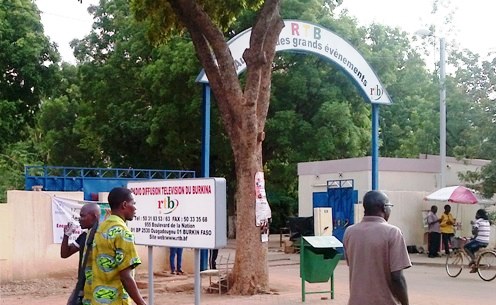
Conseil Supérieur de la Communication: Canal+ RTB Gratuit Burkina Faso Channels
Summary
- Channels from Burkina Faso's national public broadcaster, RTB, are now freely available on the Canal+ satellite television bouquet.
- This development was officially announced by the Conseil supérieur de la communication (CSC) on Friday, August 28, 2026.
- The free-to-air diffusion is a direct result of a convention signed between the CSC and Canal+ International in February 2025.
Free Access to RTB Channels on Canal+
This regulatory development establishes a significant precedent for the distribution of public service broadcasting on private platforms within Burkina Faso.
In a significant development for media accessibility across Burkina Faso, channels from the national public broadcaster, Radiodiffusion Télévision du Burkina (RTB), are now available free of charge on the Canal+ satellite television bouquet. This crucial update, ensuring broader public access to national programming, was formally communicated to the nation by the Conseil supérieur de la communication (CSC) on Friday, August 28, 2026. The announcement marks a pivotal moment in the country's broadcasting landscape, directly impacting how a wide segment of the population can engage with public service media.
The move, which makes the Canal+ RTB gratuit Burkina Faso initiative a tangible reality, means that subscribers to the private satellite service can access RTB's offerings without any additional cost or specific package requirements. This 'diffusion en clair RTB Canal+' represents a direct and effective outcome of a prior, foundational agreement. It underscores a clear commitment to enhancing the reach of public service broadcasting within the country, ensuring that national content is not confined behind paywalls for those who subscribe to private platforms.
The Regulatory Mandate and Underlying Agreement
The implementation of free access for RTB channels on Canal+ is not a unilateral decision by the private broadcaster but rather a direct consequence of a formal and binding convention. This pivotal agreement, often referred to as the CSC Canal+ RTB convention, was meticulously negotiated and subsequently signed in February 2025 between the Conseil supérieur de la communication (CSC) and Canal+ International. The convention laid the groundwork for this mandatory inclusion, setting a clear regulatory framework for content distribution.
As the primary regulatory body overseeing media and communication in Burkina Faso, the Conseil supérieur de la communication Burkina Faso plays a critical and authoritative role in shaping the country's broadcasting landscape. Its communiqué, issued in August 2026, served to officially inform the national public that the terms of this accord Canal+ International CSC were now effectively in force. This public declaration ensured both compliance from the private broadcaster and transparency for the citizenry regarding the availability and accessibility of their national public media outlets.
Broader Significance for Media Distribution
This regulatory development establishes a significant precedent for the distribution of public service broadcasting on private platforms within Burkina Faso. By mandating the free-to-air inclusion of national public channels like RTB on a major private satellite bouquet, the CSC has clearly articulated a robust regulatory expectation regarding content accessibility for the national populace. This move highlights a strategic effort to balance commercial interests with the public's right to access essential national information and cultural programming.
For legal professionals advising media companies, telecommunications providers, or content distributors operating in the region, this convention signals a crucial shift in the regulatory environment. It underscores a growing emphasis on ensuring that essential national content remains universally accessible, irrespective of subscription models for private services. Such a regulatory stance could profoundly influence future contractual negotiations, particularly concerning carriage agreements and content licensing, as all parties will now need to factor in this established requirement for free access to public channels as a fundamental condition of operation.
The accord further illuminates the evolving landscape of media regulation, where public interest considerations, such as the widespread availability of national news, educational content, and cultural programming, are increasingly being integrated into commercial broadcasting frameworks. Compliance requirements for content accessibility are therefore likely to become a more prominent feature of regulatory oversight, prompting companies to proactively review their distribution strategies and ensure full alignment with these public service mandates to avoid potential penalties or disputes.
Practical Implications
This development, stemming from a regulatory convention, sets a precedent for the distribution of public service broadcasting on private platforms in Burkina Faso. Lawyers advising media companies, telecommunications providers, or content distributors should note this regulatory expectation regarding free access to national public channels, as it may influence future contractual negotiations or compliance requirements for content accessibility.
Source
How does this affect you?
Get an AI analysis of this article grounded in your jurisdictions, practice areas, and any policy documents you've uploaded to Wansom.
Finish Reading the Full Expert Analysis.
Wansom is AI and can make mistakes.