
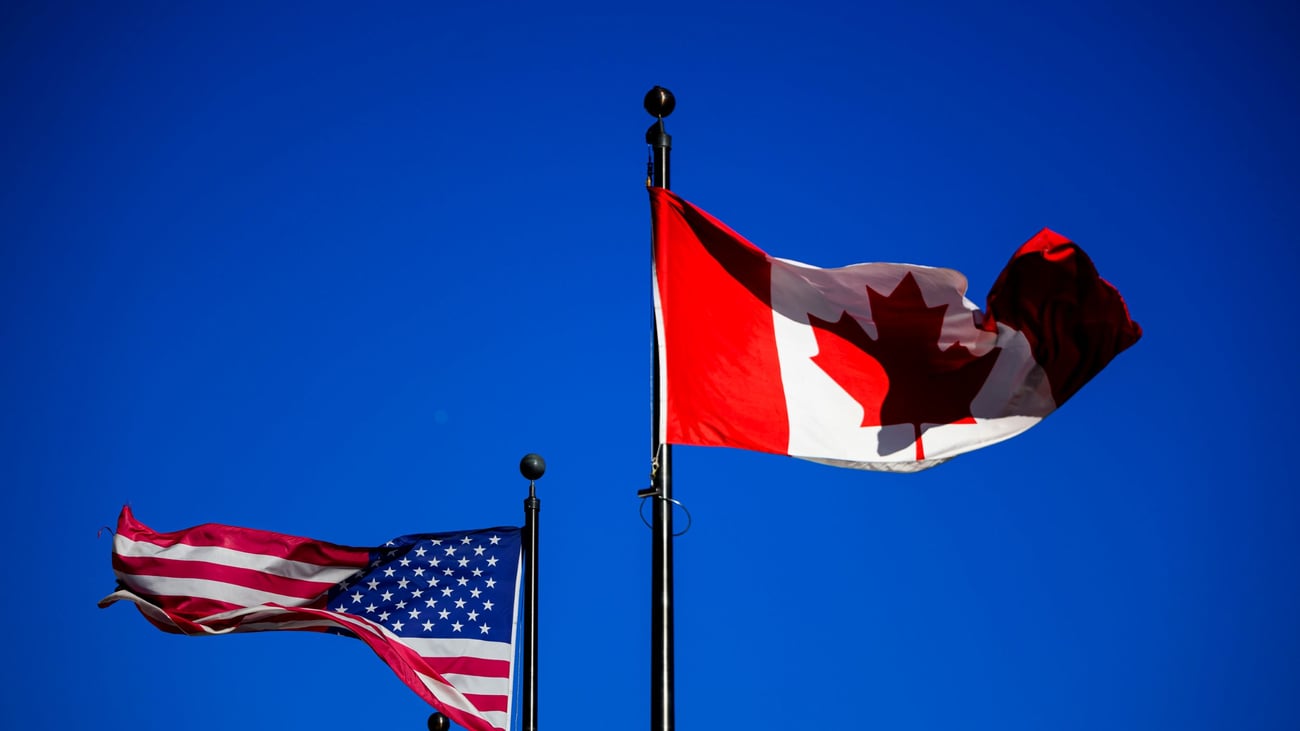
Canada: Retaliatory Tariffs on US Goods Begin September 8
Summary
- New Canadian retaliatory tariffs on over 700 American goods are set to take effect on September 8.
- These Canadian counter-tariffs, ranging up to 50%, are a dollar-for-dollar response to recent US duties on $20 billion of Canadian products.
- Affected items include seafood, dairy, farm equipment, and railway material, with specific rates from 15% to 50%.
- Experts suggest the measures strategically target politically sensitive US border and battleground states ahead of midterm elections.
- The tariffs further strain US-Canada trade relations, which have been under pressure since March 2025, impacting the USMCA trade agreement.
What Happened
Experts suggest that the Canadian counter-tariffs on American products are strategically crafted to exert political pressure, particularly targeting US border and battleground states in anticipation of upcoming midterm elections.
Canada is poised to implement a new series of retaliatory tariffs on a broad spectrum of American products, with these measures scheduled to take effect on September 8. This action comes as a direct response to the United States' recent imposition of 50% duties on Canadian goods valued at $20 billion. The Canadian government's counter-tariffs are specifically designed to mirror the financial impact of the American duties on a dollar-for-dollar basis.
The comprehensive list of affected American products encompasses more than 700 distinct items, with the tariff rates varying significantly. Certain goods, including fish and paper, will incur a 25% duty. Other categories, such as forklift trucks, stoves, and chainsaws, are slated for a 15% tariff. At the highest end of the spectrum, products like milk, railway material, and beauty products will be subjected to a substantial 50% tariff. This latest move further intensifies an existing trade dispute, building upon tariffs already in place on steel and aluminum.
Legal and Economic Context
This recent escalation highlights the persistent strain on North American free trade, a situation that has been ongoing since March 2025 and has notably impacted industries such as alcohol and automotive manufacturing. Many observers now regard the 2020 United States-Mexico-Canada Agreement (USMCA) as effectively undermined, particularly because current American tariffs are targeting items that were previously exempt from duties under the agreement. Given that Canada serves as the United States' second-largest trade partner, these disruptions carry significant economic implications for both nations.
Canadian Finance Minister François-Philippe Champagne articulated his nation's position, asserting that while Canada did not initiate this conflict, it is compelled to act when economic integration is exploited as a weapon rather than serving as a foundation for mutually beneficial partnership. This statement underscores Canada's determination to safeguard its economic interests amidst the escalating trade tensions.
Political Motivations and Impact
Experts suggest that the Canadian counter-tariffs on American products are strategically crafted to exert political pressure, particularly targeting US border and battleground states in anticipation of upcoming midterm elections. William Ridley, an economist and professor at the University of Illinois Urbana-Champaign, observed that Canada is not merely applying a broad brush but is specifically focusing on products exported from politically sensitive regions. States such as Alaska, Maine, Michigan, and Ohio, which are significant manufacturing hubs and feature crucial midterm elections, are expected to experience the most substantial economic repercussions.
Frédérick Gagnon, director of the Observatory of the United States, highlighted the pervasive uncertainty that has characterized US-Canada trade relations since former President Donald Trump's involvement. Gagnon expressed skepticism regarding Trump's concern for individual states' trade relations, despite the considerable discontent these measures generate in border areas heavily reliant on commerce with Canada. However, Ridley noted that while the president himself might not be easily swayed, Republican policymakers are acutely aware of how these trade disputes could impact their electoral prospects, indicating a potential internal political dynamic within the US.
Practical Implications
Lawyers and compliance officers advising clients engaged in US-Canada trade, especially those importing or exporting the specified American goods (e.g., seafood, dairy, automotive parts, farm equipment), must immediately assess the financial implications of these new Canadian tariffs (up to 50%) taking effect in September. This necessitates reviewing supply chain costs, potential contract renegotiations, and developing mitigation strategies to ensure compliance and minimize financial exposure for affected businesses.
Source
How does this affect you?
Get an AI analysis of this article grounded in your jurisdictions, practice areas, and any policy documents you've uploaded to Wansom.
Wansom is AI and can make mistakes.