
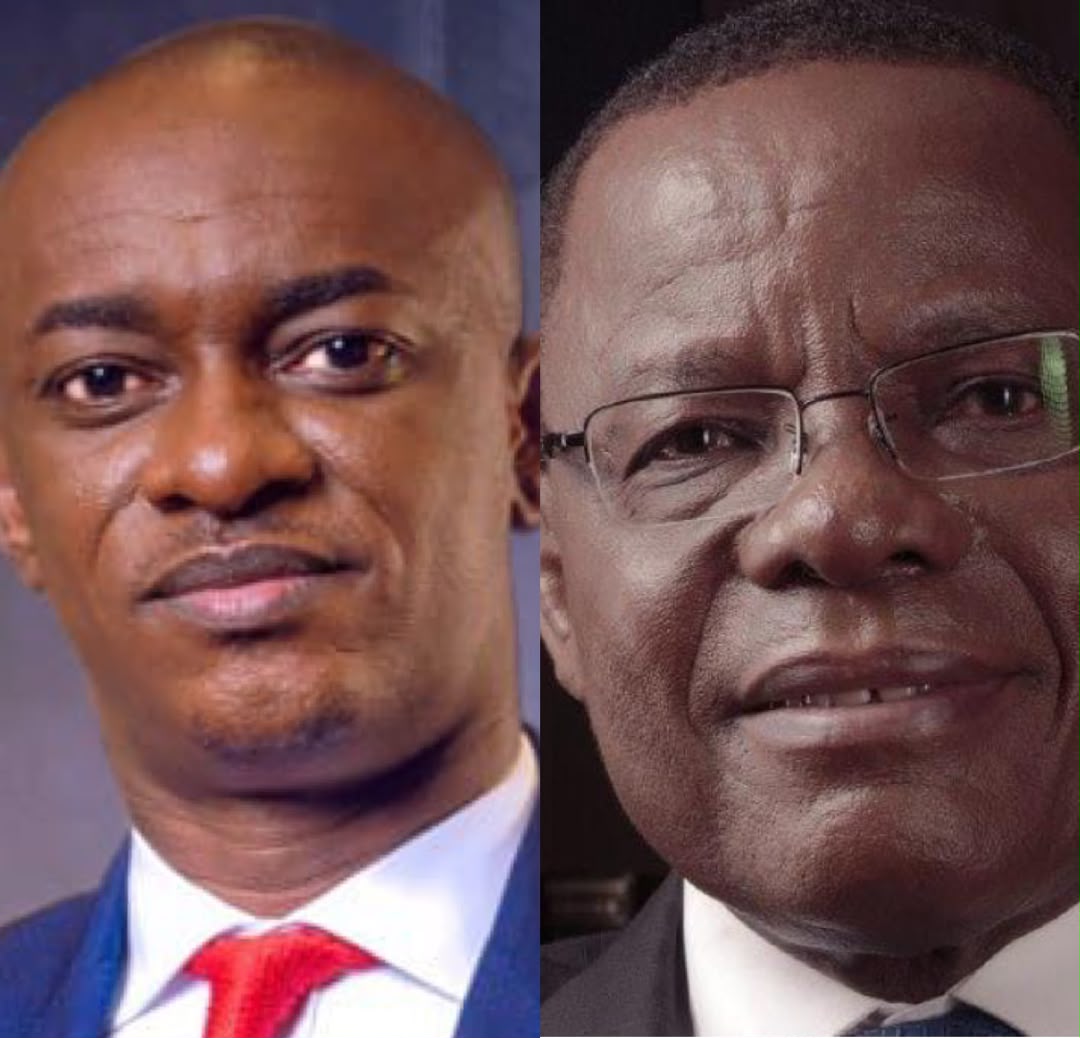
Maurice Kamto: Rejects Cameroun Vice-Président as Constitutional Coup
Summary
- Cabral Libii advocates for the appointment of a person to the recently established vice-presidency in Cameroon, arguing it would secure the presidential mandate and prevent succession crises.
- Maurice Kamto, former head of the MRC, vehemently opposes the established vice-presidency, labeling it a "constitutional coup" and a "flagrant violation of Article 64" of the Constitution.
- The debate unfolded publicly over three days on Facebook, with both political leaders presenting detailed arguments.
- Libii, leader of the PCRN, directly appealed to President Paul Biya to name a person to the vice-presidency.
- Kamto, former leader of the MRC, published his opposition, urging that the established reform be allowed to fade into disuse.
A Heated Debate Over Cameroon's Executive Structure
Maurice Kamto, conversely, characterized the established vice-presidency as a 'true deception imposed by force' and a 'ghost introduced by breaking in' to the Constitution, explicitly citing a 'flagrant and outrageous violation of Article 64'.
A significant political debate has erupted in Cameroon concerning the recently established vice-presidency, sparking intense exchanges between prominent opposition figures Maurice Kamto and Cabral Libii. The discussion, which unfolded over three days primarily through posts on Facebook, highlights fundamentally opposing views on the nation's executive governance. This public discourse signals a critical juncture for Cameroonian political stability and potential constitutional reform.
Cabral Libii, leader of the Cameroon Party for National Reconciliation (PCRN), has actively championed the establishment of a vice-presidency. He directly addressed President Paul Biya in an open letter, urging him to "appoint your vice-president!" Libii frames this move not merely as the addition of another political office, but as an essential measure for the survival of the current regime and the broader political landscape in Cameroon.
Conversely, Maurice Kamto, former head of the Movement for the Rebirth of Cameroon (MRC), who resigned on September 8, 2026, has vehemently rejected the establishment of the vice-presidency. In a published piece titled "Pensée n°126-2026," Kamto dismantled the concept of a vice-presidency, portraying it as a deceptive and illegitimate insertion into the nation's foundational legal framework. His strong opposition underscores a deep concern regarding the constitutional integrity of the state.
Competing Visions for National Stability
Cabral Libii's advocacy for a vice-president stems from a desire to bolster the existing political system and ensure smoother transitions of power. He argues that establishing such a position would "secure the mandate" of the presidency and "mitigate succession struggles" that could otherwise paralyze collective action. For Libii, appointing a loyal successor is a pragmatic step to avert potential chaos and reinforce the stability of governance in Cameroon.
Maurice Kamto, conversely, characterized the established vice-presidency as a "true deception imposed by force" and a "ghost introduced by breaking in" to the Constitution, explicitly citing a "flagrant and outrageous violation of Article 64". He views the initiative as a potential "coup constitutionnel" that undermines the very principles of Cameroonian constitutional law. Kamto's recommendation is for political actors to cease discussing the matter entirely, allowing the established reform to "die a natural death, by disuse."
Adding to the dynamic, Cabral Libii issued a second Facebook post just 35 minutes after Kamto's publication, expressing concern over certain political actors' continued engagement in such debates despite their experience and age. This rapid exchange further illustrates the depth of the disagreement and the strategic maneuvering within the political sphere regarding the vice-présidence Cameroun.
Constitutional Scrutiny and Political Ramifications
The core of Maurice Kamto's opposition lies in the alleged infringement of Article 64 of the Constitution of Cameroon. His assertion of a "flagrant and outrageous violation" elevates the debate beyond mere political preference to a fundamental question of droit constitutionnel Cameroun. This legal challenge suggests that the establishment of the vice-presidency, if not done with proper constitutional amendment, could face significant legal hurdles and be perceived as an illegitimate power grab.
This intense political debate signals ongoing legal challenges regarding the structure of the executive branch in Cameroon following the 2026 constitutional amendment establishing the vice-presidency, requiring constitutional law practitioners to monitor developments for implications on governance and legal precedent, particularly concerning Article 64 of the Constitution. The differing perspectives on the vice-presidency highlight a broader struggle over the future of gouvernance politique Cameroun and the interpretation of its foundational legal texts. The discussion around the vice-président in Cameroun, therefore, is not just about an office, but about the very nature of executive power and succession in the nation, especially following its establishment in 2026.
Practical Implications
This intense political debate signals potential constitutional reform or legal challenges regarding the structure of the executive branch in Cameroon, requiring constitutional law practitioners to monitor developments for implications on governance and legal precedent, particularly concerning Article 64 of the Constitution.
Source
How does this affect you?
Get an AI analysis of this article grounded in your jurisdictions, practice areas, and any policy documents you've uploaded to Wansom.
Finish Reading the Full Story and the Expert Analysis.
Get the latest legal & regulatory intelligence in Cameroon
Wansom is AI and can make mistakes.