
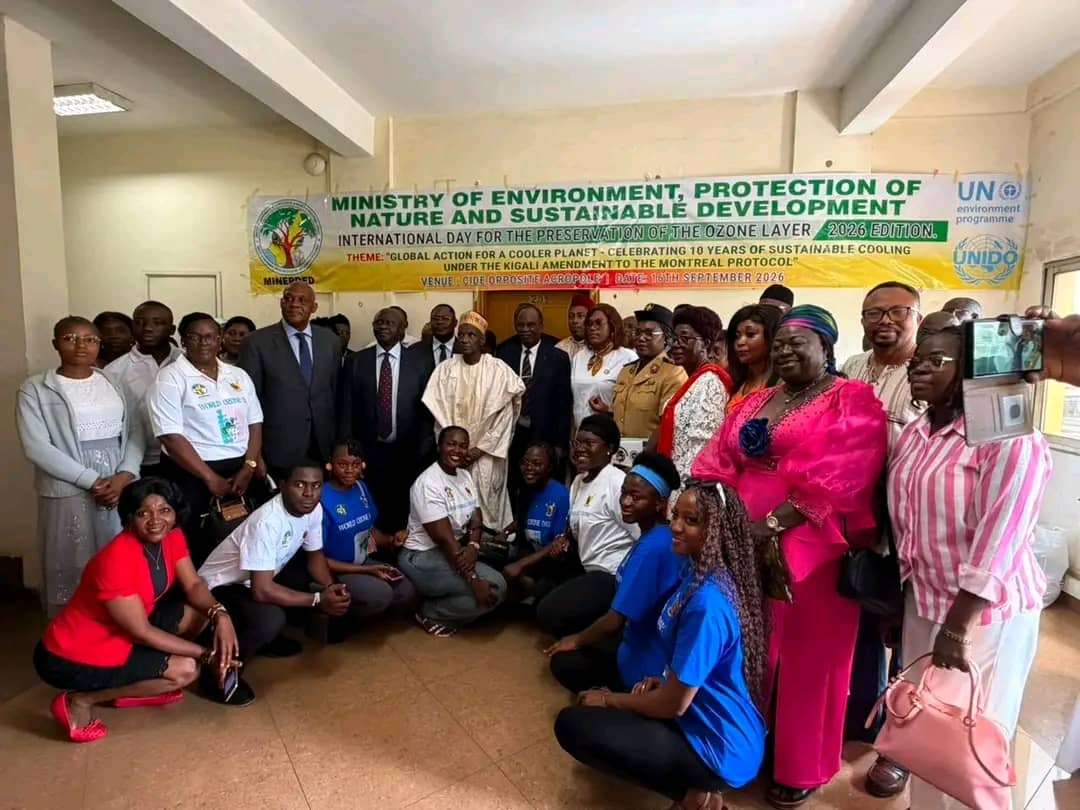
Cameroon: MINEPDED Details Ozone Layer Preservation Actions
Summary
- Minister of Environment HELE Pierre presided over the International Day for the Preservation of the Ozone Layer ceremony in Yaoundé on September 16, 2026.
- MINEPDED has undertaken six major initiatives this year, including the elimination of 5% of HCFC-22 and training for technicians, customs officers, and inspectors.
- Cameroon ratified the Vienna Convention and Montreal Protocol on August 30, 1989, demonstrating a long-standing commitment to ozone protection.
- The ozone layer, located between 20 and 50 km altitude, filters harmful UV rays, preventing cancers, eye diseases, and ecological disruptions.
- Key actions include updating the national licensing and quota system and conducting an inventory of hospital refrigeration equipment.
Renewed Focus on Ozone Protection
Lawyers and compliance officers advising clients in Cameroon's manufacturing, import/export, or cold chain sectors should therefore meticulously review their operations to align with these updated licensing and quota systems, anticipating stricter enforcement and a heightened focus on environmental accountability.
Cameroon recently reaffirmed its strong commitment to global environmental stewardship, particularly concerning the preservation of the ozone layer. On Wednesday, September 16, 2026, the official ceremony for the International Day for the Preservation of the Ozone Layer took place in Yaoundé, presided over by HELE Pierre, the Minister of Environment. The event underscored the nation's ongoing dedication to the cause, celebrated under the theme "Global Action for a Cooler Planet," highlighting the comprehensive Cameroun ozone layer preservation actions currently underway.
This year, the Ministry of Environment, Protection of Nature and Sustainable Development (MINEPDED) has spearheaded six significant MINEPDED ozone initiatives Cameroun. These include a targeted effort to eliminate 5% of Hydrochlorofluorocarbons (HCFC-22), a potent ozone-depleting substance. Complementing this, extensive training programs have been rolled out for refrigeration technicians, focusing on best practices that are environmentally sound and ozone-friendly.
Further strengthening regulatory enforcement, customs officers and inspectors have received specialized training on effectively controlling equipment that contains harmful substances such as CFCs, halons, and methyl bromides. These capacity-building efforts are crucial for preventing the illegal trade and use of restricted chemicals. Additionally, the national licensing and quota system for ozone-depleting substances has undergone a significant update, streamlining processes and enhancing oversight. The MINEPDED also collaborated with MINSANTE on a national inventory of refrigeration equipment in hospitals and initiated the rehabilitation of refrigeration and air conditioning workshops in designated Centers of Excellence, ensuring sustainable management of cooling technologies.
Cameroon's Enduring Commitment to International Protocols
The importance of the ozone layer cannot be overstated; situated between 20 and 50 kilometers above Earth, it acts as a vital filter against harmful ultraviolet (UV) radiation. Without this protective shield, excessive UV exposure would lead to severe health consequences, including increased rates of cancers, various eye diseases, and a weakened human immune system. Beyond human health, the absence of the ozone layer would also cause significant alterations to both terrestrial and aquatic biogeochemical cycles, disrupting ecosystems globally.
Cameroon's dedication to safeguarding this critical atmospheric layer dates back decades. The nation demonstrated its early commitment to international environmental agreements by ratifying both the Vienna Convention and its pivotal Montreal Protocol on August 30, 1989. This foundational step established a framework for Cameroun Montreal Protocol compliance, guiding subsequent national policies and actions.
Since its ratification, the country has consistently engaged in a multi-faceted approach to ozone protection. This involves continuous public awareness campaigns, stringent control measures, and the implementation of robust regulatory frameworks designed to monitor and reduce the consumption and production of ozone-depleting substances. These ongoing efforts underscore Cameroon's long-term vision for environmental sustainability.
Strengthening Regulatory Compliance and Future Implications
The recent updates to Cameroon's licensing and quota system represent a critical development for businesses operating within sectors that utilize refrigerants and other controlled substances. These Cameroun refrigerant licensing updates are designed to enhance the nation's ability to track and manage the import, export, and use of such materials, ensuring adherence to international obligations, particularly those related to HCFC-22 elimination Cameroun.
The intensified training provided to customs officers and inspectors is particularly noteworthy. This initiative directly impacts the practical enforcement of environmental regulations at the borders and within the country, making it imperative for companies involved in manufacturing, import/export, or cold chain operations to ensure their full compliance. The government's proactive stance aims to prevent the entry and circulation of non-compliant equipment and substances.
The comprehensive approach, including the national inventory of hospital refrigeration equipment and the rehabilitation of specialized workshops, signals a broader commitment to sustainable practices across various sectors. Lawyers and compliance officers advising clients in Cameroon's manufacturing, import/export, or cold chain sectors should therefore meticulously review their operations to align with these updated licensing and quota systems, anticipating stricter enforcement and a heightened focus on environmental accountability.
Practical Implications
Lawyers and compliance officers advising clients in Cameroon's manufacturing, import/export, or cold chain sectors should review their operations for compliance with updated licensing and quota systems for ozone-depleting substances, given the intensified training of customs and inspectors on controlling related equipment.
Source
How does this affect you?
Get an AI analysis of this article grounded in your jurisdictions, practice areas, and any policy documents you've uploaded to Wansom.
Finish Reading the Full Story and the Expert Analysis.
Get the latest legal & regulatory intelligence in Cameroon
Wansom is AI and can make mistakes.