
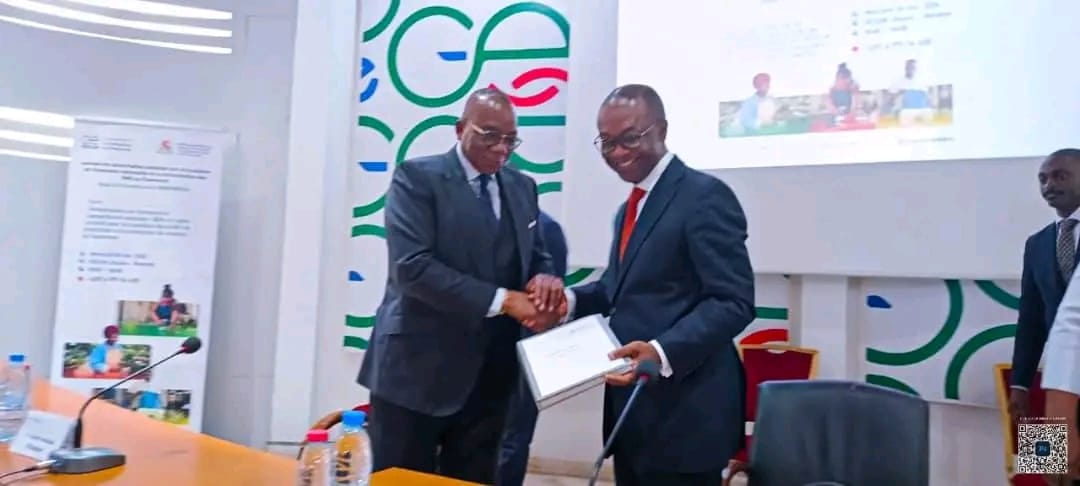
Cameroun MINPMEESA GECAM: Stratégie de Formalisation de l'Économie Informelle
Summary
- MINPMEESA and GECAM held a national consultation in Douala on November 4, 2026, to discuss formalizing Cameroun's informal economy.
- The meeting, led by Minister Achille Bassilekin III and GECAM President Célestin Tawamba, included diverse public and private sector stakeholders.
- Discussions focused on taxation, sector structuring, and financing to transition informal units into a more structured and productive economy.
- Recommendations from the consultation were documented in a joint communiqué signed by both leaders.
- These recommendations will form the basis for a comprehensive "feuille de route 2027-2030 Cameroun" aimed at guiding formalization efforts.
What Happened
The central question guiding the national consultation was how to transform formalization from a perceived obstacle into a tangible opportunity for those operating within the informal economy in Cameroun.
On November 4, 2026, a significant national consultation took place in Douala, bringing together the Ministry of Small and Medium-sized Enterprises, Social Economy, and Handicrafts (MINPMEESA) and the Grouping of Enterprises of Cameroon (GECAM). This pivotal meeting, held at GECAM's headquarters, aimed to address the critical challenge of integrating the informal sector into the formal economy. The gathering saw a broad representation of stakeholders, including a MINPMEESA delegation led by Minister Achille Bassilekin III, GECAM President Célestin Tawamba, various public administrations, decentralized territorial collectivities, financial institutions, and key private sector actors.
The primary objective of this collaborative effort was to devise concrete strategies for assisting informal production units in their transition towards a more structured, productive, competitive, and job-creating economic environment. Discussions were structured around three core areas: fiscal policy, the organization and development of specific economic sectors, and access to financing. These focused deliberations sought to identify practical solutions that would facilitate the formalization process.
Following intensive discussions, a series of recommendations were formulated and subsequently documented in a joint final communiqué. This important document was co-signed by Minister Bassilekin III and President Tawamba, signifying a unified commitment from both governmental and private sector leadership. These recommendations are poised to serve as the foundational principles for a forthcoming strategic plan.
Strategic Vision for Formalization
The central question guiding the national consultation was how to transform formalization from a perceived obstacle into a tangible opportunity for those operating within the informal economy in Cameroun. This initiative reflects a broader strategic vision to harness the potential of the informal sector as a significant driver for national economic growth. The MINPMEESA GECAM partnership underscores a shared understanding that a robust and inclusive economy requires the effective integration of all its components.
The concerted effort between MINPMEESA and GECAM aims to foster an environment where informal businesses can thrive by gaining access to the benefits of formalization, such as improved access to credit, market opportunities, and legal protection. This stratégie formalisation Cameroun is not merely about regulation but about creating pathways for sustainable development and enhanced competitiveness for countless small-scale entrepreneurs and producers. By focusing on key areas like taxation and financing, the initiative seeks to dismantle barriers that traditionally keep businesses in the shadows.
Ultimately, the goal is to cultivate an economy that is not only more organized but also more dynamic, capable of generating substantial employment opportunities across the nation. This proactive approach to the formalisation économie informelle Cameroun is designed to unlock new avenues for wealth creation and contribute significantly to the country's overall economic resilience and prosperity.
The Path Forward: 2027-2030 Roadmap
The recommendations outlined in the joint communiqué are not merely declarative statements; they are intended to be the bedrock for a comprehensive "feuille de route 2027-2030 Cameroun." This upcoming strategic plan will detail the actionable steps and policies necessary to implement the vision of transforming the informal sector. The development of this roadmap signifies a long-term commitment to systemic change and economic integration.
This future roadmap, spanning from 2027 to 2030, will be crucial for guiding the formalisation économie informelle Cameroun efforts. It is expected to introduce specific measures related to fiscal incentives, improved access to financial services, and structured support for various economic sectors. For legal and compliance professionals, this period will be particularly significant, as the roadmap will likely introduce new regulatory frameworks, tax obligations, and compliance requirements for businesses currently operating informally or those interacting with the informal sector.
The successful implementation of this stratégie formalisation Cameroun, driven by the MINPMEESA GECAM partenariat, holds the potential to reshape the economic landscape. Businesses and their legal advisors should proactively monitor the development and release of this 2027-2030 roadmap to understand its implications for operations, risk management, and strategic planning, ensuring compliance and leveraging new opportunities within a more formalized economy.
Practical Implications
Lawyers and compliance officers in Cameroon should closely monitor the upcoming 2027-2030 roadmap from MINPMEESA and GECAM. This initiative signals potential new regulations, tax implications, and compliance requirements for businesses operating in or interacting with the informal sector, necessitating proactive advice to clients on formalization strategies and risk mitigation.
Source
How does this affect you?
Get an AI analysis of this article grounded in your jurisdictions, practice areas, and any policy documents you've uploaded to Wansom.
Wansom is AI and can make mistakes.