
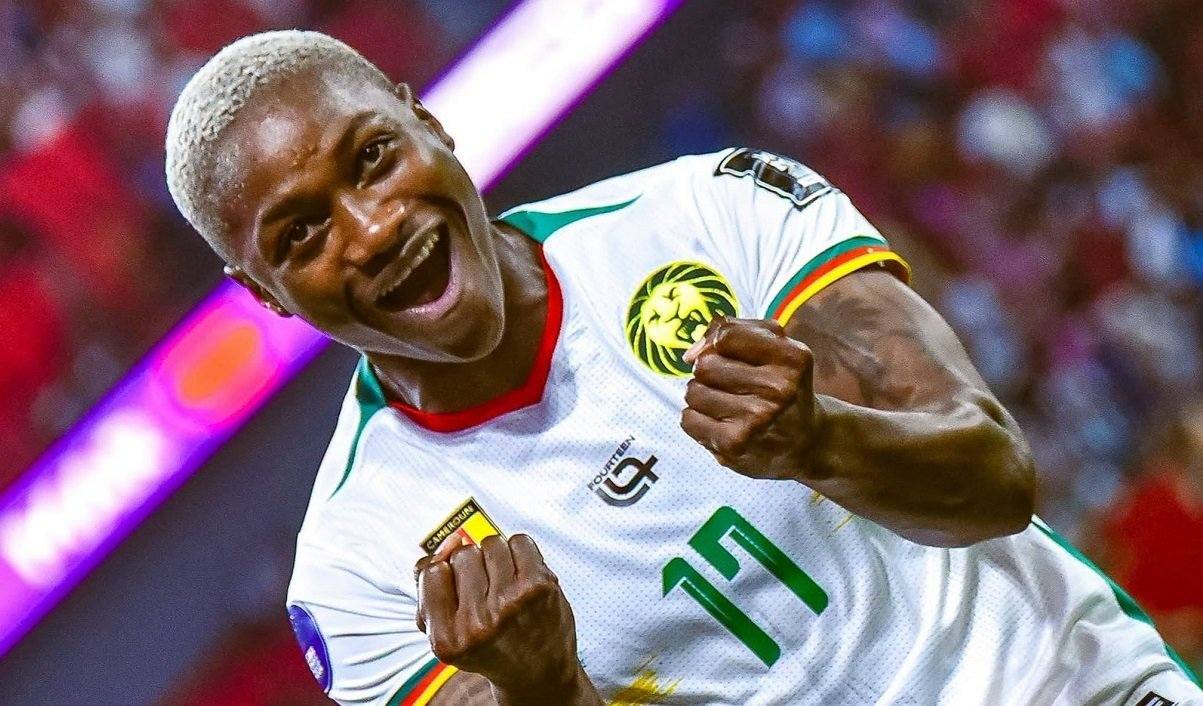
Cameroun Ministère Public: Inaction on Rose Bella Fuels Two-Tier Justice Concerns
Summary
- The Rose Bella case, involving a Cameroonian international athlete, highlights concerns about the state's legal enforcement and societal values.
- Critics question the Cameroun Ministère Public's perceived passivity, alleging a "two-tier justice system" that favors powerful individuals.
- Rose Bella faces potential dual proceedings: a sports-related inquiry from FECAFOOT and a criminal investigation from the Ministère Public.
- FECAFOOT is in a dilemma, balancing national laws with FIFA's non-discriminatory policies regarding sexual orientation.
- The situation echoes the past case of Gaëlle Enganamouit, where the Ministère Public also did not intervene, and she later returned to football leadership without criminal conviction.
The Rose Bella Controversy
The perceived selective enforcement of justice, where individuals in positions of power or their protégés appear to be exempt from the full force of the law, is becoming increasingly normalized.
The case involving Rose Bella, a distinguished Cameroonian international athlete and recent African champion, has ignited significant public debate, drawing sharp criticism regarding the state's capacity to uphold its own legal framework. Bella, who recently received a medal of merit directly from the Head of State, finds herself at the center of a controversy that extends beyond the realm of sports, raising fundamental questions about justice in Cameroun. Observers, such as Marc Chouamo, contend that the reactions to this affair underscore a profound systemic failure, suggesting a gradual erosion of core Cameroonian values.
At the heart of the discussion is the perceived inaction of the Cameroun Ministère Public, or Public Prosecutor's Office. Critics are questioning why this crucial legal body appears passive, seemingly effective only when dealing with ordinary citizens, yet hesitant to act against individuals connected to power or their associates. This perceived disparity fuels accusations of a "two-tier justice system" operating within the nation, where the application of law is inconsistent. Given her active status, Bella is expected to face at least two distinct legal processes: one initiated by the Ethics Commission of the Cameroonian Football Federation (FECAFOOT) on sporting grounds, and another, criminal procedure, from the Ministère Public.
The Public Prosecutor's Role and Sporting Governance
The fundamental role of the Cameroun Ministère Public is to guarantee and reinforce the laws enacted by the state, often through self-seizure in cases of public interest. However, the current situation prompts a critical examination of whether general prosecutors are fulfilling this mandate or merely acting as passive observers. The expectation is that they should be the primary defenders of Cameroonian law, not just sending a message, but actively ensuring legal compliance across all societal strata.
This controversy places FECAFOOT, the national football governing body affiliated with FIFA, in a delicate position. While FIFA's regulations do not prohibit players from having sexual orientations that differ from their sex, FECAFOOT operates within a sovereign state that possesses its own distinct legal framework. This creates a significant dilemma for the federation and its president, Samuel Eto'o, who has previously navigated similar sensitive issues. The handling of this case is under intense scrutiny, particularly as the technical staff prepares for upcoming Olympic Games qualifiers, with public sentiment leaning towards pessimism regarding the country's current governance.
A Troubling Precedent: The Gaëlle Enganamouit Case
The current Rose Bella situation draws parallels to a similar incident involving Gaëlle Enganamouit approximately five years ago. Enganamouit, Cameroon's sole female African Ballon d'Or recipient, faced public scrutiny following a controversial video. At the time, she had already retired from active play due to multiple injuries, meaning she was not at risk of being excluded from the national team based on her sporting status. Despite the public nature of the controversy, the Cameroun Ministère Public did not initiate any proceedings.
Instead, Enganamouit was reportedly "exfiltrated" from Cameroun, effectively disappearing from public view until the initial outcry subsided. During this period, both FIFA and CAF continued to invite her to various events as a football legend, as her actions were not considered a breach under their respective regulations. Upon her eventual return to Cameroun, she was gradually reintegrated into the leadership structures of Cameroonian football. Crucially, without any criminal conviction, her subsequent candidacy for a position as a member of the COMEX (Executive Committee) proceeded without opposition, illustrating a perceived lack of accountability within the legal system for certain individuals.
Broader Implications for Cameroonian Justice
The recurring nature of such incidents, from the past case of Gaëlle Enganamouit to the present Rose Bella controversy, suggests a deepening systemic issue within Cameroun. Critics argue that these cases are not isolated events but rather symptoms of a broader failure by the state to consistently apply and protect its own laws. The perceived selective enforcement of justice, where individuals in positions of power or their protégés appear to be exempt from the full force of the law, is becoming increasingly normalized.
This pattern, as articulated by commentators like Marc Chouamo, signifies a "slow death of values" intrinsic to Cameroun. The lack of decisive action from the Cameroun Ministère Public in high-profile cases, coupled with the apparent ease with which individuals can avoid criminal consequences, fosters an environment where a "two-tier justice system" is not just an accusation but a perceived norm. The ongoing situation underscores a critical challenge to the rule of law and the integrity of the nation's judicial institutions.
Source
How does this affect you?
Get an AI analysis of this article grounded in your jurisdictions, practice areas, and any policy documents you've uploaded to Wansom.
Finish Reading the Full Story and the Expert Analysis.
Wansom is AI and can make mistakes.