
Cameroun: Le Syndrome des Enquêtes Ouvertes Non Abouties
Summary
- Cameroon has a nine-year history of investigations being announced but rarely reaching conclusive judicial outcomes.
- The Association pour la défense des droits des opprimés (ADDO) appealed to President Paul Biya on September 14, 2026, regarding the disappearance of Hadja Haoua, a militant known for criticizing high officials.
- Allegations suggest Hadja Haoua's body was thrown from a helicopter, though the ADDO questions the testimony's credibility.
- Bishop Jean-Marie Benoît Bala was found dead in the Sanaga River on May 31, 2017, with conflicting theories of suicide (official) versus assassination (family/Church).
- Despite an announced investigation into Bishop Bala's death, nine years later, no judicial truth has been established.
- The Martinez Zogo judicial investigation has concluded, and a trial is currently underway.
Cameroon's Unresolved Investigations Pattern
For the past nine years, a recurring phrase has echoed across Cameroon: "An investigation has been opened."
For the past nine years, a recurring phrase has echoed across Cameroon: "An investigation has been opened." This declaration often precedes a period of public anticipation, only to be followed by a lack of conclusive judicial outcomes, a phenomenon some observers have dubbed the "syndrome of the open investigation that never concludes." This pattern generates significant public anxiety, particularly in high-profile cases that capture national attention.
The public's frustration is palpable, as evidenced by the ongoing concern surrounding cases such as the disappearance of Hadja Haoua, the death of Bishop Jean-Marie Benoît Bala, and the Martinez Zogo case, where the judicial investigation has concluded and a trial is currently underway. These instances collectively highlight a systemic challenge within the Cameroonian judicial landscape, where initial promises of thorough examination frequently fail to translate into definitive legal resolutions. The perceived lack of accountability in such matters contributes to a broader sense of justice inachevée Cameroun, fueling public skepticism regarding the efficacy of the legal system.
The Disappearance of Hadja Haoua
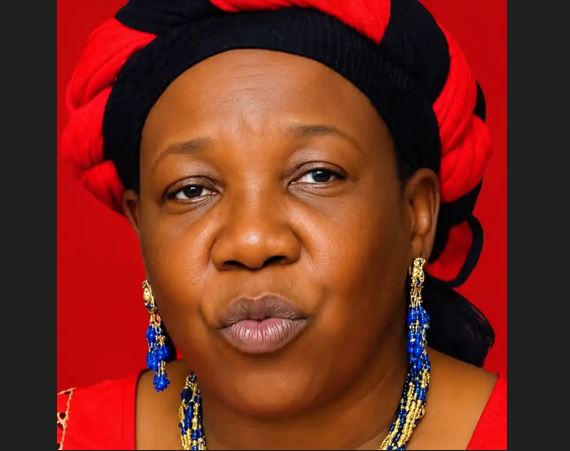
The case of Hadja Haoua exemplifies this troubling trend. On September 14, 2026, the Association pour la défense des droits des opprimés (ADDO), based in Garoua, formally appealed to President Paul Biya regarding her disappearance. Hadja Haoua, known as a militant for the Rassemblement démocratiques du peuple camerounais (RDPC) in Yaoundé, gained prominence through her viral "Mondovision" videos, in which she openly criticized high-ranking officials. However, since her disappearance, there has been no trace of her.
Adding to the mystery, the ADDO has cited writer Calixthe Beyala, who reportedly claimed that Hadja Haoua's body was discarded from a helicopter over the Bertoua forest. While this testimony is described as troubling and recurrent, the ADDO itself questions its veracity, asking what credibility can be assigned to such an assertion. The organization draws a chilling parallel between this unresolved situation and other high-profile cases that have left the Cameroonian public deeply unsettled.
The Enigma of Bishop Bala's Death
Another deeply unsettling case is that of Bishop Jean-Marie Benoît Bala, the Bishop of Bafia, whose body was discovered in the Sanaga River on May 31, 2017. Found in the water, a purported suicide note was located in his car, though his relatives deemed its authenticity questionable. Officially, the cause of death was attributed to drowning or suicide. However, both his family and the Church maintain that his death was an assassination.
Following the discovery, an investigation was announced, but this was subsequently met with what has been described as "radio silence." Nine years later, no judicial truth has emerged regarding the circumstances of Bishop Bala's death. The source notes that "Monseigneur s'est retrouvé au fond du lac à l'instar d'un poisson d'eau douce, prenant prétendument soin d'orienter sa dernière demeu".
Broader Implications for Judicial Accountability
The recurring pattern of Cameroun enquêtes ouvertes non abouties, as seen in the cases of Hadja Haoua and Bishop Bala, underscores a significant challenge to judicial accountability and public trust in Cameroon. When investigations into serious matters, particularly those involving prominent figures or allegations of foul play, fail to reach a definitive conclusion, it fosters a perception of impunité judiciaire Cameroun. This lack of resolution leaves families and the wider public without answers, perpetuating a cycle of doubt and dissatisfaction with the legal process.
The absence of judicial truth in these high-profile instances creates a chilling effect, suggesting that even grave injustices may remain unaddressed. This systemic issue not only undermines confidence in the rule of law but also raises questions about the capacity of the justice system to deliver equitable outcomes for all citizens. The continued public outcry and the persistent questioning by organizations like the ADDO highlight the profound societal impact of these unresolved inquiries.
Practical Implications
This article highlights systemic judicial inefficiencies in Cameroon, particularly the risk of high-profile investigations remaining unresolved. Lawyers and compliance officers must factor this into risk assessments and client advice, especially in cases with political or public interest dimensions, as it impacts expectations for judicial resolution and accountability.
Source
How does this affect you?
Get an AI analysis of this article grounded in your jurisdictions, practice areas, and any policy documents you've uploaded to Wansom.
Finish Reading the Full Story and the Expert Analysis.
Get the latest legal & regulatory intelligence in Cameroon
Wansom is AI and can make mistakes.