
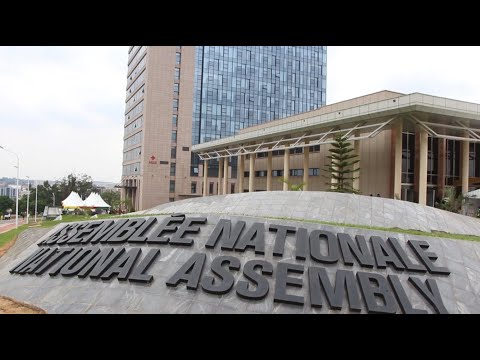
Cameroun Assemblée Nationale: 150 Agents Fictifs Cost 10 Billion CFA
Summary
- An audit conducted in April 2026 at the Cameroon National Assembly revealed 150 fictitious agents on the payroll.
- These non-existent employees, with 97 linked to the former President's cabinet and 53 to the Secretary General's office, led to an estimated loss of 10 billion CFA francs.
- Secretary General André-Noël Essian announced a new physical census of personnel, scheduled from September 10 to 23, 2026, to verify staff and update administrative records.
- The new President, Théodore Datouo, initiated the counting operation that exposed the fictitious agents as part of a broader "sanitation" effort launched in April 2026.
Discovery of Fictitious Agents
The financial implications of this extensive fraud are considerable, with an estimated loss of approximately 10 billion CFA francs attributed to these unauthorized salary payments.
The National Assembly in Cameroon is undertaking a comprehensive physical census of its personnel, scheduled to run from September 10 to September 23, 2026. This significant exercise, announced by Secretary General André-Noël Essian, aims to accurately ascertain staff numbers and update administrative records. The move follows a startling revelation earlier in the year concerning widespread payroll irregularities within the institution.
An audit conducted in April 2026 brought to light the existence of 150 fictitious agents on the National Assembly's payroll. These individuals were reportedly receiving salaries despite not performing any work, leading to a substantial financial drain. The investigation pinpointed that 97 of these non-existent employees were associated with the cabinet of the former President, Cavaye Yeguie Djibril, while the remaining 53 were linked to the Secretary General's office.
The financial implications of this extensive fraud are considerable, with an estimated loss of approximately 10 billion CFA francs attributed to these unauthorized salary payments. While the identities of those who ultimately benefited from these funds remain undisclosed, the discovery underscores a critical vulnerability in the public sector's financial oversight mechanisms. This situation highlights the urgent need for robust internal controls to prevent such instances of fraud.
Strategic Response and Institutional Overhaul
The current physical census represents a crucial step in a broader "sanitation" initiative that commenced in April 2026, coinciding with a leadership transition at the National Assembly. This comprehensive effort seeks to restore integrity and transparency to the institution's human resources management. Secretary General André-Noël Essian emphasized that the census is designed to provide a clearer understanding of the actual workforce, update all relevant administrative data, and establish a reliable personnel file that accurately reflects the institution's human resources.
The impetus for uncovering these payroll discrepancies came from the new President of the National Assembly, Théodore Datouo. Upon assuming his role, President Datouo initiated an operation to count agents listed in the institution's records. This proactive measure directly led to the identification of the 150 fictitious employees, exposing a significant instance of what can be termed as "fraude salariale secteur public Cameroun." The ongoing recensement personnel Assemblée nationale Cameroun is therefore not merely a routine administrative task but a strategic response to rectify past malpractices and prevent future occurrences.
Implications for Public Sector Integrity
The discovery of "Cameroun Assemblée nationale agents fictifs" and the subsequent efforts to address this issue carry profound implications for public sector entities across Cameroon. This incident signals an intensified focus on payroll integrity and the necessity of stringent internal controls within government institutions. The estimated loss of 10 billion CFA francs due to these non-existent employees highlights the potential scale of financial mismanagement that can occur without adequate oversight.
This situation serves as a stark reminder for lawyers advising public sector entities or involved in anti-corruption efforts in Cameroon. It indicates a heightened scrutiny of financial management practices and a potential for increased investigations into similar irregularities across various government departments. The commitment to a thorough physical census and the stated goal of creating a reliable personnel file demonstrate a clear intent to combat such fraud, setting a precedent for improved accountability within the public administration.
Practical Implications
Lawyers advising public sector entities or involved in anti-corruption efforts in Cameroon should note the intensified focus on payroll integrity and internal controls within government institutions, as evidenced by this large-scale discovery of fictitious employees. This signals increased scrutiny and potential for investigations into financial management practices across the public sector.
Source
How does this affect you?
Get an AI analysis of this article grounded in your jurisdictions, practice areas, and any policy documents you've uploaded to Wansom.
Finish Reading the Full Story and the Expert Analysis.
Get the latest legal & regulatory intelligence in Cameroon
Wansom is AI and can make mistakes.