
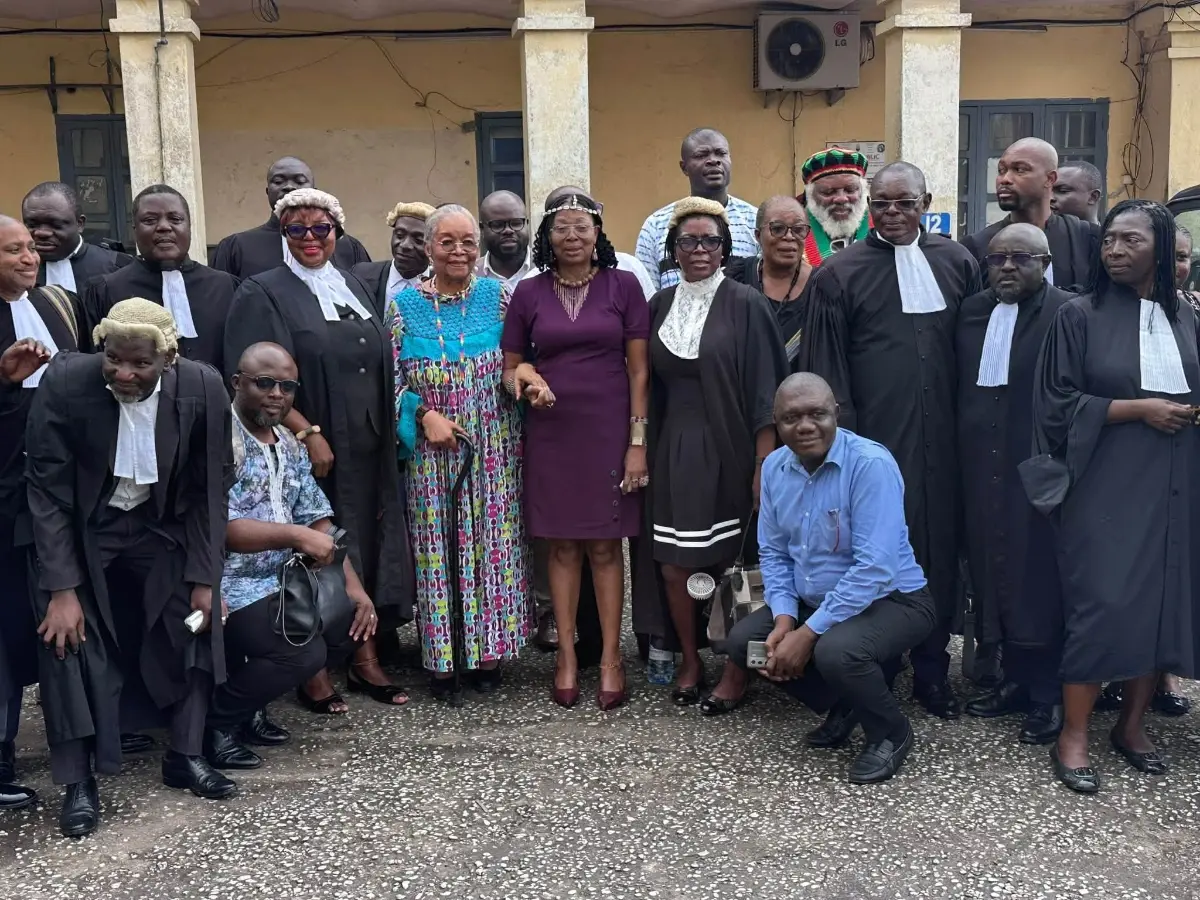
Cameroun: Alice Nkom Bris De Scellés Verdict — 1-Year Suspended Sentence
Summary
- On September 21, 2026, the Tribunal de première instance de Douala-Bonanjo delivered its verdict in the case against REDHAC leadership.
- Me Alice Nkom was found guilty of 'bris de scellés' and received a one-year suspended sentence, a 500,000 FCFA fine, and 62,100 FCFA in costs.
- Both Me Alice Nkom and Maximilienne Ngo Mbe were acquitted of 'rébellion en coaction' due to an uncharacterized offense.
- Maximilienne Ngo Mbe was fully acquitted of all charges, and proceedings against REDHAC as a legal entity were annulled.
- Me Nkom has 10 days to appeal her conviction for 'bris de scellés'.
Verdict Issued in High-Profile Cameroonian Case
Maximilienne Ngo Mbe was fully acquitted of all accusations.
A significant legal verdict was handed down by the Tribunal de première instance de Douala-Bonanjo on Monday, September 21, 2026, concluding the case involving the Public Ministry and the State of Cameroun against the Network of Human Rights Defenders in Central Africa (REDHAC) and its leadership. The court, sitting in correctional matters, delivered its decision concerning prominent human rights lawyer Me Alice Nkom and REDHAC Executive Director Maximilienne Ngo Mbe.
Me Alice Nkom, who serves as the President of REDHAC's Board of Directors, received a conviction for the charge of 'bris de scellés' (breaking of seals). Conversely, Maximilienne Ngo Mbe was fully acquitted of all accusations. Furthermore, the legal proceedings initiated against REDHAC as a corporate entity were entirely annulled, marking a notable outcome for the organization.
Specific Charges and Sentences Detailed
For the 'bris de scellés' offense, Me Alice Nkom was found guilty and sentenced to one year of imprisonment, which was suspended for a period of five years. This means the sentence will only be enforced if she commits another infraction within that five-year timeframe. Additionally, the court ordered her to pay a fine of 500,000 FCFA and court costs amounting to 62,100 FCFA. Due to her age, Me Nkom was exempted from 'contrainte par corps,' a form of imprisonment for debt.
Both Me Alice Nkom and Maximilienne Ngo Mbe faced a separate accusation of 'rébellion en coaction' (rebellion in co-action). However, the court declared both individuals not guilty on this count, granting them acquittal because the alleged offense was deemed uncharacterized. Maximilienne Ngo Mbe's full acquittal underscores the lack of evidence against her across all charges. Me Nkom retains the right to appeal her conviction within 10 days of the judgment.
Legal Context and Case Origins
The case, which saw the State of Cameroun as a key plaintiff, was heard before the Tribunal de première instance de Douala-Bonanjo. The judicial proceedings, which culminated in the September 21, 2026, verdict, had their origins dating back to December 9, 2024. The court's decision to annul the charges against REDHAC as a legal entity is a critical aspect, effectively removing the organizational liability that had been pursued.
This ruling from the Douala court provides a definitive resolution to a case that has drawn attention to the legal challenges faced by human rights defenders in the region. The specific outcomes for Me Alice Nkom, including her suspended sentence for 'bris de scellés,' and the complete exoneration of Maximilienne Ngo Mbe, highlight the nuanced nature of judicial processes in such matters.
Implications for Human Rights Advocacy
The verdict carries significant implications for the landscape of human rights advocacy in Cameroun and the broader Central African region. The full acquittal of Maximilienne Ngo Mbe, the executive director of the Réseau des défenseurs des droits humains en Afrique centrale, offers a measure of relief for the organization's operational leadership. Similarly, the annulment of all proceedings against REDHAC as a legal entity ensures the organization can continue its vital work without the immediate threat of corporate prosecution.
While Me Alice Nkom's conviction for 'bris de scellés' and her suspended sentence represent a legal setback for the veteran human rights lawyer, her acquittal on the more serious charge of 'rébellion en coaction' and her exemption from imprisonment for debt due to age temper the overall outcome. The ability for Me Nkom to appeal the verdict within a specified timeframe also leaves open avenues for further legal recourse, underscoring the ongoing challenges and legal battles faced by those defending human rights in the region.
Practical Implications
Lawyers advising human rights organizations or activists in Cameroon should note the specific charges and outcomes in this case, particularly the conviction for 'bris de scellés' against Me Alice Nkom and the full acquittal of Maximilienne Ngo Mbe for lack of evidence on rebellion, which could inform risk assessments and defense strategies regarding similar accusations. The annulment of proceedings against REDHAC as a legal entity is also a significant point for organizational liability.
Source
Source: Original reporting via {source}
How does this affect you?
Get an AI analysis of this article grounded in your jurisdictions, practice areas, and any policy documents you've uploaded to Wansom.
Finish Reading the Full Story and the Expert Analysis.
Get the latest legal & regulatory intelligence in Cameroon
Wansom is AI and can make mistakes.