
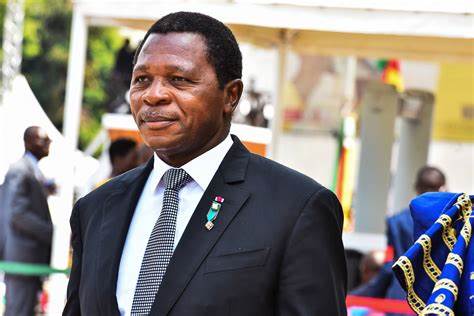
Cameroon: Minister Nji Pushes Vice President Post Creation, Dismisses Critics
Summary
- Cameroon's Minister of Territorial Administration, Paul Atanga Nji, published an opinion piece on September 7 defending the proposed creation of a Vice President post.
- Nji stated that President Paul Biya is expected to present a constitutional amendment bill to Parliament in March 2026, following a declaration made during his anticipated November 6, 2025 oath-taking ceremony.
- The core of the proposed bill is the establishment of the Vice President of the Republic position, a significant change to Cameroon's executive structure.
- Minister Nji criticized opposition leaders, media, and NGOs for fueling debates and attempting to discredit this 'major innovation.'
- Rumors suggest a politician has petitioned the African Union to oppose the Vice President post creation, highlighting the controversy surrounding the proposal.
Minister Defends Proposed Vice President Post
The central provision of this proposed Cameroon constitutional amendment Vice President bill is the establishment of the Vice President of the Republic position.
Cameroon's Minister of Territorial Administration, Paul Atanga Nji, has publicly addressed and dismissed controversies surrounding the proposed creation of a Vice President post within the country's executive structure. In an opinion piece published on September 7 in The Guardian Post, Minister Nji called for an end to what he termed a 'witch hunt concerning the Vice-President post,' signaling the government's firm stance on the constitutional reform.
Nji's intervention comes amidst growing debate and opposition regarding the significant change to Cameroon's governance framework. His article aims to silence critics and justify the initiative, which he frames as a necessary evolution for the state's operational efficiency. The minister's strong defense underscores the political sensitivity surrounding the Cameroon Vice President post creation.
Presidential Initiative and Legislative Path
Minister Nji's defense directly references President Paul Biya's long-term vision for institutional reform. According to Nji, President Biya, during his anticipated oath-taking ceremony on November 6, 2025, declared the need for parliamentary reforms to enhance state functionality and adapt institutions to contemporary demands. Nji emphasized that President Biya consistently acts on his pronouncements, asserting that the President 'says what he does and does what he says.'
Following this declared commitment, President Biya is expected to present a bill to Parliament in March 2026, aiming to amend the Constitution. The central provision of this proposed Cameroon constitutional amendment Vice President bill is the establishment of the Vice President of the Republic position. This legislative move, championed by the Paul Biya Vice President proposal, represents a fundamental shift in the nation's executive structure.
Opposition and Emerging Controversies
Despite the government's push for the new position, Minister Nji highlighted significant opposition to what he described as a 'major innovation.' He criticized certain opposition leaders, along with segments of the media and non-governmental organizations, for allegedly fueling 'strange debates' designed to discredit the proposed reform. Nji suggested these actors are operating under external influence, implying a coordinated effort to undermine the initiative.
Further illustrating the contentious nature of the proposal, Nji mentioned a rumor circulating about a politician, whom he described as a 'victim of his own misdeeds,' having petitioned the African Union (AU) to oppose the creation of the Vice President post. The minister also noted discussions among some regarding the introduction of a 'presidential ticket,' indicating broader speculation about the implications of the Cameroon executive structure changes.
Implications for Governance
The proposed creation of a Vice President post in Cameroon carries substantial implications for the nation's governance and political landscape. This constitutional amendment, if passed, would fundamentally alter the executive branch, potentially impacting presidential succession and the distribution of power. The ongoing public debate, as addressed by Minister Nji, underscores the deep divisions and political maneuvering surrounding such a significant reform.
Monitoring the legislative process for this constitutional amendment will be crucial for understanding its long-term effects on Cameroon's political stability and future policy direction. The government's determination to proceed, despite vocal opposition, signals a pivotal moment in the country's institutional development, with the Paul Atanga Nji Cameroon VP defense serving as an early indicator of the administration's resolve.
Practical Implications
This development signals a significant constitutional reform in Cameroon, impacting the executive branch's structure and presidential succession. Lawyers and compliance officers should monitor the legislative process for the constitutional amendment to understand its implications for governance, political stability, and potential future policy shifts.
Source
How does this affect you?
Get an AI analysis of this article grounded in your jurisdictions, practice areas, and any policy documents you've uploaded to Wansom.
Finish Reading the Full Story and the Expert Analysis.
Wansom is AI and can make mistakes.