
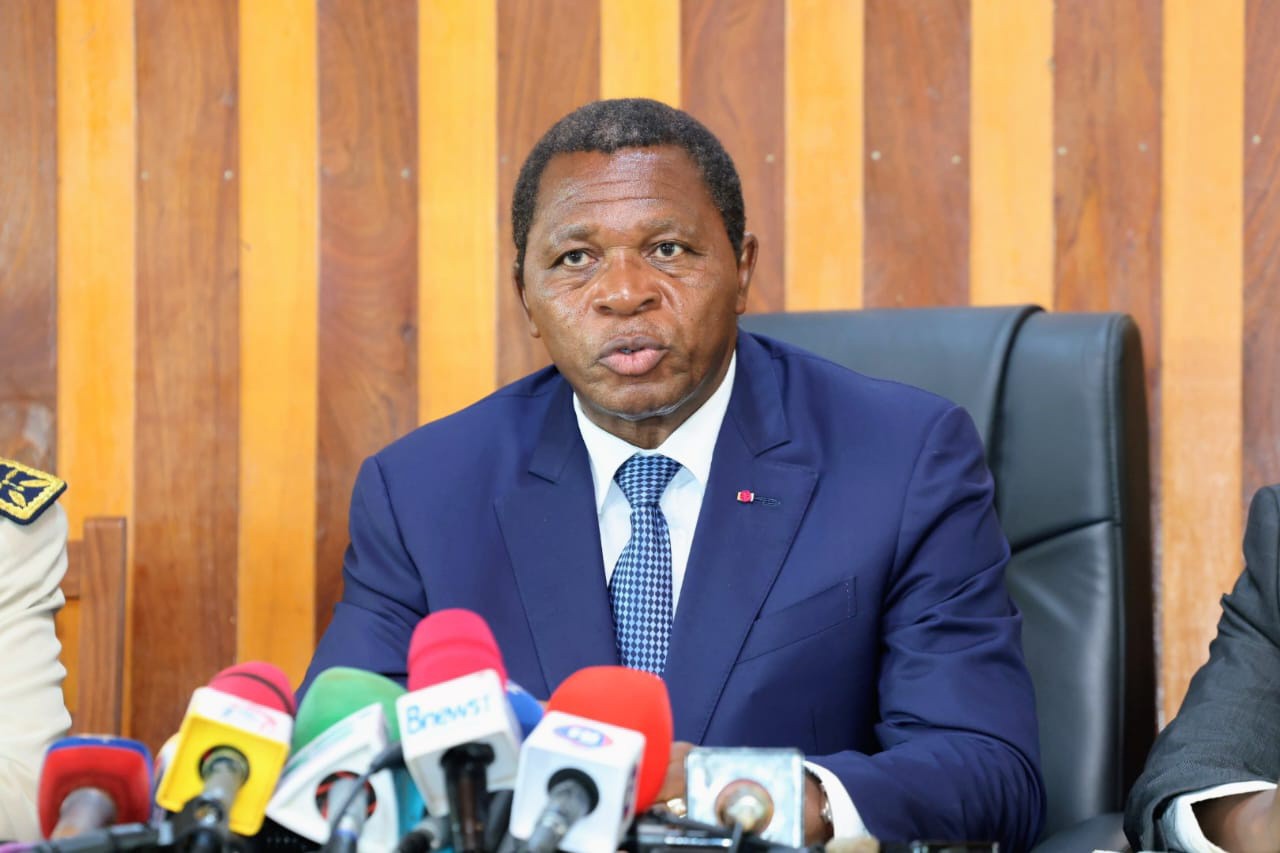
Atanga Nji: Chasse Aux Sorcières Vice-Président Talk Dismissed In Cameroon
Summary
- Minister of Territorial Administration Atanga Nji published an op-ed on September 7, 2026, in The Guardian Post, defending President Paul Biya's discretionary power over appointments and dismissals.
- The Minister dismissed discussions about a Vice-Presidential post as a "witch hunt," asserting the President's absolute authority to appoint or remove civil and military officials at any time.
- Atanga Nji's commentary reinforces the official stance that presidential decisions on high-level roles are unchallengeable and serve national interests.
- He cited historical instances, including the 1990 multi-party system introduction and his past defenses against calls for a Sovereign National Conference and claims of Anglophone marginalization, to underscore the President's consistent leadership.
- The Minister's article frames criticism of the President's initiatives as unfounded and originating from "failing opponents" or elements working for "occult forces."
Recent Commentary on Executive Authority
The Minister underscored that the Head of State's inherent prerogatives and discretionary authority empower him to appoint individuals to both civilian and military roles and to relieve them of their duties at any given moment.
The Minister of Territorial Administration, Atanga Nji, recently published an opinion piece on Monday, September 7, 2026, in The Guardian Post, directly addressing what he termed a "witch hunt" concerning the potential creation or discussion around a Vice-Presidential post in Cameroon. In his commentary, the Minister firmly asserted that the Head of State, His Excellency Paul Biya, possesses inherent prerogatives and discretionary power, allowing him to appoint individuals to both civilian and military positions and to remove them from their functions at any time. This statement, aimed at dispelling what he views as unfounded speculation, highlights the President's ultimate authority over high-level appointments.
Minister Atanga Nji's article, titled "Let's stop this witch hunt around the vice-presidency!", also contained strong affirmations of loyalty and support for President Biya. He declared that President Biya is unequivocally correct in his exercise of power, adding that anyone claiming to love Cameroon more than the Head of State is a charlatan. This perspective frames any criticism of the President's initiatives as baseless, often originating from "failing opponents" or elements of civil society allegedly working for "occult forces."
Presidential Discretionary Powers in Cameroon
The core of Minister Atanga Nji's argument rests on the extensive discretionary powers vested in the Cameroonian presidency, particularly concerning the appointment and dismissal of public officials. This interpretation of executive power Cameroon emphasizes that the President's authority in personnel matters is absolute and not subject to external challenge or debate. The Minister's intervention serves to reinforce the official position that the President's decisions in this domain are beyond reproach, aligning with the broad scope of Cameroon presidential appointment authority.
This stance has significant implications for understanding the structure of governance and the nature of high-level public service in Cameroon. The Minister's remarks underscore that the Head of State's ability to name or remove officials, including those who might occupy a future poste Vice-Président Cameroun, is an unassailable aspect of his constitutional role. This framework suggests that any public discourse questioning such appointments or the President's prerogative is considered an attempt to undermine state authority.
Historical Context of Presidential Prerogative
The Ministre Administration Territoriale Atanga Nji's recent commentary is not an isolated instance but rather part of a long-standing pattern of public defense of presidential actions and policies. For a quarter-century, the Minister has been a regular contributor to The Guardian Post, offering reflections on significant political matters. He consistently publishes these pieces whenever President Biya's commendable initiatives face what he deems "unfounded criticism." This historical engagement demonstrates a consistent effort to shape public opinion and legitimize the President's decisions.
The Minister cited several historical examples to illustrate President Biya's visionary leadership and commitment to national interests. In 1990, anticipating what was referred to as the "East wind," President Biya submitted amendments to public liberties laws to the National Assembly, leading to the end of the single-party system and the establishment of multi-partyism. This move also saw the abrogation of exceptional laws in force since 1960 and the elimination of mandatory prior censorship for newspapers by the Minister of Territorial Administration. Following these reforms, the MINAT authorized numerous political parties and non-governmental organizations.
Further, Minister Atanga Nji recalled his own interventions during periods of political tension. In 1991, he published an article in Cameroon Tribune on February 8, condemning new political parties for launching an "anti-republican" campaign demanding a Sovereign National Conference before the 1992 elections. He argued against such a conference, labeling it a "dangerous masquerade" and a "vast intellectual fraud" that provocatively challenged state authority. Paul Biya discretionary powers Cameroon were evident when the President later echoed this sentiment in a June 27, 1991, speech to the National Assembly, stating that the Sovereign National Conference was "without object for Cameroon." Similarly, between 1993 and 2003, when the "All Anglophone Conference" emerged, citing alleged marginalization, the Minister authored two articles in Cameroon Tribune (October 1, 1993, and October 14, 2003). In these, he asserted that no Anglophone problem existed and that President Biya had provided preferential treatment to Anglophones since 1982, concluding that being Cameroonian supersedes linguistic identity.
Implications for Governance and Public Discourse
The Minister of Territorial Administration Atanga Nji's recent op-ed, particularly his strong stance against the "Atanga Nji chasse aux sorcières Vice-Président" narrative, carries significant weight for understanding governance in Cameroon. His intervention reinforces the notion that the President's decisions, especially regarding the structure of the executive and the appointment of high-ranking officials, are definitive. This perspective aims to curb public debate and criticism surrounding such matters, asserting the President's unchallengeable authority.
By framing discussions about a potential Vice-Presidential post as a "witch hunt" and linking criticism to "occult forces," the Minister seeks to delegitimize dissenting voices. This approach underscores a political environment where the executive's broad authority, particularly Paul Biya discretionary powers Cameroon, is consistently affirmed and defended by key government figures. The article effectively communicates an official position that views any challenge to the President's appointment authority, including for the poste Vice-Président Cameroun, as an attack on national stability and the Head of State's vision.
Practical Implications
This article provides insight into the Cameroonian government's interpretation of presidential discretionary powers regarding high-level appointments and dismissals, specifically for the Vice-Presidential post. Lawyers and compliance officers should be aware of this official stance as it underscores the executive's broad authority and the political context influencing public service roles in Cameroon.
Source
How does this affect you?
Get an AI analysis of this article grounded in your jurisdictions, practice areas, and any policy documents you've uploaded to Wansom.
Finish Reading the Full Story and the Expert Analysis.
Wansom is AI and can make mistakes.