
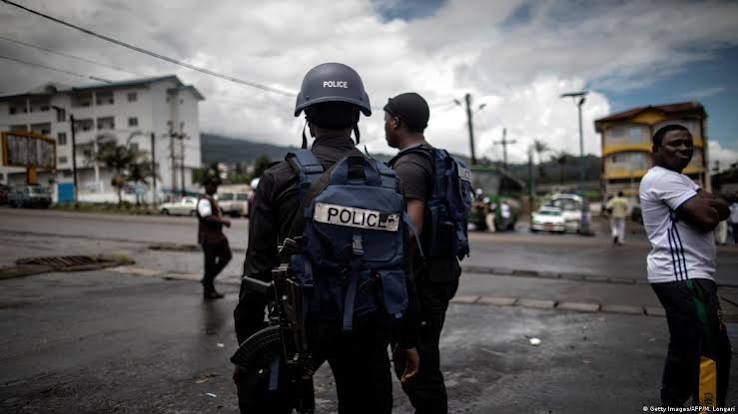
Cameroon: UN Report Cites 12,000 Police Deployment, Humanitarian Law Training
The State of Cameroon, during its periodic review by the United Nations Human Rights Committee in Geneva on October 23 and 24, 2026, declared that it had retrained and deployed 12,000 police officers to security crisis zones between 2016 and 2026 as part of its anti-terrorism efforts.
This declaration by the Cameroonian delegation also detailed that between 2024 and 2025, at least 250 national gendarmerie personnel received seven training sessions on humanitarian law, organized in collaboration with the International Committee of the Red Cross. These statements were made in response to concerns raised by the Committee, particularly regarding measures taken in the fight against terrorism and the broad, ambiguous definition of terrorist acts. Cameroon asserted that its security forces receive initial training designed to prevent human rights violations during anti-terrorism operations, aiming to assure the Committee of its commitment to international standards.
This development is legally significant as it highlights Cameroon's official position and stated commitment to human rights compliance and international humanitarian law in the context of its counter-terrorism operations, particularly under international scrutiny. For legal practitioners, it underscores the ongoing international pressure on states to balance national security imperatives with fundamental human rights obligations, especially concerning the conduct of security forces in conflict-affected regions. The government's explicit mention of training and adherence to international norms, even if aspirational, provides a basis for future accountability and advocacy efforts by human rights organizations and legal counsel.
The core legal framework for this discussion is the International Covenant on Civil and Political Rights (ICCPR), which the UN Human Rights Committee monitors, and to which Cameroon is a signatory. The dialogue also implicates international humanitarian law (IHL), particularly concerning the conduct of hostilities and the treatment of individuals in armed conflict, as evidenced by the training sessions on humanitarian law and the involvement of the International Committee of the Red Cross (ICRC). Domestically, Cameroon's anti-terrorism legislation and the operational guidelines for its police and gendarmerie forces are the relevant national legal instruments, though the excerpt does not detail their specific provisions. Key parties involved include the State of Cameroon, the United Nations Human Rights Committee, and the International Committee of the Red Cross.
Attorneys advising clients operating in or affected by security operations in Cameroon should closely monitor future reports and recommendations from the UN Human Rights Committee and other international bodies to assess the actual implementation of these stated commitments. Businesses with operations in crisis-affected regions should also consider the human rights due diligence implications of their activities and supply chains, given the heightened international scrutiny on state actors and the potential for human rights violations. The persistent concern regarding the broad and ambiguous definition of terrorism in Cameroon's legal framework remains a critical area for legal analysis and potential challenge, requiring careful consideration for any related charges or legal proceedings.
How does this affect you?
Get an AI analysis of this article grounded in your jurisdictions, practice areas, and any policy documents you've uploaded to Wansom.
Finish Reading the Full Story and the Expert Analysis.
Wansom is AI and can make mistakes.