
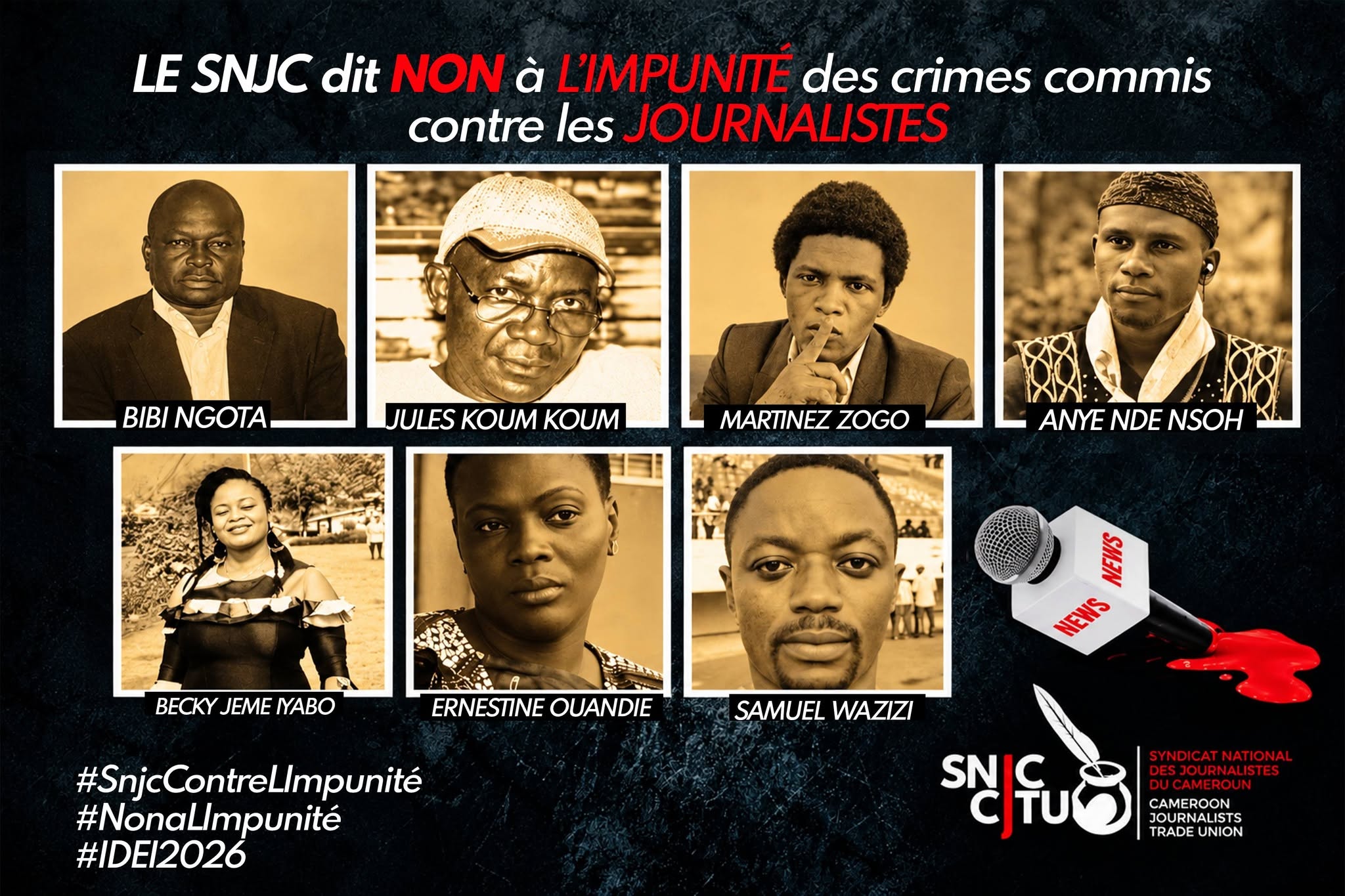
SNJC: Cameroon Journalist Impunity Condemned Amid Killings
Summary
- The Syndicat national des journalistes du Cameroun (SNJC) condemns the assassinations of journalists and media professionals in Cameroon.
- The SNJC calls for an end to the prevailing impunity surrounding these crimes against journalists.
- Journalism in Cameroon exposes professionals to various dangers, including physical harm and the loss of life.
- Several journalists, including Martinez Zogo, have died in recent years under unclear circumstances; legal proceedings are ongoing in Zogo's murder case, but full accountability is still awaited.
- Globally, 15 journalists were killed in 2026 while performing their professional duties.
Persistent Dangers for Cameroonian Journalists
No editorial disagreement, no critical commentary, and no journalistic investigation can ever serve as a justification for violence or repression against media workers.
The Syndicat national des journalistes du Cameroun (SNJC) has voiced profound indignation regarding the assassinations of journalists and media professionals in the country over recent years. The organization has specifically called upon various stakeholders to intervene and halt the pervasive culture of impunity that continues to plague these cases. Practicing journalism, along with other related professions, inherently exposes individuals to a multitude of hazards within Cameroon's borders, creating an environment of heightened risk for those seeking to report the news.
These dangers extend beyond fleeting threats, encompassing persistent intimidation, physical and moral assaults, and numerous other forms of suffering that undermine their ability to work freely. Tragically, some professionals ultimately pay the ultimate price, losing their lives in the line of duty. The SNJC's concerns are underscored by a series of unresolved deaths, including those of Bibi Ngota, Jules Koum Koum, Samuel Wazizi, Emestines Quandie, Anye Nde Nsoh, Becky Jeme Iyabo, and notably, Martinez Zogo. The specific circumstances surrounding many of these fatalities remain unclear. While legal proceedings are ongoing to establish accountability, as seen in the active trial concerning Martinez Zogo's murder, families and colleagues still await full closure.
The Unaddressed Issue of Impunity
The SNJC unequivocally condemns all acts that infringe upon the life, physical and moral integrity, freedom, and dignity of journalists. The union firmly asserts that no editorial disagreement, no critical commentary, and no journalistic investigation can ever serve as a justification for violence or repression against media workers. This strong stance highlights the critical importance of protecting those who seek to inform the public and hold power accountable, emphasizing that such attacks are unacceptable under any circumstances.
Beyond its condemnation of these acts, the Syndicat national des journalistes du Cameroun expresses deep regret over the persistent issue of impunity for crimes contre journalistes Cameroun. The organization points to a series of unanswered questions that continue to surround these tragic events, specifically asking: "Who ordered the murder? Who planned the crime? Who is truly responsible?" These inquiries underscore the profound lack of resolution and justice in cases involving the murders of journalists, perpetuating a cycle of fear and silence.
Broader Implications for Press Freedom and Rule of Law
The situation in Cameroon reflects a broader, troubling trend impacting media professionals globally. In 2026, for instance, 15 journalists were tragically killed worldwide while carrying out their professional duties, highlighting the universal risks faced by the profession. The persistent pattern of impunity for meurtres journalistes Cameroun contributes significantly to an environment where press freedom is severely curtailed, making it increasingly perilous for individuals to report without fear of reprisal or fatal consequences. This lack of accountability erodes public trust and stifles critical reporting.
The SNJC's urgent appeal to end impunity for crimes against journalists in Cameroon is a critical call for the protection of fundamental rights and the upholding of the rule of law. The failure to thoroughly investigate these deaths and hold perpetrators accountable sends a chilling message to the media community, undermining the ability of journalists to perform their essential role in a democratic society. Addressing this issue is paramount for fostering a safe environment for the media and upholding the principles of liberté de la presse Cameroun, ensuring that those who speak truth to power can do so without fear for their lives.
Practical Implications
This article highlights a persistent issue of impunity for crimes against journalists in Cameroon, indicating a significant rule of law concern. Lawyers advising media organizations, human rights groups, or international clients operating in Cameroon should be aware of the heightened risks to press freedom and personal safety, which may impact due diligence, risk assessments, and the potential for effective legal recourse in such cases.
Source
How does this affect you?
Get an AI analysis of this article grounded in your jurisdictions, practice areas, and any policy documents you've uploaded to Wansom.
Wansom is AI and can make mistakes.