
Cameroon Customs, Navy: Douala Surveillance Coordination Boosts Maritime Security
Summary
- A coordination meeting was held on September 28, 2026, at the Douala Naval Base to optimize surveillance of the city's water body.
- The meeting involved Zone I of Operation HALCOMI IV and the naval command, aiming to intensify the fight against illicit trafficking.
- The collaboration is underpinned by the MINFI-MINDEF Convention, signed on August 11, 2015, in Yaoundé.
- This convention facilitates customs officers' deployment in maritime, fluvial, and lake areas to strengthen national security and combat crime.
- The Douala Naval Base Commander pledged full logistical and tactical support for these enhanced surveillance efforts.
Heightened Enforcement in Douala's Waters
The recent coordination meeting signals a significant escalation in efforts to combat illicit trafficking and enhance maritime security within Douala's vital water zones.
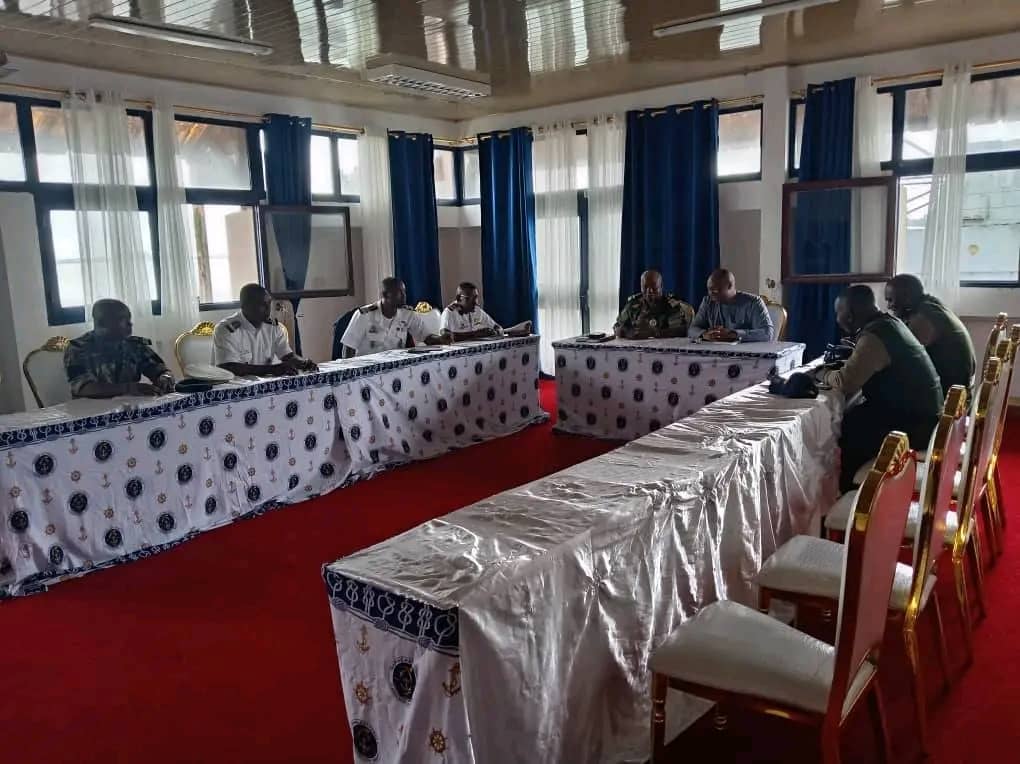
A significant coordination meeting recently took place at the Naval Base of Douala, signaling an intensified focus on maritime security and illicit trafficking enforcement within Cameroon's economic capital. Held on September 28, 2026, the gathering brought together representatives from Zone I of Operation HALCOMI IV and the local naval command. The primary objective was to establish an optimal surveillance strategy for Douala's extensive water body, directly responding to directives from the Director General of Customs to escalate the fight against illegal trade. The Director General of Customs in Cameroon is Fongod Edwin Nuvaga, who has held the position since at least December 2015.
The meeting saw key figures in attendance, including Elvis Manga, Coordinator for Zone I of Operation HALCOMI IV, accompanied by Captain Lawin Meka, Chief of Operations, and Captain Ardant Epoh Mbappe, the Navy Liaison Officer. Their discussions with the Commander of the Douala Naval Base and his staff centered on defining the precise parameters for this enhanced surveillance. This strategic Cameroon Customs Navy Douala surveillance coordination underscores a concerted effort to fortify the maritime front against various forms of illicit activities.
This development marks a critical step in bolstering Cameroon maritime security Douala, particularly in its vital port and surrounding fluvial areas. The collaborative approach aims to create a more robust framework for detecting and interdicting contraband, smuggling, and other organized criminal enterprises that exploit the waterways. The focus on optimal surveillance suggests a move towards more sophisticated and integrated monitoring techniques to safeguard the nation's economic interests and security.
Inter-Agency Collaboration Strengthens Maritime Security
The Douala Naval Base Commander and his General Staff expressed their full commitment to this joint initiative, pledging unwavering logistical and tactical support. This spirit of cooperation is firmly rooted in the MINFI-MINDEF Convention Cameroon, a landmark agreement signed on August 11, 2015, in Yaoundé. This convention serves as the foundational legal and operational framework for the enhanced collaboration between the Ministry of Finance (MINFI), which oversees customs, and the Ministry of Defense (MINDEF), responsible for the navy.
The MINFI-MINDEF Convention was specifically designed to dismantle existing barriers that hindered the deployment of customs officers across Cameroon's maritime, fluvial, and lake territories. By facilitating this inter-agency cooperation, the agreement aims to significantly bolster national security, providing a unified front against various threats. The Cameroon Douanes Marine nationale collaboration, as exemplified by this recent meeting, is a direct implementation of the convention's principles, ensuring that both entities work in tandem to achieve shared objectives.
This historic agreement is crucial for effective Douala illicit trafficking enforcement, as it empowers customs officials to operate more freely and effectively in aquatic environments, leveraging the navy's capabilities. The convention's foresight in addressing jurisdictional and operational challenges has paved the way for the current intensified surveillance efforts, ensuring a more coordinated and impactful response to maritime crime.
Strategic Imperatives for National Security
The broader objectives of the MINFI-MINDEF Convention extend beyond mere enforcement, encompassing a comprehensive strategy to protect Cameroon's economic maritime space. By enabling customs and naval forces to work seamlessly, the convention directly contributes to the fight against smuggling, fraud, and organized crime, which often exploit maritime routes. This integrated approach is vital for maintaining economic stability and safeguarding national resources from illicit exploitation.
The recent coordination meeting, part of the ongoing Operation HALCOMI IV Douala, is a tangible manifestation of these strategic imperatives. Operation HALCOMI has been an ongoing enforcement operation by Cameroon Customs since at least 2016, with different phases mentioned in reports, including Halcomi III in 2023. It signifies a proactive stance by Cameroonian authorities to secure their borders and economic interests against evolving threats. The success of such joint operations in Douala is expected to have far-reaching implications for overall Cameroon maritime security, setting a precedent for similar initiatives across the country.
Looking ahead, the focus of these collaborative surveillance sessions is set to expand, with plans to extend similar efforts to the Southwest region. This geographical expansion indicates a national commitment to replicating the Douala model of inter-agency cooperation to enhance security and combat illicit activities across all of Cameroon's critical water bodies, further solidifying the nation's defense against economic and security threats.
Practical Implications
This development signals heightened enforcement against illicit trafficking and smuggling in Douala's maritime and fluvial zones, increasing compliance risks for businesses operating in these areas. Lawyers should advise clients on stricter adherence to customs regulations and potential for increased scrutiny of their maritime trade operations in Cameroon.
Source
How does this affect you?
Get an AI analysis of this article grounded in your jurisdictions, practice areas, and any policy documents you've uploaded to Wansom.
Finish Reading the Full Story and the Expert Analysis.
Get the latest legal & regulatory intelligence in Cameroon
Wansom is AI and can make mistakes.