
Federal Judge: California Penal Code 4571 Vagueness Challenge Proceeds
Summary
- A federal judge allowed a lawsuit challenging California Penal Code section 4571 to proceed on grounds of unconstitutional vagueness.
- The lawsuit, brought by activist William Brown (Minister King X) and All of Us or None, argues the law's "adjacent thereto" clause is unclear.
- Most other claims, including those related to First Amendment overbreadth and Brown's 2021 arrest, were dismissed for lack of standing.
- California Penal Code section 4571 bars ex-felons from prison grounds or adjacent lands without warden permission.
- The court noted the varying geographical footprints of prisons contribute to the ambiguity of the "adjacent thereto" phrase.
What Happened
The court found that the imprecise nature of this clause could render the statute unclear in its application.
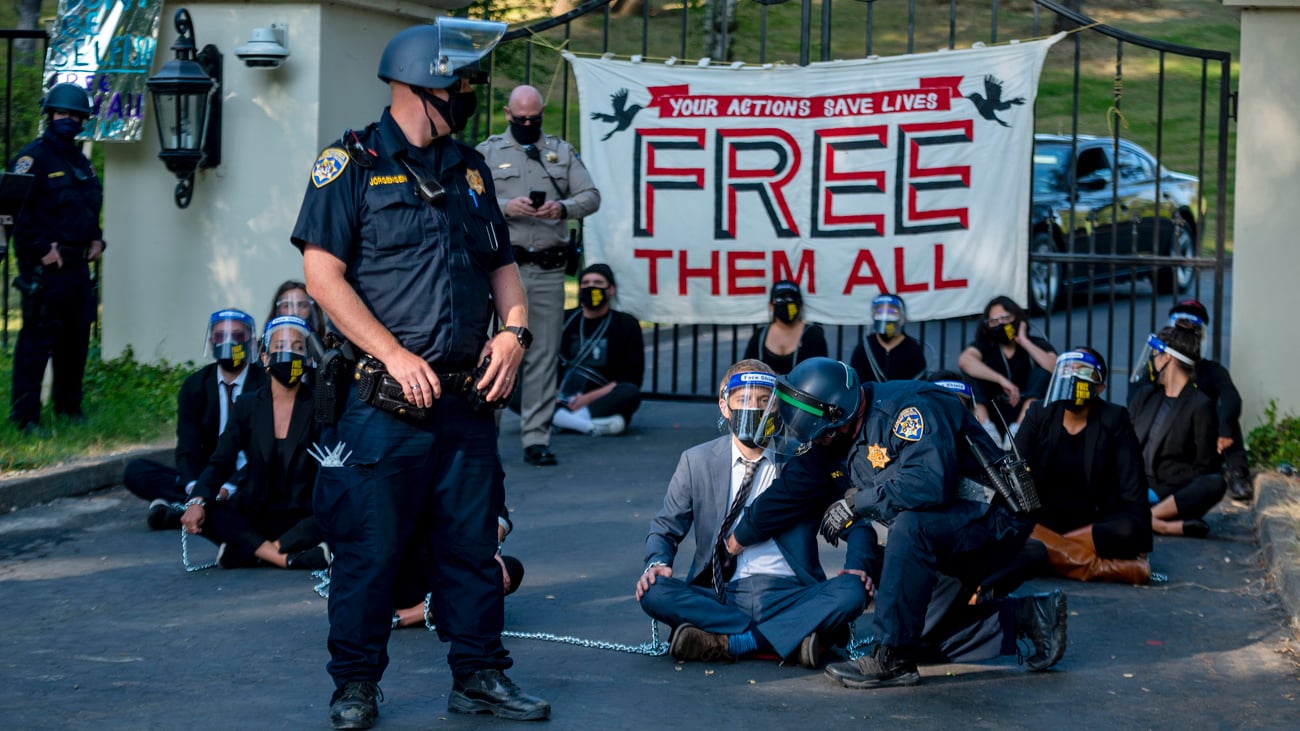
A federal judge recently allowed a specific challenge to California Penal Code section 4571 to proceed, despite dismissing most other claims. This statute prohibits individuals with felony convictions from entering prison grounds or "lands belonging or adjacent thereto" without official permission. The lawsuit was brought by activist William Brown, also known as Minister King X, who has a prior felony conviction and frequently organizes and participates in protests near correctional facilities. In 2021, following a demonstration outside the California State Medical Facility, Brown was charged with violating this law. After his release from jail, his parole officer reportedly advised him against being in the vicinity of any prisons or jails, though he would not face parole violation prosecution.
Brown subsequently initiated legal action against the state, asserting that Penal Code section 4571 infringes upon his First Amendment rights to free speech and assembly. He further contended that the statute is unconstitutionally vague, overly broad, and violates both the Fourth and Fourteenth Amendments. Joining Brown in the suit was All of Us or None (AOUON), an advocacy organization based in the Bay Area that represents formerly incarcerated individuals. AOUON has stated that over 200 people have been incarcerated for breaches of section 4571 and highlighted instances of two unnamed members who have refrained from visiting incarcerated family and friends due to fears of arrest. The lawsuit had previously faced dismissal for lack of standing, and Governor Gavin Newsom was removed as a defendant, but the plaintiffs were granted permission to refile their case last year.
Judicial Scrutiny and Dismissals
In a ruling issued on August 26, U.S. District Judge Daniel Calabretta, a Joe Biden appointee, significantly narrowed the scope of the lawsuit. The judge dismissed the majority of the causes of action, citing a lack of standing for many of the claims. This included three specific claims that were directly tied to Brown's 2021 arrest. Judge Calabretta determined that Brown had not adequately demonstrated how a prospective injunction could remedy harms that had occurred nearly four years prior to the ruling.
Furthermore, the court dismissed the challenge alleging overbreadth, again due to a lack of standing. While acknowledging that Penal Code section 4571 "implicates conduct that has an expressive element," Judge Calabretta concluded that the statute's primary application targets individuals not engaged in expressive activities, thus negating the overbreadth argument. Officials from the California Department of Corrections and Rehabilitation (CDCR) had previously argued in their motion to dismiss that Brown lacked a "concrete plan" to violate the law and faced no "realistic danger" of re-arrest, suggesting he could simply obtain warden permission to avoid infractions.
The Surviving Vagueness Challenge
Despite the extensive dismissals, Judge Calabretta permitted one crucial cause of action to proceed: the claim that California Penal Code section 4571 is unconstitutionally vague. This specific challenge centers on the statutory phrase "or lands belonging or adjacent thereto." The court found that the imprecise nature of this clause could render the statute unclear in its application.
The judge highlighted that California's correctional facilities vary significantly, with some located in urban environments possessing relatively small footprints, while others are situated in more rural areas with less defined boundaries. This geographical diversity, according to the court, contributes to the potential ambiguity of what constitutes "lands belonging or adjacent thereto," thereby making the statute's enforcement potentially arbitrary and difficult for individuals to understand and comply with. This ruling keeps alive a significant legal question regarding the clarity and enforceability of the California ex-felon prison visitation law.
Why It Matters
The ongoing legal battle, particularly the surviving challenge to California Penal Code 4571 vagueness, holds considerable importance for formerly incarcerated individuals and advocacy groups across the state. The ambiguity surrounding the phrase "adjacent thereto" directly impacts the ability of ex-felons to engage in lawful activities, including protests or even simply being in the vicinity of a prison, without fear of arrest. The judge's acknowledgment of the varying footprints of correctional facilities underscores the practical difficulties in interpreting the law's geographical reach.
For organizations like All of Us or None, which represent the rights of formerly incarcerated individuals, a successful vagueness challenge could provide clearer boundaries for conduct and protect First Amendment prison grounds rights. The potential for arbitrary enforcement of such a broad and ill-defined clause poses a significant threat to civil liberties, making the court's decision to allow this specific claim to advance a pivotal moment in ensuring statutory clarity and protecting the rights of those with past felony convictions.
Practical Implications
Lawyers advising ex-felons or advocacy groups in California should monitor the ongoing challenge to Penal Code 4571, particularly concerning the vague 'adjacent thereto' clause, as its interpretation could impact client rights and compliance regarding prison visitation and protest activities.
Source
How does this affect you?
Get an AI analysis of this article grounded in your jurisdictions, practice areas, and any policy documents you've uploaded to Wansom.
Finish Reading the Full Expert Analysis.
Wansom is AI and can make mistakes.