
California judge rules voter ID supporters must rewrite ballot arguments
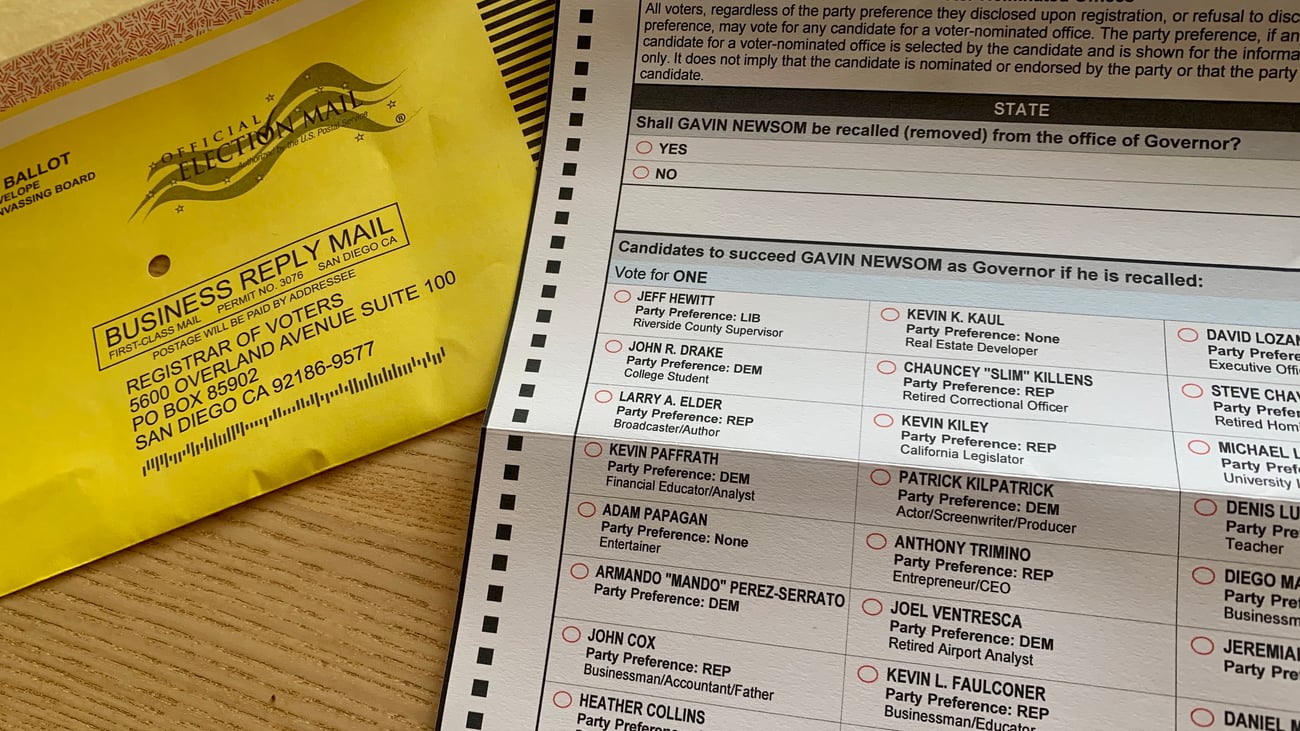
The judge encouraged both sides to meet and provide her with acceptable, alternative language ahead of a hearing later Thursday. An unmarked ballot from a 2021 California election. (Barbara Leonard/Courthouse News Service) SACRAMENTO, Calif. (CN) — Top California Democrats have secured a tentative win Thursday in their legal effort to amend arguments in favor of a voter ID measure slated for November’s ballot. Sacramento Superior Court Judge Shelleyanne Chang in her tentative ruling determined that arguments made by supporters of Proposition 39 are false and misleading. That’s a win for Assembly Speaker Robert Rivas and Senate President pro Tempore Monique Limón, who dispute claims that the measure saves money, makes voting easier and places security measures on elections. The Democratic leaders filed suit last week over ballot measure supporter arguments that would appear in a voter information guide. If enacted, Prop 39 would require people to show government-issued ID when casting a ballot in person. They’d have to include the last four digits of a government-issued ID when voting by mail. “It is hard to conceive how it would be ‘easy’ or ‘easier’ to vote if a voter has to take the extra step of either bringing government-issued identification when voting in person or search for their government-issued identification and supply the last four digits if they vote by mail,” Chang wrote. The decision isn’t final. A hearing is set for Thursday afternoon, as well as in another lawsuit filed by proposition supporters against changes made to the ballot title and summary by the state attorney general. In the Rivas and Limón petition, the judge in her tentative ruling encouraged both sides to meet before Thursday’s hearing and provide her with acceptable, alternative language in light of her decision. The parties in both suits have urged a quick resolution, as ballots and voter information guides have looming deadlines. Chang found issue with all challenged claims, including that the measure would make elections more secure and contain privacy protections. “In fact, it requires voters using a mail-in ballot to include ‘the last four digits of a unique identifying number from government-issued identification’ on the outside of the ballot envelope,” she wrote. “This makes voter’s ‘government-issued identification’ numbers less private, and less secure.” Additionally, the judge determined the supporters’ claim that the measure would save millions of dollars each election was contradicted by the Legislative Analyst’s Office. That office said the proposition would increase government costs by tens of millions of dollars to the low hundreds of millions of dollars. Any potential savings would come from fewer registered voters. “Thus, any statements that Proposition 39 will have an overall fiscal effect of saving any money, let alone the claimed ‘millions of dollars each election’ are objectively untrue and are not simply statements of opinion or hyperbole,” Chang wrote. Finding each of the challenged statements false and misleading, the judge granted Rivas and Limón’s petition. No tentative decision has been issued in the other Prop 39 case. In that suit, Californians for Voter ID, Yes on 39 and an Orange County voter filed a petition over a change Attorney General Rob Bonta’s office made to the measure’s title and summary. Initially, it stated the proposition “establishes additional voter identification and citizenship verification requirements.” Bonta’s office changed it to: “prohibits citizens from voting unless they present government-issued identification.” The plaintiffs are asking a judge to require the state to amend or strike the challenged language and have the secretary of state include their preferred language in the voter information guide. Alternatively, they want the phrase “prohibits citizens from voting” removed. Our weekly newsletter Closing Arguments offers the latest about ongoing trials, major litigation and rulings in
How does this affect your business?
Get an AI analysis of this article grounded in your jurisdictions, practice areas, and any policy documents you've uploaded to Wansom.
Wansom is AI and can make mistakes.