
Afghan jailed for life for deadly Munich car-ramming
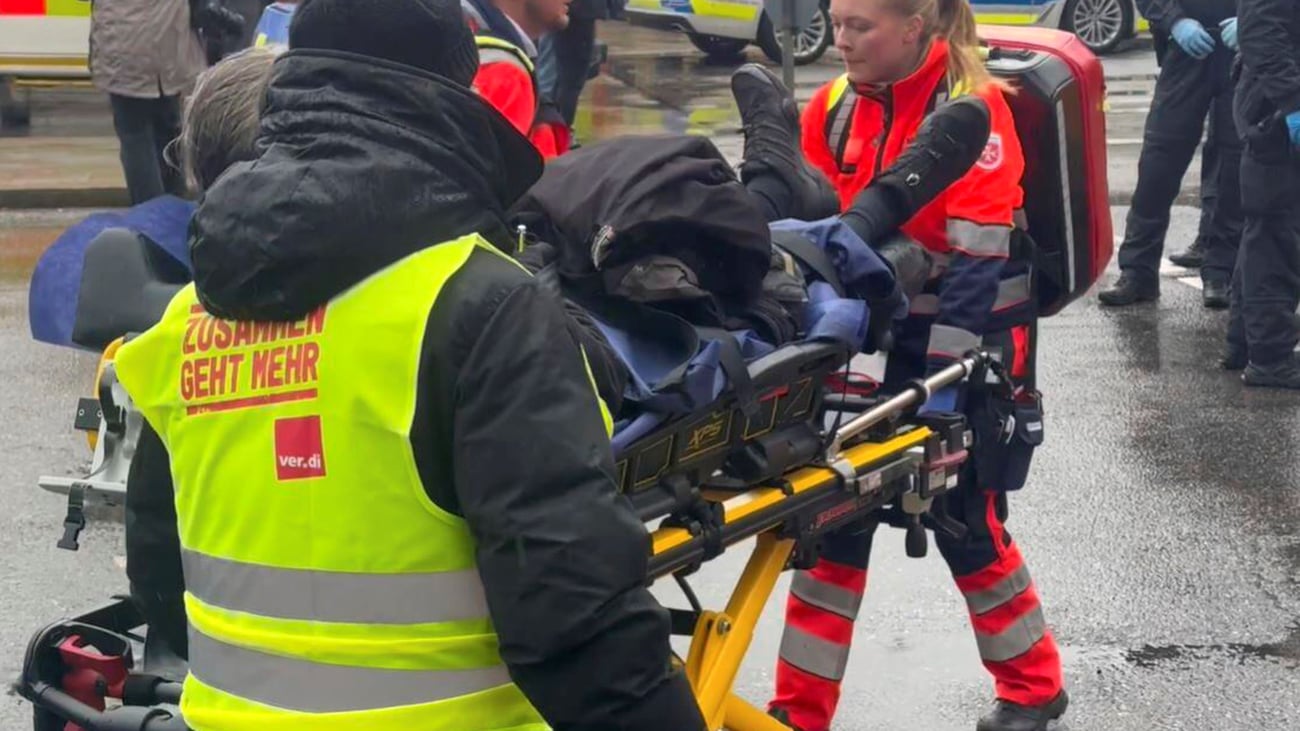
The attack was one of several committed by foreign nationals in the run-up to last year's general election that inflamed debate over immigration and security. An injured person is taken away by emergency services at the scene of an accident after a driver hit a group of people in Munich, Germany, Thursday Feb. 13, 2025. (Michael Fischer/dpa via AP) (AFP) — A German court on Thursday handed an Afghan man a life sentence for a car-ramming attack in Munich last year that killed a 2-year-old girl and her mother and left dozens injured. The court in Munich found the man, identified only as Farhad N., guilty of two counts of murder, 23 counts of attempted murder and 22 counts of causing bodily harm, including 19 counts of serious bodily harm. The court found that the offenses carried a “particular gravity of guilt” — a designation that makes it much less likely the 25-year-old will ever be released from prison. The attack was one of several committed by foreign nationals in the run-up to last year’s general election that inflamed debate over immigration and security. It also came on the eve of the Munich Security Conference, a major gathering of high-level figures from politics and defense. Farhad N. drove a Mini Cooper around a police vehicle before accelerating into a 1,400-person trade union march, hurling a 37-year-old woman and her young daughter about 10 meters (33 feet) through the air. Both suffered severe head injuries and died several days later. Presiding Judge Michael Hoehne said the mother had deliberately chosen the back of the march because it had a stronger police presence and she felt safer there. Hoehne described the aftermath of the attack as “a field of nothing but debris, 12 meters (39 feet) wide.” He said some of those injured “are still suffering today” and quoted one victim as saying they had lived “one life before the attack and another one after it.” The only reason the attack was not even deadlier was that the number of people Farhad N. struck slowed and eventually stopped the car, Hoehne said. Farhad N. showed no emotion as the verdict was read. Prosecutors said during the trial that Farhad N. acted out of a “religious motivation” and uttered the words “Allahu akbar,” Arabic for “God is greatest,” after the attack. However, he is not believed to have been part of any organized jihadist movement, such as the Islamic State group. Prosecutors also pointed to his loneliness and anxiety as contributing factors. Farhad N. did not disclose any motive during the trial. Hoehne described Farhad N. as having “a fragile sense of self-worth” while trying to present “an idealized image of himself.” His defense team asked for him to be sent to a psychiatric facility despite court-appointed experts determining that his mental health problems did not diminish his criminal responsibility. Farhad N. arrived in Germany without a parent or guardian in 2016, when he was 15. His asylum request was rejected, but he was allowed to remain in the country and find work. Police said Farhad N. worked in security and was heavily involved in fitness training and bodybuilding. Authorities believe he was radicalized in the months leading up to the attack by consuming online content from radical Afghan preachers. The attack came just days before the February 2025 general election, in which the far-right Alternative for Germany, or AfD, won its best-ever result with more than 20% of the vote. The center-right CDU/CSU bloc finished first, and its leader, Friedrich Merz, became chancellor, promising to take a tougher line on immigration and stave off the AfD’s rise. However, the CDU/CSU has since lost support while the AfD has established a steady lead in opinion polls. Our weekly newsletter Closing Arguments offers the latest about ongoing trials, major litigation and rulings in courthouses around the U.S. and the world, wh
How does this affect your business?
Get an AI analysis of this article grounded in your jurisdictions, practice areas, and any policy documents you've uploaded to Wansom.
Wansom is AI and can make mistakes.