
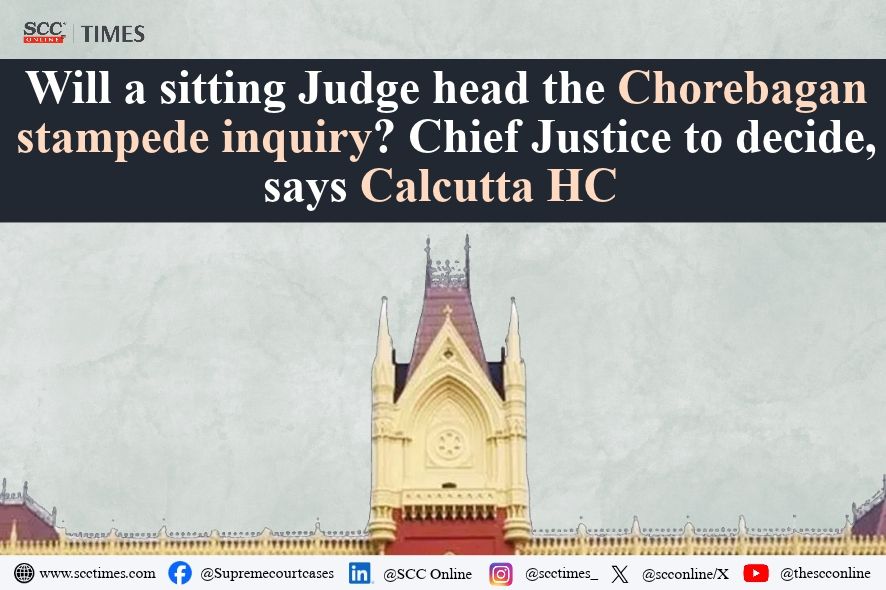
Calcutta High Court: Chorebagan Inquiry Judge Must Be Sitting Or Retired
Summary
- The Calcutta High Court issued a directive regarding the head of the Chorebagan stampede inquiry commission.
- The Court stated that if a sitting judge is unavailable, a retired Calcutta High Court judge must lead the commission.
- This appointment must conform to the provisions of the Commissions of Inquiry Act.
- The ruling clarifies the hierarchy for judicial appointments to state-level inquiry commissions in West Bengal.
The Court's Directive on Inquiry Leadership
The Calcutta High Court specified that if a sitting judge cannot be made available to lead the Chorebagan stampede inquiry, the State must then constitute a commission headed by a retired judge of the Calcutta High Court, in accordance with the Commissions of Inquiry Act.
The Calcutta High Court recently issued a significant clarification regarding the composition of the inquiry commission established to investigate the Chorebagan stampede. This directive addresses a crucial aspect of judicial oversight in such public investigations, specifically concerning the qualifications of the commission's chairperson.
The Court's pronouncement stipulated a clear hierarchy for the appointment of the Calcutta HC Chorebagan inquiry judge. It mandated that if a sitting judge of the High Court is not available to lead the Chorebagan stampede inquiry commission, the State government is then obligated to constitute the commission with a retired judge from the Calcutta High Court at its helm. This condition underscores the judiciary's preference for active judicial involvement where possible, while ensuring a high level of judicial experience in any event.
This specific instruction from the Calcutta High Court ensures that the inquiry into the Chorebagan stampede adheres to established legal principles. The directive explicitly states that the formation of the commission, particularly the appointment of its head, must be in strict accordance with the provisions outlined in the Commissions of Inquiry Act.
Legal Framework and Judicial Oversight
The Commissions of Inquiry Act India provides the statutory framework for establishing bodies to investigate matters of public importance. These commissions are typically formed to ascertain facts, identify causes, and recommend measures following significant incidents, such as the Chorebagan stampede. The Act grants these commissions considerable powers, including the ability to summon witnesses and compel the production of documents, making the integrity and authority of their leadership paramount.
The Calcutta High Court's emphasis on a judicial figure, whether sitting or retired, as the Calcutta High Court inquiry head, highlights the importance of impartiality and legal expertise in such investigations. A judge, by virtue of their training and experience, is uniquely positioned to conduct a fair and thorough inquiry, weigh evidence objectively, and arrive at conclusions that are legally sound and credible. This judicial leadership is critical for public confidence in the inquiry's findings.
The court's ruling reinforces the principle that inquiries into serious public incidents should be guided by individuals with a deep understanding of legal processes and a commitment to justice. The distinction between a sitting vs retired judge inquiry, while offering flexibility, maintains the essential requirement of judicial leadership, ensuring that the commission operates with the necessary independence and authority under the Commissions of Inquiry Act.
Implications for Future State Inquiries
This clarification by the Calcutta High Court sets an important precedent for the constitution of future inquiry commissions within West Bengal. It establishes a clear guideline for the State government regarding the appointment of inquiry heads, prioritizing the availability of a sitting judge before considering a retired judicial officer. This structured approach aims to bolster the perceived independence and effectiveness of such investigative bodies.
The directive ensures that the State government understands its obligations under the Commissions of Inquiry Act when establishing commissions for significant public events. By specifying the judicial status of the inquiry head, the High Court is effectively guiding how these crucial investigative bodies should be formed, thereby influencing expectations for their composition and operational integrity. This ruling underscores the judiciary's role in ensuring accountability and transparency in state-led investigations.
Practical Implications
Lawyers should note the Calcutta High Court's clarification on the appointment of inquiry commission heads under the Commissions of Inquiry Act, particularly the preference for a sitting judge if available, or a retired judge otherwise. This sets a precedent for the composition of future state-level inquiry commissions in West Bengal, influencing expectations for their independence and authority.
Source
Source: Original reporting via SCC Times
How does this affect you?
Get an AI analysis of this article grounded in your jurisdictions, practice areas, and any policy documents you've uploaded to Wansom.
Finish Reading the Full Story and the Expert Analysis.
Wansom is AI and can make mistakes.