
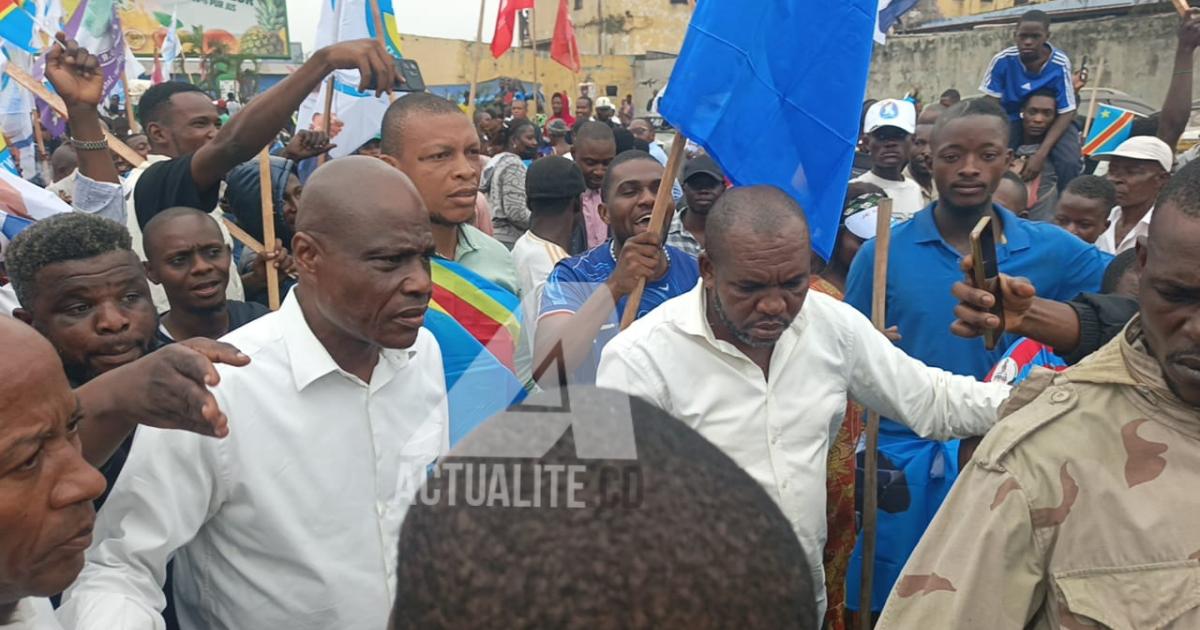
Kinshasa Government: C64 Kinshasa Protest Route Change, Palais du Peuple Off-Limits
Summary
- The Kinshasa provincial government announced a compromise with the C64 opposition group regarding a planned protest.
- The demonstration, scheduled for Tuesday, September 15, 2026, was organized to oppose constitutional changes.
- As part of the agreement, the protest route was altered, and the Palais du Peuple is now inaccessible as a final destination.
- The compromise was announced on Monday, September 14, 2026, at 11:01 PM.
What Happened
The original intended destination, the Palais du Peuple, is now explicitly off-limits to demonstrators.
On Monday, September 14, 2026, at 11:01 PM, the provincial government of Kinshasa announced a significant development concerning a planned demonstration by the C64 opposition group. This protest, scheduled for the following day, Tuesday, September 15, 2026, in Kinshasa, was organized to voice opposition against proposed changes to the Constitution. Authorities confirmed that a compromise had been reached with the opposition regarding the planned itinerary for the manifestation.
As a direct result of these negotiations, the designated endpoint for the C64 Kinshasa protest route change has been altered. The original intended destination, the Palais du Peuple, is now explicitly off-limits to demonstrators. This adjustment means the protest's final gathering point has been relocated, effectively preventing participants from converging on the symbolic legislative building.
Public Order and Regulatory Framework
The intervention by the Kinshasa provincial government underscores the delicate balance authorities must maintain between upholding public order and safeguarding fundamental rights, including the DRC freedom of assembly. While citizens possess the right to peaceful demonstration, governments are also tasked with ensuring public safety and minimizing disruption. The decision to negotiate a revised DRC C64 manifestation itinerary, rather than outright prohibit the event, reflects an attempt to manage the Kinshasa public order demonstration within a regulatory framework.
Such compromises often involve discussions between protest organizers and security forces to agree upon routes that allow for expression while mitigating potential security risks or significant impediments to daily life in the capital. The specific restriction on accessing the Palais du Peuple suggests a strategic decision by authorities to control the proximity of the protest to key governmental institutions, a common practice in managing high-profile demonstrations, especially those related to sensitive political issues like a Congo constitutional change protest.
Implications for Dissent and Governance
The modification of the protest route carries significant implications for both the opposition and the provincial administration. For the C64, the inability to reach the Palais du Peuple may diminish the symbolic impact of their demonstration against constitutional amendments, as the visibility at a key governmental site is often central to protest strategies. This forced C64 Kinshasa protest route change could be perceived by some as a curtailment of expressive rights, even if a compromise was formally agreed upon.
Conversely, the government's management of the protest itinerary demonstrates its capacity to influence the scope and visibility of public dissent. By redirecting the demonstration, authorities aim to control the narrative and potential for escalation, thereby maintaining public order. This approach highlights the ongoing political dynamics in Kinshasa, where constitutional matters frequently ignite public debate and require careful governmental oversight of public gatherings.
Why It Matters
This development is crucial for understanding the political climate and the exercise of civil liberties in the Democratic Republic of Congo. The provincial government's proactive engagement with the opposition to alter the C64 Kinshasa protest route change signals a particular strategy for managing political tensions surrounding the proposed constitutional changes. It illustrates how authorities in Kinshasa navigate the complexities of allowing public expression while simultaneously asserting control over the urban landscape during periods of heightened political activity.
For observers, this incident provides insight into the practical application of freedom of assembly in the DRC and the mechanisms employed by the state to manage large-scale public demonstrations. The outcome of such negotiations, particularly concerning sensitive issues like a Congo constitutional change protest, can set precedents for future interactions between civil society and the government, influencing the broader landscape of political participation and public discourse in the nation's capital.
Practical Implications
Lawyers and compliance officers with operations or clients in Kinshasa should monitor public order developments, particularly regarding government management of protests, to assess potential operational disruptions, security risks, or implications for freedom of assembly rights.
Source
How does this affect you?
Get an AI analysis of this article grounded in your jurisdictions, practice areas, and any policy documents you've uploaded to Wansom.
Finish Reading the Full Story and the Expert Analysis.
Get the latest legal & regulatory intelligence in DR Congo
Wansom is AI and can make mistakes.