
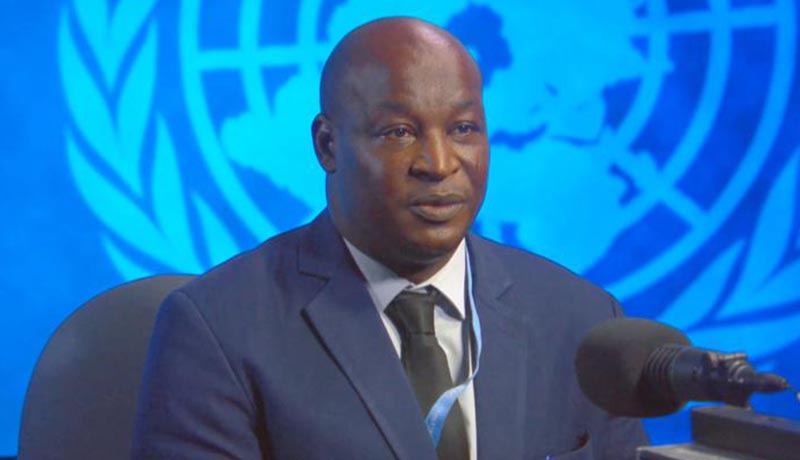
UN Human Rights Council: Burundi UN Special Rapporteur Mandate Renewed
Summary
- The UN Human Rights Council has renewed the mandate of its Special Rapporteur on Burundi for another year.
- Fortuné Gaëtan Zongo, the current Rapporteur, expressed concerns about summary executions, forced disappearances, and a shrinking civic space in Burundi.
- He also warned of potential electoral crisis signs ahead of the May 2027 presidential elections.
- Burundi's government strongly opposes the mandate, refusing cooperation and denying the Rapporteur entry, calling the mechanism politicized.
- The resolution passed with 22 votes in favor, 7 against, and 17 abstentions, indicating continued international division on the issue.
UN Renews Burundi Human Rights Monitoring Mandate
The United Nations Human Rights Council has extended the mandate of its Special Rapporteur on Burundi for another year, ensuring continued international scrutiny of the nation's human rights situation.
The United Nations Human Rights Council has extended the mandate of its Special Rapporteur on Burundi for another year, ensuring continued international scrutiny of the nation's human rights situation. This decision was made during the Council's 63rd session in Geneva, despite strong opposition from the Burundian government and several other nations. Fortuné Gaëtan Zongo, the Burkinabé expert currently holding the position, will continue his work, which now encompasses the critical period leading up to Burundi's presidential elections scheduled for May 2027.
The resolution to renew the mandate passed with 22 votes in favor, 7 against, and 17 abstentions. Alongside Burundi, countries that voted against the extension included Benin, China, Cuba, Ethiopia, Pakistan, and the Democratic Republic of Congo. This outcome underscores a persistent division within the international community regarding the monitoring mechanism, which Burundi consistently labels as a politically motivated and hostile instrument.
Deepening Concerns Over Human Rights and Electoral Integrity
In his previous address to the UN Human Rights Council on September 18, Fortuné Gaëtan Zongo raised significant alarms about potential precursors to an electoral crisis ahead of the 2027 polls. He highlighted grave concerns regarding reports of summary and extrajudicial executions, enforced disappearances, torture, and other forms of ill-treatment within the country. These issues, he noted, contribute to an environment of fear and intimidation, which is detrimental to democratic processes.
While acknowledging that the 2025 elections proceeded without major violence, the Special Rapporteur expressed reservations about the absence of conditions conducive to genuinely inclusive, transparent, and credible electoral outcomes. He specifically lamented the shrinking space for civil society and media, the lack of political pluralism, and the pervasive climate of fear that has characterized recent electoral processes. These observations are central to the ongoing Burundi human rights monitoring efforts and the assessment of the nation's readiness for the Burundi 2027 elections human rights standards.
Security Challenges and Government Non-Cooperation
Beyond internal human rights issues, Fortuné Gaëtan Zongo Burundi also drew attention to the precarious security situation along Burundi's borders with the Democratic Republic of Congo. His report indicated a concerning flow of arms and combatants, including elements from the M23 rebel movement and RED-Tabara, contributing to regional instability. Furthermore, he identified a significant health risk posed by the Ebola virus epidemic in the DRC, noting Burundi's structural vulnerability to such outbreaks due to its weak health infrastructure and public services.
The Burundi government UN non-cooperation remains a significant hurdle for the Special Rapporteur's work. Gitega has consistently refused to collaborate with the UN expert, denying him entry into the country and rejecting the legitimacy of his mandate. Burundi's Ambassador to Geneva, Elisa Nkerabirori, publicly denounced the mechanism as a "propaganda tool" that has lost its credibility and legitimacy. Similarly, President Evariste Ndayishimiye, speaking at the 81st UN General Assembly and as the then-chair of the African Union, criticized what he perceived as the politicization of the Human Rights Council against certain states, reiterating Burundi's firm opposition to the Special Rapporteur's mandate. He emphasized the need for Africa's voice to be more prominent and better represented in global decision-making.
Historical Context and International Calls for Engagement
The current mandate of the Special Rapporteur on Burundi was established in October 2021, succeeding the Commission of Inquiry on Burundi. That Commission had been formed in 2016 specifically to document human rights violations that occurred following the political crisis of May 2015. The continuation of this monitoring mechanism by the UN Human Rights Council Burundi signifies an enduring international concern over the country's human rights record, despite the government's strong objections.
Calls for greater cooperation persist from international bodies. The European Union, for instance, has urged for the situation to remain under close surveillance and has specifically requested access for the Special Rapporteur to Burundian territory, a request that the Burundian government has categorically rejected. Conversely, domestic voices like Lambert Nigarura, who presides over the Burundian Coalition for the International Criminal Court, have publicly welcomed the Council's decision, emphasizing the importance of the mandate's renewal for continued oversight.
Practical Implications
Lawyers advising clients with operations or interests in Burundi should be aware of the continued international scrutiny on human rights, electoral processes, and security. The Special Rapporteur's ongoing mandate, despite government opposition, signals persistent international pressure and potential for future sanctions or policy changes that could impact business and investment climate, as well as human rights compliance obligations.
Source
How does this affect you?
Get an AI analysis of this article grounded in your jurisdictions, practice areas, and any policy documents you've uploaded to Wansom.
Finish Reading the Full Story and the Expert Analysis.
Get the latest legal & regulatory intelligence in Burundi
Wansom is AI and can make mistakes.