
Burundi Police: Brutally Beat Journalist Alexis Ndayisenga
Summary
- Burundian journalist Alexis Ndayisenga of RT Isanganiro was severely beaten by police officers in Bujumbura after identifying himself.
- The assault began on a bus where police used electric cables on passengers, escalating when Ndayisenga protested the brutality.
- He was taken to a police post and subjected to over 30 minutes of beating with electric cables on his buttocks.
- The responsible officer later apologized, attributing the incident to untrained agents who also extorted money from detainees.
- Charles Makoto, director of RT Isanganiro, condemned the attack, highlighting the failure of press credentials to protect journalists.
Journalist Brutally Assaulted in Bujumbura
This incident starkly underscores the precarious position of journalists in Burundi, where official credentials offer little protection against arbitrary violence.
Alexis Ndayisenga, a journalist for RT Isanganiro, recently endured a brutal assault by police officers in Bujumbura, Burundi, an incident that has ignited concerns over press freedom and police accountability. The ordeal began following a long day of work, as Ndayisenga attempted to board a bus serving the Ruziba area in southern Bujumbura. Police officers initiated a forceful evacuation of all passengers from the vehicle, employing electric cables and sticks to compel compliance.
Despite the general commotion, Ndayisenga, exhausted from his duties, identified himself as a journalist and presented his press card, requesting permission to remain on the bus. His plea was disregarded, and he was subjected to the same violent treatment as other passengers, receiving blows to the back of his neck. It was his subsequent verbal protest against this indiscriminate brutality that escalated the situation, drawing the specific ire of the officers involved.
A Vicious Attack Unfolds
Following his protest, officers demanded Ndayisenga accompany them to a police post located within the dilapidated ruins of Bujumbura's former central market. There, the assault intensified. He was kicked and ordered to lie face down, after which he was subjected to a prolonged beating with electric cables, primarily targeting his buttocks. This torture lasted for more than thirty minutes, during which Ndayisenga cried out in pain and writhed, eventually feigning unconsciousness in an attempt to halt the relentless blows.
Even as he lay still, another officer joined the assault, remarking that Ndayisenga's "buttocks were state property," a phrase reportedly used by a high-ranking official to legitimize corporal punishment. The beating only ceased when a more composed officer intervened, suggesting that if they intended to kill him, they should take him to their official station. This remark reportedly caused the attacking officers to panic, bringing an end to the violent episode.
Official Response and Broader Implications
After the prolonged assault, the officer deemed responsible for the incident approached Ndayisenga, offering an apology. He attributed the violence to his agents' lack of adequate training and admitted that they routinely extorted money from apprehended individuals. Ndayisenga was then left to find his own way home, barely able to stand or sit due to his injuries. He purchased painkillers and took two taxis to reach his residence, where his wife administered initial first aid.
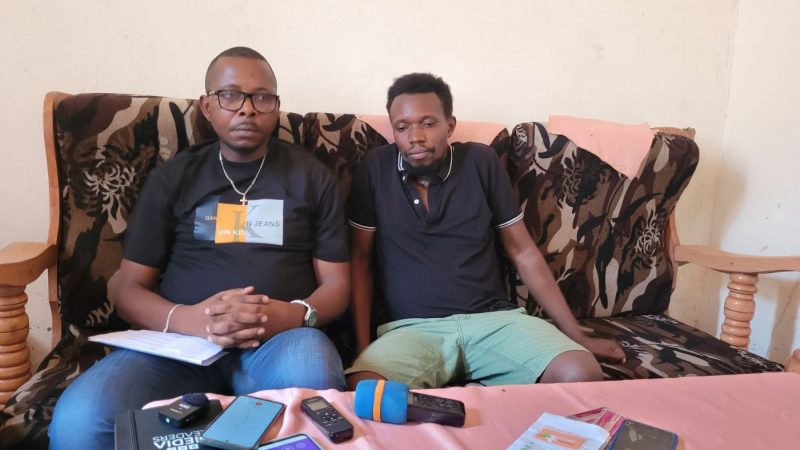
News of the brutal attack quickly spread, prompting a delegation of approximately ten journalists, including Charles Makoto, the director of Radio-Télévision Isanganiro, and the program head of the media support NGO La Benevolencija, to visit Ndayisenga. They found him in considerable pain, struggling to remain upright and visibly distressed.
Calls for Justice Amidst Press Freedom Concerns
Charles Makoto expressed profound dismay at the incident, highlighting the stark contradiction between the purpose of press credentials and the reality faced by journalists. He noted that press cards explicitly request administrative and police authorities to protect their holders, yet in this instance, those very authorities were responsible for violating that directive. This incident starkly underscores the precarious position of journalists in Burundi, where official credentials offer little protection against arbitrary violence.
The assault on Alexis Ndayisenga, an RT Isanganiro journalist, serves as a grim illustration of ongoing Burundi press freedom violations and the challenges faced by media professionals. It also casts a shadow on the rule of law, particularly given the irony that RT Isanganiro's own slogan advocates for dialogue over violence. The call for justice in this case resonates widely, emphasizing the urgent need for accountability and respect for journalist rights in Burundi.
Practical Implications
Lawyers advising media organizations, NGOs, or individuals operating in Burundi must assess increased risks of arbitrary detention and physical assault by law enforcement, even when official credentials are presented. This incident highlights a significant breakdown in the rule of law and the practical ineffectiveness of legal protections for journalists, necessitating updated risk assessments and security protocols for personnel in the region.
Source
How does this affect you?
Get an AI analysis of this article grounded in your jurisdictions, practice areas, and any policy documents you've uploaded to Wansom.
Finish Reading the Full Story and the Expert Analysis.
Get the latest legal & regulatory intelligence in Burundi
Wansom is AI and can make mistakes.