
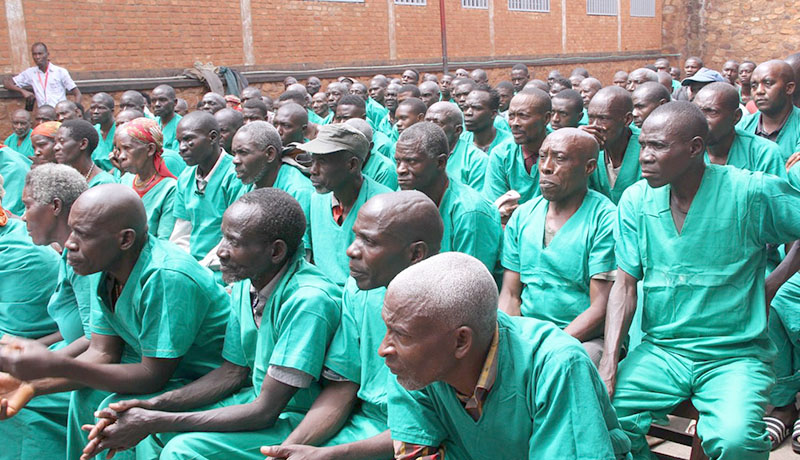
Burundi: Détention Préventive Rules in Code de Procédure Pénale
Summary
- Pre-trial detention decisions in Burundi require a panel of three council chamber judges ruling within 48 hours of the hearing.
- Statutory remand ceilings are set at one year for lesser offenses and three years for crimes punishable by more than five years of penal servitude.
- Supervisory authorities are legally mandated to order immediate detainee release once maximum statutory timeframes expire.
- Provisional bail is strictly prohibited for sexual violence offenses, crimes exceeding 20 years' imprisonment, and unreturned stolen property.
Mandatory Three-Judge Panel and Remand Hearing Procedures
For charges carrying a statutory penalty of five years or less, the durée maximale détention préventive burundi is strictly capped at one year.
Under the statutory framework governing détention préventive code procédure pénale burundi, judicial decisions regarding pre-trial remand are subject to strict procedural safeguards. Pursuant to article 157 code de procédure pénale burundi, rulings on temporary custody must be delivered by a collège de trois juges chambre du conseil burundi within 48 hours following the hearing in the council chamber. The law grants the accused person the right to request a defense extension of up to three days if additional time is needed to prepare their case.
The procedural guidelines detailed in Article 158 mandate that any order extending or instituting remand must be fully reasoned and rendered following formal requisitions from the Public Prosecutor's Office. The accused must be heard prior to the ruling and retains the right to legal counsel. Should an accused individual refuse to appear before the court, the presiding magistrate is legally empowered to issue a ruling based solely on the case file. Additionally, granting a temporary release requires the tribunal to hear the victim or their designated representative first, unless specific extenuating circumstances render their attendance impossible.
Statutory Duration Caps and Hierarchical Release Mandates
The statutory framework establishes rigorous boundaries on the duration of pre-trial custody. According to Article 159, an initial order authorizing detention remains valid for 30 calendar days, inclusive of the date of issuance. Upon the expiration of this baseline period, custody may be renewed on a monthly basis through formal, reasoned decisions whenever public interest demands continued incarceration.
However, the law establishes absolute statutory caps on cumulative remand depending on the severity of the alleged offense. For charges carrying a statutory penalty of five years or less, the durée maximale détention préventive burundi is strictly capped at one year. For serious offenses subject to sentences exceeding five years of penal servitude, detention cannot exceed three years. Once these statutory ceilings expire, the hierarchical superior of the investigating magistrate must immediately order the detainee's release, acting upon a petition submitted either by the incarcerated individual or the head of the correctional facility. Investigating magistrates who fail to present detainees before the court without valid justification face potential disciplinary measures and criminal prosecution.
Bail Mechanics and Statutory Ineligibility Criteria
Under Article 160, detainees may petition for provisional release subject to depositing a monetary sum with the court clerk. This monetary guarantee, central to rules governing liberté provisoire cautionnement burundi, serves to ensure the accused's appearance at all procedural stages, compliance with custodial sentences if convicted, and coverage of legal expenses, fines, and civil damages.
Article 161 establishes specific statutory exceptions where financial bail is explicitly prohibited. Provisional release under bail cannot be granted to defendants facing charges punishable by more than 20 years of penal servitude, individuals accused of sexual violence, or defendants who have failed to return funds, property, or their monetary equivalent derived from the alleged offense.
Under Article 162, bail monies are fully refunded if the case is dismissed without prosecution, if detention is terminated, if provisional release is revoked, or if the defendant is acquitted. Refund orders are issued by the Public Prosecutor's office attached to the deciding jurisdiction, or directly by the court if bail was judicially established. Conversely, if an accused absconds, the posted bail is forfeited to the Public Treasury, following the deduction of court costs caused by the non-appearance and without compromising civil party rights.
Practical Implications
Defense counsel practicing in Burundi should audit client detention orders to ensure compliance with the mandatory three-judge panel requirement, and immediately file petitions for automatic release with the magistrate's hierarchical authority when statutory maximums (1 year or 3 years) are breached.
Source
How does this affect you?
Get an AI analysis of this article grounded in your jurisdictions, practice areas, and any policy documents you've uploaded to Wansom.
Wansom is AI and can make mistakes.