
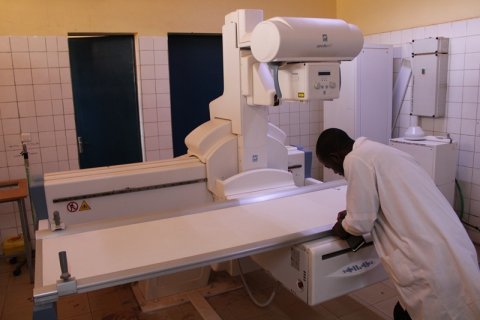
Burkina Faso: Scanner Tariff Reduction Halves Public Hospital Costs
Summary
- Burkina Faso reduced the subsidized tariff for scanner examinations in public hospitals by 50%, from 50,000 to 25,000 CFA francs, effective April 1, 2024.
- The government's decision, made on March 13, 2024, aims to significantly improve public access to essential medical diagnostics.
- According to the Ministry of Health, 10,850 scanner exams were performed in 2024, increasing to 49,525 in 2025.
- For 2026, 34,032 examinations have already been registered, indicating a sustained increase in service utilization following the price reduction.
Significant Reduction in Medical Imaging Costs
This 50% cut in the BF public hospital scanner cost represents a direct government intervention aimed at making critical medical imaging more accessible to the general population.
Burkina Faso has implemented a substantial reduction in the cost of scanner examinations within its public hospitals, effective April 1, 2024. The subsidized tariff for these essential diagnostic procedures has been halved, decreasing from 50,000 CFA francs to 25,000 CFA francs per examination. This 50% cut in the BF public hospital scanner cost represents a direct government intervention aimed at making critical medical imaging more accessible to the general population.
The decision to enact this Burkina Faso scanner tariff reduction was formally taken by the government on March 13, 2024, preceding its implementation by just over two weeks. This policy adjustment directly addresses the financial barriers that often prevent individuals from accessing necessary diagnostic services. By lowering the CFA francs scanner price BF, the government seeks to alleviate the economic burden on patients requiring advanced medical assessments.
This measure is part of a broader effort to enhance public health services and ensure that vital diagnostic tools are within reach for more citizens. The government's proactive stance underscores its commitment to improving healthcare accessibility across the nation, particularly for services that are often costly. The reduced tariff is expected to have a far-reaching positive impact on public health outcomes by facilitating earlier and more accurate diagnoses.
Government Policy and Health Access
The initiative to reduce scanner tariffs is a direct outcome of Burkina Faso healthcare policy, specifically designed to improve the population's access to essential diagnostic services. The Ministère de la Santé Burkina Faso has highlighted that this reduction significantly facilitates access to these crucial examinations, which are vital for accurate diagnosis and effective treatment planning. The government's move reflects a strategic focus on public health, recognizing that affordability is a key determinant of healthcare utilization.
By subsidizing the cost of scanner examinations, the government is actively working to dismantle financial obstacles that have historically limited access to advanced medical imaging. This policy is particularly impactful in a context where high medical costs can deter individuals from seeking necessary diagnostic care, potentially leading to delayed treatment and poorer health outcomes. The 50% price drop is a tangible example of how policy can directly translate into improved public welfare.
This intervention aligns with national health objectives to strengthen the healthcare system and ensure equitable access to medical services for all citizens. The focus on reducing the Burkina Faso medical imaging cost in public facilities demonstrates a commitment to leveraging government resources to address critical health disparities and enhance the overall capacity of the public health sector to serve its population effectively.
Quantifiable Impact on Service Utilization
The positive effects of the Burkina Faso scanner tariff reduction are already evident in the reported utilization figures from the Ministry of Health. Following the implementation of the reduced tariff, the number of scanner examinations performed in public hospitals has seen a notable increase. In 2024, a total of 10,850 examinations were conducted, indicating an initial uptake after the policy change.
The subsequent year, 2025, witnessed a significant surge in demand, with 49,525 examinations recorded. This substantial increase underscores the direct correlation between reduced costs and enhanced patient access to medical imaging services. For the current year, 2026, preliminary data already shows 34,032 examinations registered, suggesting a sustained high level of utilization.
These figures from the Ministère de la Santé Burkina Faso clearly demonstrate the effectiveness of the government's measure in improving Burkina Faso health access measures. The dramatic rise in the volume of scanner procedures indicates that the lower CFA francs scanner price BF has enabled a greater number of people to undergo these critical diagnostic tests, thereby fulfilling the policy's primary objective of facilitating access to essential diagnostics for the population.
Practical Implications
This government intervention significantly alters the cost structure for medical imaging in public hospitals. Lawyers advising private healthcare providers in Burkina Faso should monitor how this subsidized pricing impacts market competition and patient demand, potentially influencing their clients' pricing strategies or service offerings.
Source
How does this affect you?
Get an AI analysis of this article grounded in your jurisdictions, practice areas, and any policy documents you've uploaded to Wansom.
Finish Reading the Full Story and the Expert Analysis.
Wansom is AI and can make mistakes.