
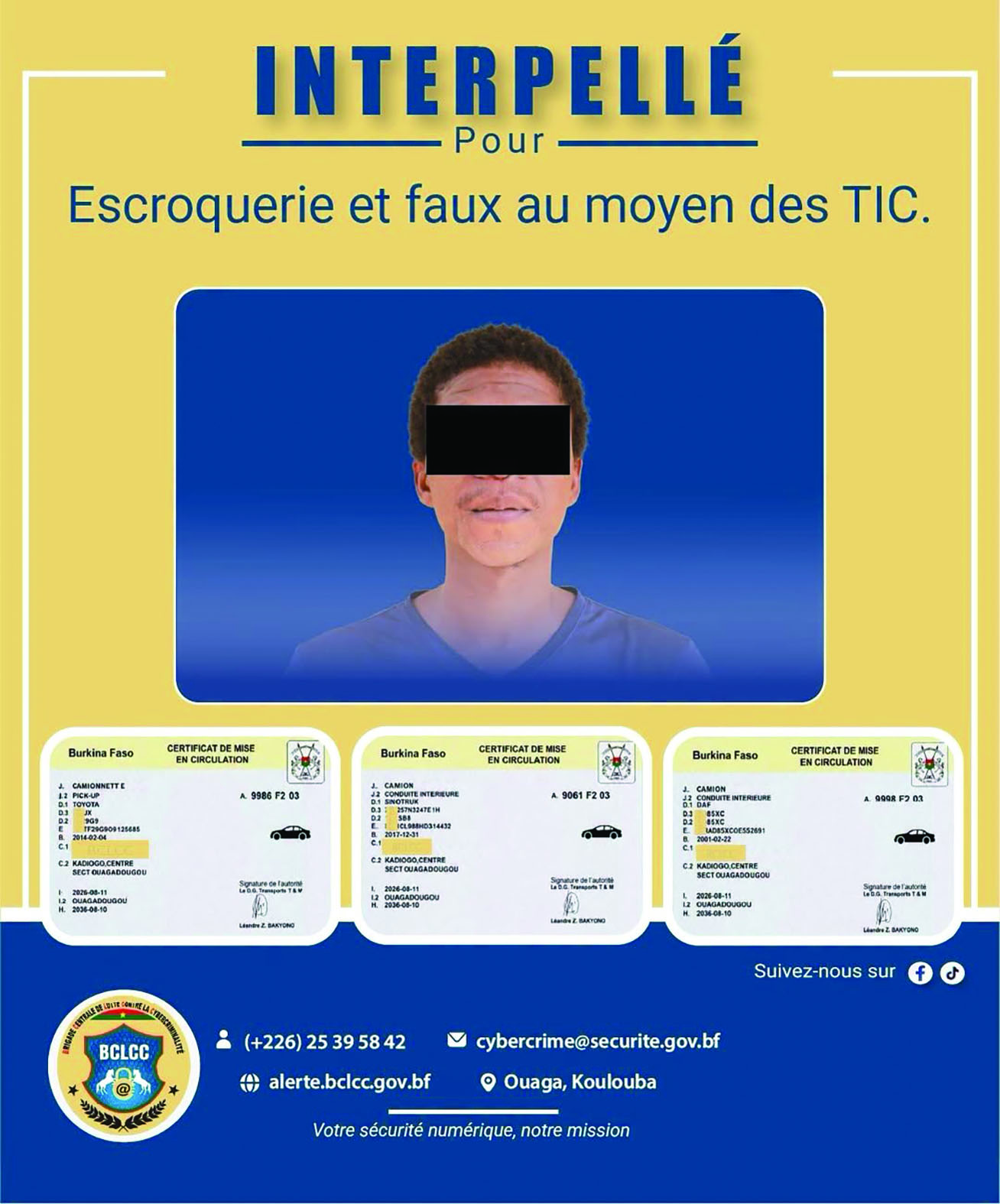
Burkina Faso BCLCC: AI Document Forgery Arrest for Fake Vehicle Papers
Summary
- A 36-year-old individual, D.R., was arrested in Burkina Faso for allegedly producing fake vehicle registration documents.
- The suspect reportedly used artificial intelligence (AI) to create the counterfeit `cartes grises`.
- The arrest was carried out by the Brigade centrale de lutte contre la cybercriminalité (BCLCC).
- This incident highlights the escalating challenge of AI-powered digital forgery and cybercrime enforcement in Burkina Faso.
Significant Arrest in Digital Forgery Case
The use of AI in this particular case of Burkina Faso fake vehicle registration represents a new frontier for law enforcement.
A 36-year-old individual, identified as D.R., has been apprehended in Burkina Faso on suspicion of producing fraudulent vehicle registration documents. The arrest, carried out by the Brigade centrale de lutte contre la cybercriminalité (BCLCC), highlights an emerging trend in criminal activity: the sophisticated use of artificial intelligence (AI) to facilitate digital forgery. D.R., who is reportedly both a student and a canvasser, is alleged to have leveraged AI technologies to create these counterfeit `cartes grises`.
This operation marks a notable development in the ongoing efforts by Burkinabe authorities to combat advanced cybercrime. The BCLCC's intervention underscores the increasing vigilance required to counter illicit activities that exploit cutting-edge technological advancements. The specific nature of the alleged crime—forging official vehicle documents—carries significant implications for public safety and administrative integrity within the nation.
The use of AI in this particular case of Burkina Faso fake vehicle registration represents a new frontier for law enforcement. It demonstrates how tools designed for innovation can be repurposed for illicit gains, creating challenges for traditional investigative methods. The BCLCC's swift action in this matter signals a proactive approach to addressing these evolving threats.
Escalating Enforcement Against AI-Powered Cybercrime
The Brigade centrale de lutte contre la cybercriminalité (BCLCC) plays a pivotal role in safeguarding Burkina Faso's digital landscape, and this recent arrest reinforces its commitment to tackling sophisticated criminal enterprises. The agency's mandate extends to investigating and prosecuting a wide array of cyber offenses, with a particular focus on those that leverage advanced technologies like AI to perpetrate fraud and other illegal acts. This incident underscores the BCLCC's growing capacity and determination in the fight against cybercrime in Burkina Faso.
The legal implications of AI fraud are becoming increasingly complex, requiring specialized expertise and resources from enforcement bodies. As digital forgery enforcement Burkina Faso intensifies, authorities are confronted with the challenge of adapting existing cybercrime law Burkina Faso AI frameworks to address crimes enabled by rapidly evolving artificial intelligence. The BCLCC's successful interception of D.R. serves as a clear warning to those who might consider employing AI for illicit purposes.
This case is indicative of a broader trend where national cybercrime units are enhancing their capabilities to detect and neutralize threats posed by technologically adept criminals. The BCLCC's actions reflect a strategic imperative to protect citizens and institutions from financial and identity-related crimes, especially as digital transactions and official documentation become more prevalent.
The Dual Nature of AI and Its Global Impact
Artificial intelligence, while a powerful engine for innovation and productivity across various sectors, also presents significant opportunities for malicious exploitation. This incident in Burkina Faso serves as a stark reminder of the dual nature of AI, illustrating how its capabilities can be diverted to facilitate sophisticated criminal endeavors such as digital forgery. The ease with which AI can generate convincing fake documents poses a substantial threat to verification systems worldwide.
The implications of AI fraud extend beyond national borders, affecting legal and regulatory landscapes across Africa and globally. As AI tools become more accessible, the potential for widespread misuse in creating counterfeit documents, manipulating digital identities, and executing complex fraud schemes escalates. This necessitates a concerted effort from legal professionals, policymakers, and technology developers to anticipate and mitigate these emerging risks.
The Burkina Faso AI document forgery arrest highlights the urgent need for robust legal frameworks and enhanced international cooperation to address cybercrime. It underscores the critical importance of continuous investment in cybersecurity infrastructure and the training of law enforcement personnel to stay ahead of technologically advanced criminals. The evolving threat landscape demands proactive strategies to protect against the misuse of AI and ensure its ethical deployment.
Practical Implications
This arrest underscores the escalating enforcement against AI-powered cybercrime in Burkina Faso, particularly digital forgery. Legal and compliance professionals should proactively assess client vulnerabilities to AI misuse and review internal controls against sophisticated fraud schemes, anticipating increased regulatory scrutiny in this evolving area.
Source
Source: Reporting from Burkina Faso.
How does this affect you?
Get an AI analysis of this article grounded in your jurisdictions, practice areas, and any policy documents you've uploaded to Wansom.
Finish Reading the Full Story and the Expert Analysis.
Wansom is AI and can make mistakes.