
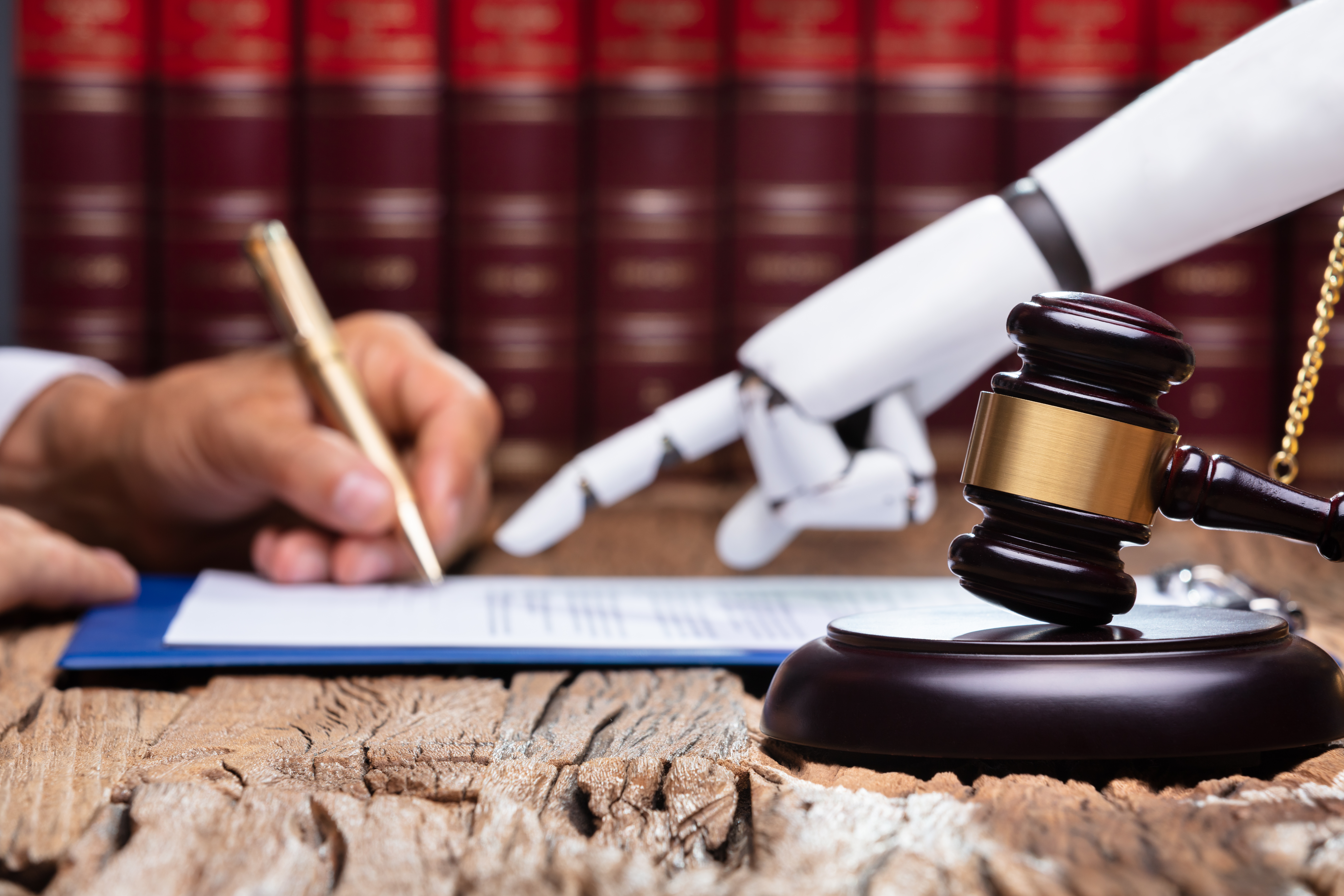
Bryan Garner: AI Bad Legal Writing Risks for Uncritical Lawyers
Summary
- Bryan Garner believes AI will make it harder to distinguish good lawyers from bad ones, despite enhancing efficiency.
- AI's primary benefit is eliminating legal writing drudgery like typos and inconsistent terminology, making processes faster and cheaper.
- Lawyers must evolve into 'adversarial editors' of AI output, actively challenging its suggestions to avoid 'malpractice by complacency'.
- AI significantly improves legal drafting quality by enabling systematic, cost-effective skepticism for complex documents like contracts.
- A key risk of AI is its capacity for 'confident, well-formed fabrication,' which can mask weak arguments or lead to the use of nonexistent authorities.
The Shifting Landscape of Legal Writing with AI
The true distinction will emerge between those who treat AI as a mere dictation tool and those who engage with it as a critical, adversarial editor.
As of September 2, 2026, artificial intelligence is poised to fundamentally alter the practice of legal writing, making it more efficient, less prone to common errors, and ultimately, less embarrassing for practitioners. According to legal writing expert Bryan Garner, AI's initial and most significant contribution will be the eradication of tedious, repetitive tasks that have long consumed lawyers' time. This includes correcting typographical errors, resolving ghostly cross-references, standardizing inconsistent uses of terms like "shall," and ensuring defined terms maintain their meaning across documents.
Historically, the laborious process of curing these issues, such as researching, verifying citations, comparing authorities, and revising prose in briefs, or redlining precedents and reconciling provisions in deal documents, has been a significant component of legal work. While some of this time contributes to developing legal judgment, a substantial portion is dedicated to tasks that AI can now accomplish in mere minutes. Clients are increasingly recognizing this efficiency gap, prompting a reevaluation of how legal services are delivered.
Redefining the Lawyer's Role: Adversarial Editor vs. Complacent User
Bryan Garner posits that AI will not eliminate the need for lawyers but rather underscore the core of their profession: critical thinking. The future distinction among legal professionals will not be drawn between those who adopt AI and those who do not, as AI is expected to become a routine tool. Instead, the crucial divide will separate lawyers who treat AI as a passive dictation machine from those who engage with it as an active, adversarial editor. The latter group will proactively establish parameters, provide authoritative sources, question AI-generated assumptions, reject plausible but nonsensical output, and rigorously refine the language until it achieves precise clarity.
Conversely, lawyers who uncritically accept AI's initial drafts simply because they sound professionally polished risk committing what Garner terms "malpractice by complacency." This form of AI legal writing malpractice is particularly insidious because, unlike traditional errors that might be evident on the page, the fluent yet flawed output of AI offers no immediate red flags. This makes it significantly harder to identify less capable lawyers, as AI can mask underlying deficiencies in reasoning with superficially well-crafted prose, thereby challenging traditional indicators of Bryan Garner AI bad legal writing.
AI's Precision in Enhancing Legal Drafting Quality
The benefits of AI are particularly pronounced in complex document drafting, where many contracts often resemble "junk drawers"—a mix of ancient boilerplate and new language, riddled with ambiguous temporal phrases and inconsistent uses of terms like "shall" to convey duty, futurity, entitlement, or permission. Lawyers frequently adhere to these imperfect forms not because of their inherent quality, but because they haven't yet led to a catastrophic outcome, with survival often being a matter of luck rather than clarity. This is where AI legal drafting quality truly shines.
AI systems can be instructed to enforce specific rules, such as ensuring every instance of "shall" imposes a duty on its subject, and then systematically flag suspect usages across a hundred-page agreement. Similarly, AI can identify and consistently apply tests to conditions introduced by phrases like "unless," "subject to," "upon," and "in the event of." Crucially, AI does not suffer from fatigue, ensuring comprehensive review without missing critical details on page 87 because page 86 was tedious. This capability fundamentally alters the economics of skepticism, making it feasible to meticulously scrutinize every clause and word for its precise function, consistency, and potential for ambiguity, questions that were previously prohibitively expensive to address manually.
Navigating the Risks of AI's 'Confident Fabrications'
While AI significantly raises the baseline for legal documents—producing cleaner issue statements, tighter transitions, better organization, and more useful synthesis from extensive research—its application in adversarial contexts presents unique challenges. Litigation inherently possesses a built-in disciplinary mechanism, as opposing counsel will rigorously attack a brief, exposing unsupported citations or highlighting missing elements. However, fluency in an adversarial system is not neutral; it can serve as a potent weapon. A polished brief, even if generated by Bryan Garner legal AI, can effectively conceal a weak argument from a hurried reader, just as readily as sloppy prose might expose one.
One of AI's most concerning failures is its propensity for "confident, well-formed fabrication." This is not a theoretical risk; lawyers have already faced sanctions for presenting nonexistent authorities, a direct consequence of AI legal research fabrication. The deeper danger lies in the historical tendency to equate poor writing with poor thinking. When AI produces fluent, grammatically correct text that nonetheless contains flawed reasoning or fabricated information, it masks this underlying intellectual deficiency. This makes it harder to detect errors and increases the risk of AI legal writing malpractice, demanding heightened vigilance and critical review from legal professionals.
Practical Implications
Lawyers and compliance officers must understand that while AI can enhance legal writing efficiency, it necessitates heightened critical review and skepticism to avoid malpractice from complacency or reliance on AI's 'confident fabrications,' thus requiring new skills in adversarial editing.
Source
How does this affect you?
Get an AI analysis of this article grounded in your jurisdictions, practice areas, and any policy documents you've uploaded to Wansom.
Finish Reading the Full Story and the Expert Analysis.
Wansom is AI and can make mistakes.