
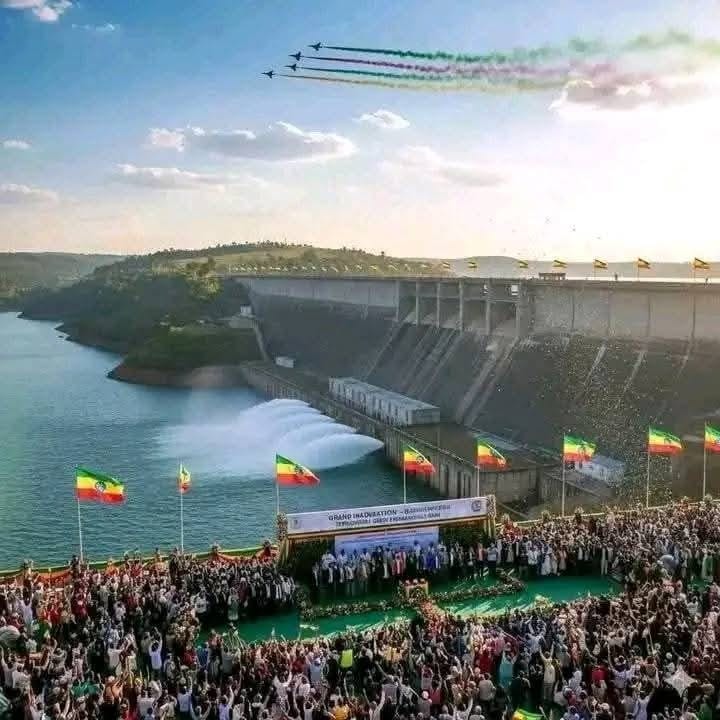
السُّودانُ وسَدُّ النَّهضة: وعودٌ بالمنافع وغيابٌ للضمانات ..!
Summary
- A 2026 decrease in water flow to Sudan's Al-Roseires Dam, partly attributed to the GERD, sparked a legal debate.
- Dr. Faisal Awad Hassan argues that international agreements require clear obligations, effective implementation, and remedies, not just good intentions.
- He questions whether existing Grand Ethiopian Renaissance Dam agreements provide sufficient and binding legal guarantees for Sudan's rights.
- Sudan must treat the GERD as an independent national issue, prioritizing its own protection over aligning with Egypt or Ethiopia.
- Historical transgressions by both Egypt and Ethiopia against Sudan underscore the need for independent and robust legal safeguards.
Recent Water Flow Concerns Spark Legal Debate
He posits that only explicit, robust legal provisions can truly serve as a definitive arbiter and provide recourse when disputes or damages inevitably arise.
The Sudanese Ministry of Agriculture and Irrigation issued a statement on July 16, 2026, reporting a significant decrease in the daily water inflow to the Al-Roseires Dam reservoir. This reduction was attributed, in part, to decreased discharge from the Grand Ethiopian Renaissance Dam (GERD). This incident prompted Dr. Salman Mohammed Ahmed Salman to publish an article on July 27, 2026, titled "The Ethiopian Renaissance Dam: A Reading of the 2022 Agreement and the Decline of Nile Waters in 2026."
Dr. Salman's piece, which critically analyzed the 2022 agreement in the context of the observed 2026 water decline, subsequently drew a detailed response from Dr. Faisal Awad Hassan. Dr. Hassan's commentary delves into the critical issue of Sudan GERD legal guarantees, firmly arguing that in matters of national security, mere good intentions or vague promises of benefits are fundamentally insufficient. He posits that only explicit, robust legal provisions can truly serve as a definitive arbiter and provide recourse when disputes or damages inevitably arise.
Scrutinizing International Water Law Agreements
Dr. Hassan emphasizes that the true measure of international agreements, particularly those concerning vital resources like the Nile River, lies not merely in their existence but in the clarity of their obligations, the efficacy of their implementation mechanisms, and the availability of effective remedies should their terms be breached. This perspective is crucial when evaluating the Grand Ethiopian Renaissance Dam agreements and their potential GERD impact on Sudan water. He highlights that without these robust elements, any agreement risks being insufficient to protect national interests.
The core of Dr. Hassan's legal inquiry, therefore, revolves around a fundamental and pressing question: Do the agreements signed concerning the Grand Ethiopian Renaissance Dam truly contain sufficient and legally binding guarantees to effectively safeguard Sudan's vital rights and national interests? This critical question underscores the imperative for comprehensive and rigorously enforceable protections, particularly given the potential for significant and immediate alterations to the Sudan Al-Roseires Dam water flow, which directly impacts agricultural and daily life.
Sudan's Independent Stance on the GERD
Before dissecting the specifics of the GERD agreements, Dr. Hassan stresses a foundational principle for Sudan: the Grand Ethiopian Renaissance Dam must be approached as an independent national issue. The sole criterion for evaluating any arrangement must be its ability to ensure the protection of Sudan and its rights. This perspective dictates that Sudan should not align itself with either Ethiopia against Egypt or vice versa in the ongoing regional dynamics surrounding the Nile River.
This independent stance is deeply rooted in historical realities, as Dr. Hassan points out that both neighboring nations have, at various times, committed significant transgressions against Sudan's sovereignty and territorial integrity. He specifically cites Egypt's occupation of the Halayeb region and Ethiopia's infiltration into Sudanese territory as clear historical examples, reinforcing the profound need for Sudan to consistently prioritize its own sovereign interests and secure robust International water law Sudan protections, entirely independent of any external alliances or pressures.
The Imperative for Enforceable Protections
The recent experience of reduced water flow to the Al-Roseires Dam reservoir in 2026, and the subsequent legal discourse, underscores the urgent need for clarity and enforceability within any Grand Ethiopian Renaissance Dam agreements. Dr. Hassan's analysis serves as a critical reminder that vague promises or non-binding assurances are inadequate when dealing with issues of national security and vital resources.
For Sudan, securing explicit and legally binding guarantees is paramount to mitigate risks associated with potential fluctuations in the Nile River's flow and to ensure long-term water security. The ongoing debate, therefore, highlights that any future Nile River treaties Sudan must decisively move beyond mere good faith declarations or aspirational statements. Instead, they must incorporate concrete, actionable mechanisms for dispute resolution, clear compensation frameworks, and enforceable compliance measures, thereby truly protecting Sudan's fundamental water rights and broader national interests against future uncertainties.
Practical Implications
Lawyers advising on Sudanese water rights or international agreements should note the critical analysis of GERD agreements, highlighting the lack of sufficient and binding legal guarantees for Sudan's interests. This necessitates a review of existing legal frameworks and potential strategies to mitigate risks associated with water flow reductions and ensure enforceable protections.
Source
How does this affect your business?
Get an AI analysis of this article grounded in your jurisdictions, practice areas, and any policy documents you've uploaded to Wansom.
Wansom is AI and can make mistakes.