
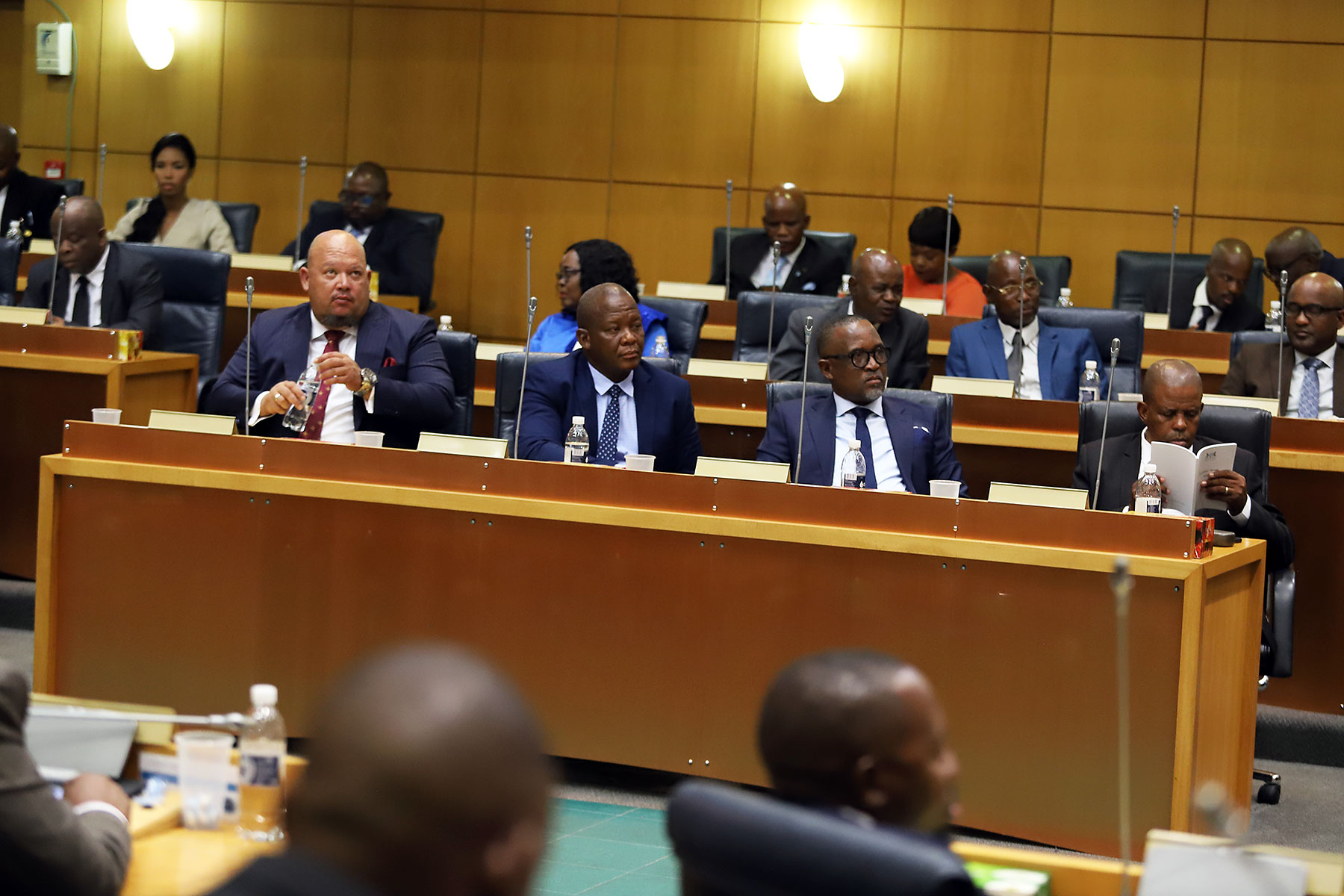
Botswana Parliament: Approves P85 Billion Bond Ceiling Increase
Summary
- Botswana's Parliament has approved a proposal to raise the government bond issuance ceiling from P55 billion to P85 billion.
- Finance Minister Ndaba Gaolathe presented the request, emphasizing it is for financing flexibility, not an immediate plan to borrow more.
- The minister clarified that the proposed P85 billion bond ceiling should not be interpreted as a borrowing target.
- The increase could provide greater capacity for the government to manage its finances and potentially absorb domestic capital, including from pension funds.
Legislative Proposal Unveiled
Finance Minister Ndaba Gaolathe presented this proposal to legislators, outlining the rationale behind the substantial upward revision of the bond ceiling.
Botswana's Parliament has approved a significant adjustment to the nation's public finance framework, specifically regarding the Botswana government bond issuance programme. A request was formally submitted to elevate the existing ceiling for government bonds from P55 billion to a new limit of P85 billion. This proposed increase, representing a P30 billion expansion, aims to provide greater operational latitude for the country's financial management.
Finance Minister Ndaba Gaolathe presented this proposal to legislators, outlining the rationale behind the substantial upward revision of the bond ceiling. The move is a critical step in potentially reshaping the landscape for government debt instruments and their role in the national economy. The legislative body's decision on this matter has determined the future scope of the government's ability to issue domestic bonds.
The current P55 billion limit has been in place, guiding the government's borrowing capacity through the issuance of securities. The new P85 billion bond ceiling marks a notable expansion, offering the government increased flexibility in managing its financial obligations and investment strategies. This legislative action underscores an ongoing effort to adapt Botswana's fiscal tools to evolving economic conditions and long-term development goals.
Ministerial Rationale and Context
Minister Gaolathe emphasized to Parliament that the primary motivation behind seeking a higher Botswana public debt limit is to enhance financing flexibility, rather than to signal an immediate intention for increased borrowing. He explicitly stated that the proposed P85 billion bond ceiling should not be misconstrued as a borrowing target that the government intends to reach or exceed in the short term. Instead, the minister framed it as a strategic measure to provide headroom for future financial operations.
The minister's statements aim to clarify the government's position, distinguishing between an expanded capacity to issue bonds and an actual commitment to borrow more. This distinction is crucial for market perception and maintaining confidence in Botswana's fiscal prudence. The increase from P55 billion to P85 billion bond capacity is presented as a proactive step to ensure the government has sufficient tools at its disposal to navigate economic fluctuations and fund essential projects without being constrained by an outdated ceiling.
While Minister Gaolathe focused on financing flexibility, the broader context, as highlighted in public discourse, often links such increases to the potential for absorbing domestic capital, particularly from large institutional investors. This includes the significant pools of capital held by Botswana pension fund investment schemes, which are continually seeking avenues for stable, long-term investments. The expanded bond ceiling could, therefore, indirectly facilitate greater domestic investment opportunities for these funds, aligning with national economic objectives.
Implications for Public Finance and Investment
The approval of the Botswana P85 billion bond ceiling carries significant implications for the nation's public finance management and the broader investment landscape. An increased ceiling provides the government with a larger buffer to manage liquidity, finance infrastructure, or respond to unforeseen economic challenges. It also signals a long-term view on the government's role in the domestic capital markets, potentially influencing the availability and pricing of government securities.
For financial institutions and pension funds operating within Botswana, an expanded Botswana government bond issuance programme could translate into a greater supply of sovereign debt instruments. This might offer more opportunities for Botswana pension fund investment, allowing them to diversify portfolios with low-risk government-backed assets. The legislative approval of this higher limit could therefore impact investment mandates and the strategic allocation of capital by institutional investors.
Ultimately, the decision on the Ndaba Gaolathe bond ceiling proposal reflects Parliament's assessment of the country's fiscal needs and its strategy for managing the Botswana public debt limit. It represents a critical juncture for the nation's financial policy, balancing the need for flexibility with prudent fiscal management and the stability of the domestic capital market.
Practical Implications
Lawyers advising financial institutions or pension funds in Botswana should monitor the legislative approval of this bond ceiling increase, as it could impact investment mandates, public finance stability, and the availability of government securities for client portfolios. Compliance officers should assess potential shifts in regulatory expectations regarding pension fund investment strategies.
Source
How does this affect you?
Get an AI analysis of this article grounded in your jurisdictions, practice areas, and any policy documents you've uploaded to Wansom.
Finish Reading the Full Story and the Expert Analysis.
Wansom is AI and can make mistakes.