
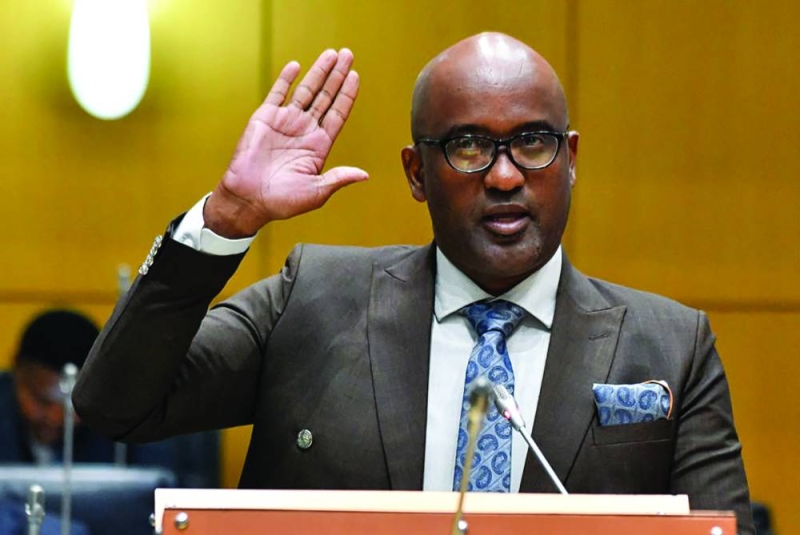
Botswana: Noah Salakae Corruption Resignation From Transport Ministry
Summary
- Noah Salakae, the Member of Parliament for Gantsi, resigned this week from his role as Minister of Transport and Infrastructure.
- His resignation occurred amidst corruption allegations.
- The allegations against Mr. Salakae have been described as a "deep-rooted political war."
What Happened
Lawyers advising clients on public sector procurement or compliance should monitor for related investigations or policy shifts within the Ministry of Transport and Infrastructure, as the fallout from the former Botswana Transport Minister's resignation could have lasting implications for regulatory enforcement and ethical expectations across the government.
A significant development in Botswana's political landscape occurred this week with the resignation of Noah Salakae, who served as the Minister of Transport and Infrastructure. Mr. Salakae, also the Member of Parliament for Gantsi, stepped down amidst a backdrop of corruption allegations. This departure marks a notable event for the government and raises questions regarding public official ethics in the country.
The allegations leveled against the former minister have been characterized as part of a "deep-rooted political war." This framing suggests that the accusations extend beyond simple misconduct, hinting at underlying power struggles or factional disputes within the political sphere. The nature of these claims, coupled with the high-profile ministerial position held by Mr. Salakae, brings considerable attention to the integrity of public service in Botswana.
Ministerial Departure and Public Scrutiny
The resignation of a cabinet minister, particularly one overseeing a critical portfolio like Transport and Infrastructure, invariably draws intense public and media scrutiny. Such a move, especially when linked to corruption allegations, underscores the ongoing challenges faced by nations striving for transparent governance. For Botswana, this incident involving Noah Salakae highlights the persistent need for accountability among its public officials, reinforcing the importance of maintaining public trust in government institutions.
The Ministry of Transport and Infrastructure is often a focal point for large-scale public projects and significant financial outlays, making it a sector particularly susceptible to scrutiny regarding procurement processes and ethical conduct. The allegations surrounding the Gantsi MP, Noah Salakae, therefore, resonate deeply within discussions about Botswana public official ethics and the mechanisms in place to uphold them. His departure under these circumstances could signal a heightened focus on integrity across government departments.
Broader Implications for Governance in Botswana
This recent development, involving the Noah Salakae corruption resignation Botswana, is likely to intensify calls for greater transparency and stricter adherence to ethical standards across the public sector. The characterization of the allegations as a "political war" also points to the complex interplay between political dynamics and governance issues, where accusations may serve multiple purposes beyond mere exposure of wrongdoing. This context adds another layer to understanding the challenges of maintaining integrity in public office, suggesting that the motivations behind such claims can be multifaceted.
The incident could prompt a re-evaluation of existing oversight mechanisms and potentially lead to increased vigilance from anti-corruption bodies and civil society organizations. For legal professionals and businesses operating within Botswana, particularly those involved in public sector procurement or infrastructure projects, this event signals a potential era of heightened scrutiny. Lawyers advising clients on public sector procurement or compliance should monitor for related investigations or policy shifts within the Ministry of Transport and Infrastructure, as the fallout from the former Botswana Transport Minister's resignation could have lasting implications for regulatory enforcement and ethical expectations across the government.
Practical Implications
This development signals potential increased scrutiny on public officials in Botswana, particularly concerning corruption allegations. Lawyers advising clients on public sector procurement or compliance should monitor for related investigations or policy shifts within the Ministry of Transport and Infrastructure.
Source
How does this affect you?
Get an AI analysis of this article grounded in your jurisdictions, practice areas, and any policy documents you've uploaded to Wansom.
Wansom is AI and can make mistakes.