
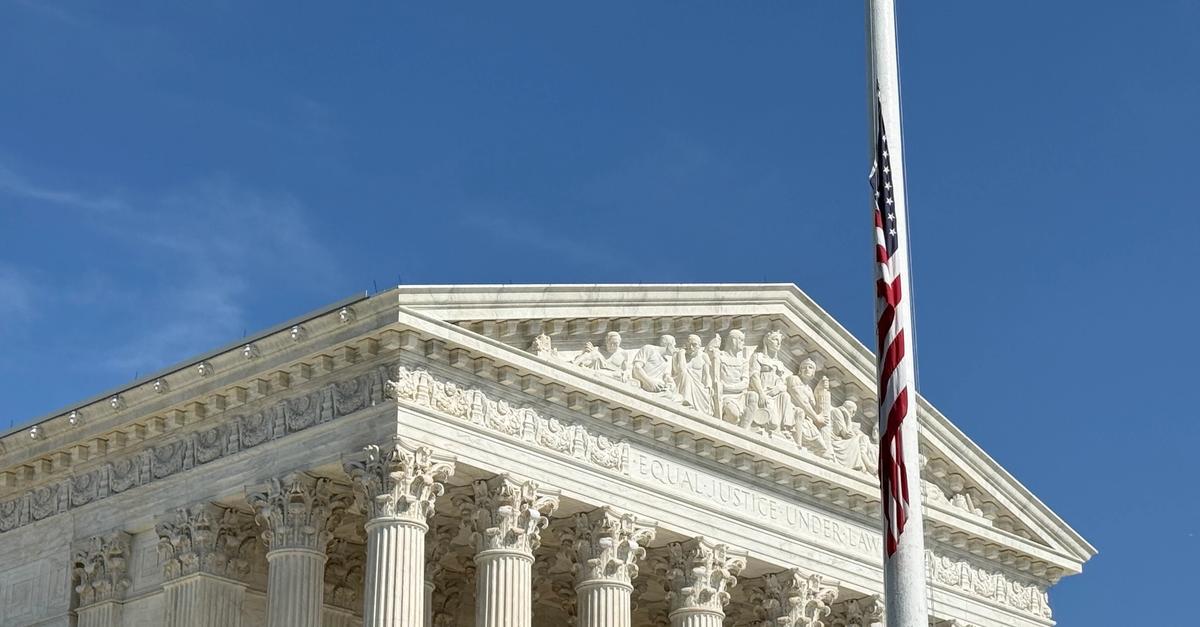
US Supreme Court: Born Free and Equal Principle vs. Buck v. Bell
Summary
- The concept of individuals being "born free and equal" is deeply embedded in American constitutional law, originating in the Declaration of Independence and present in a significant number of state constitutions since 1791.
- This principle was found in 6 of 12 state constitutions in 1791, 24 of 37 in 1868, and 37 of 50 today, exemplified by Article I of the Massachusetts Constitution of 1780.
- The 14th Amendment's Privileges or Immunities Clause constitutionalizes the "born free and equal" idea, though it does not establish a general "right to privacy."
- The Supreme Court has applied this concept in modern cases such as *Washington v. Glucksberg*, *McDonald v. City of Chicago*, and *Dobbs v. Jackson Women’s Health Organization*.
- The historical understanding of being "born free and equal" continues to influence constitutional analysis, including discussions around cases like the "noxious" *Buck v. Bell*.
Historical Roots of Equality
The enduring principle of being 'born free and equal' is not merely a historical artifact but remains deeply rooted in American legal tradition, influencing modern constitutional analysis.
The foundational principle that individuals are "born free and equal" holds a significant, enduring place in American constitutional thought and legal history. This concept, explicitly articulated in the Declaration of Independence, has been a recurring theme in state constitutional documents since the nation's inception. For instance, at the time the federal Bill of Rights was ratified in 1791, six out of the twelve existing state constitutions incorporated clauses reflecting this fundamental idea.
Its prevalence only grew over time, underscoring its deep entrenchment in the legal landscape. By 1868, when the 14th Amendment was ratified, a substantial majority of state constitutions—specifically, twenty-four out of thirty-seven—contained provisions affirming that individuals are born free and equal. This historical trajectory continues into the present day, with thirty-seven out of the fifty current state constitutions featuring similar declarations. A prime example is Article I of the Massachusetts Constitution of 1780, which unequivocally states: "All men are born free and equal, and have certain natural, essential, and unalienable rights; among which may be reckoned the right of enjoying and defending their lives and liberties; that of acquiring, possessing, and protecting property; in fine, that of seeking and obtaining their safety and happiness." This enduring presence highlights the concept's profound historical and traditional significance.
Constitutional Integration and Interpretation
The enduring principle of being "born free and equal" is not merely a historical artifact but remains deeply rooted in American legal tradition, influencing modern constitutional analysis. While the 14th Amendment does not explicitly establish a "right to privacy," its Privileges or Immunities Clause plays a crucial role in constitutionalizing the broader idea that individuals are born free and equal. This clause serves as a conduit, integrating this fundamental concept into the federal constitutional framework and providing a basis for protecting certain individual liberties.
This constitutionalization through the 14th Amendment Privileges or Immunities Clause underscores the idea's importance in defining the scope of individual rights. The concept's deep historical roots and traditional acceptance provide a framework for understanding the evolving interpretation of constitutional protections, particularly concerning fundamental liberties. It offers a lens through which courts can evaluate claims related to inherent human dignity and autonomy, even as specific rights, like a general "right to privacy," are not directly derived from it.
Modern Judicial Application
The Supreme Court has referenced the "born free and equal" idea in several significant rulings, demonstrating its continued relevance in contemporary jurisprudence. This concept has been invoked in cases considered "correctly decided" by some legal scholars, such as *Washington v. Glucksberg*, which rejected a constitutional right to assisted suicide, and *McDonald v. City of Chicago*, which affirmed the Second Amendment's right to bear arms for self-protection applies to the states. More recently, the principle also informed the decision in *Dobbs v. Jackson Women’s Health Organization*, which overturned *Roe v. Wade*, reshaping the landscape of abortion rights.
These applications illustrate how the historical understanding of individuals being born free and equal can underpin various constitutional outcomes, from limiting certain perceived rights to expanding others. The ongoing constitutional analysis surrounding these foundational principles, including their relationship to cases like the "noxious" *Buck v. Bell*, continues to shape the interpretation of individual liberties and the scope of governmental power. This framework provides a critical perspective for lawyers navigating complex constitutional litigation, particularly concerning the 14th Amendment and its evolving implications for fundamental rights.
Practical Implications
This analysis provides a critical framework for lawyers engaged in constitutional litigation, particularly concerning individual rights and the 14th Amendment. It highlights how historical principles like 'born free and equal' are being re-evaluated to challenge or support existing precedents, offering new avenues for legal argumentation and advising clients on the evolving scope of fundamental liberties.
Source
How does this affect you?
Get an AI analysis of this article grounded in your jurisdictions, practice areas, and any policy documents you've uploaded to Wansom.
Finish Reading the Full Story and the Expert Analysis.
Get the latest legal & regulatory intelligence in United States
Wansom is AI and can make mistakes.