
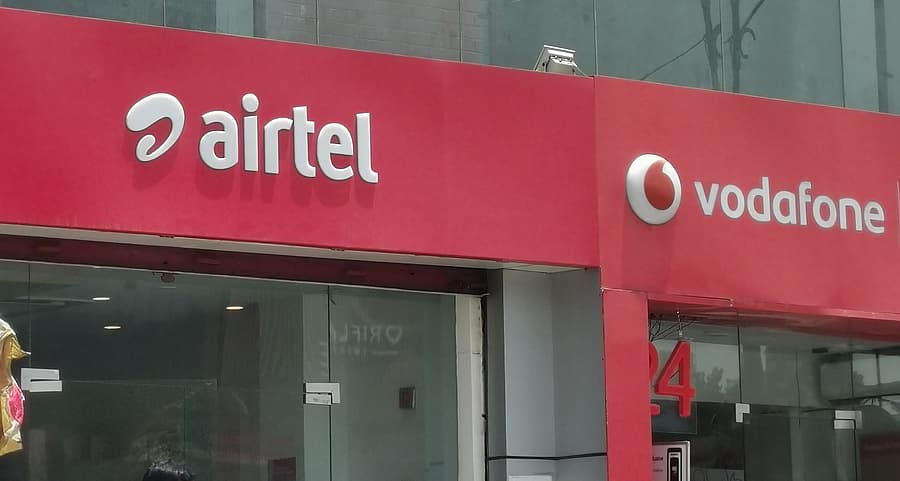
Supreme Court: One-Time Spectrum Charges Plea Against Airtel, Vodafone Idea
Summary
- The Supreme Court has sought responses from Bharti Airtel and Vodafone Idea regarding the Central government's challenge to a Bombay High Court judgment.
- The Bombay High Court had quashed the retrospective levy of one-time spectrum charges (OTSC) on telecom companies.
- The dispute originated in 2012 when the government decided to impose OTSC on spectrum held beyond 6.2 MHz between July 1, 2008, and December 31, 2012.
- Telecom companies argued that Section 4 of the Indian Telegraph Act, 1885, and their licence agreements did not permit such retrospective financial liability.
- The Bombay High Court ruled that licences are contracts, preventing the government from unilaterally imposing unforeseen retrospective charges, and directed the return of bank guarantees.
Supreme Court Seeks Responses on Retrospective Spectrum Charges
The Supreme Court's eventual ruling in `Union of India v. Airtel` carries substantial implications for the regulatory landscape of India's telecommunications sector and beyond.
India's Supreme Court has initiated proceedings in a significant regulatory dispute, requesting responses from telecom giants Bharti Airtel and Vodafone Idea. This action follows a plea filed by the Central government, which seeks to overturn a Bombay High Court judgment that had previously quashed the retrospective imposition of one-time spectrum charges (OTSC) on these operators. The case, formally titled `Union of India v. Airtel`, is now under the purview of a Supreme Court Bench comprising Justices BV Nagarathna and R Mahadevan, who have issued notice in the matter.
The government's challenge revives a contentious issue regarding the financial liabilities of telecom companies, potentially impacting their balance sheets significantly. The Supreme Court's decision to hear the plea underscores the complexity and high stakes involved in interpreting regulatory powers and contractual obligations within the telecommunications sector. This development places the long-standing dispute back into the national spotlight, with the outcome poised to set a crucial precedent for future government levies.
The Genesis of the One-Time Spectrum Levy
The origins of this dispute trace back to 2012, when the government initially decided to impose a one-time charge on spectrum already held by existing telecom operators. Specifically, the Department of Telecommunications (DoT) aimed to levy OTSC on spectrum holdings that exceeded 6.2 MHz. This charge was intended to cover the period between July 1, 2008, and December 31, 2012, with the pricing mechanism for these charges determined by the rates established during the 2012 spectrum auction.
Bharti Airtel and Vodafone Idea swiftly challenged this governmental decision. Their primary contention was that neither Section 4 of the Indian Telegraph Act, 1885, nor the terms stipulated within their existing licence agreements, provided any legal basis for the government to impose such a retrospective financial liability. This argument formed the bedrock of their legal challenge, asserting that the government's actions constituted an overreach of its regulatory authority and a breach of contractual understanding.
Bombay High Court's Contractual Interpretation
In a significant ruling delivered on June 8 of this year, a Bombay High Court Bench, consisting of Justices Manish Pitale and Shreeram V Shirsat, sided with the telecom companies. The High Court's judgment effectively quashed the government's decisions to impose the OTSC and all subsequent demands for payment. A core tenet of the High Court's reasoning was its interpretation of the licences granted under Section 4 of the Indian Telegraph Act, 1885, as binding contracts between the government and the telecom operators.
The court explicitly held that, given the contractual nature of these licences, the government lacked the authority to unilaterally impose an additional financial liability that was both retrospective and not originally contemplated within the terms of the agreements. Furthermore, the Bombay High Court directed the government to return any bank guarantees that had been furnished by the telecom companies in relation to these disputed charges, reinforcing its stance against the retrospective levy.
Broader Implications for Regulatory Authority
The Supreme Court's eventual ruling in `Union of India v. Airtel` carries substantial implications for the regulatory landscape of India's telecommunications sector and beyond. Lawyers advising telecom clients or engaged in regulatory disputes should closely monitor this case, as its outcome will definitively determine the legality of the government's power to impose retrospective financial liabilities on telecom operators. This decision could either validate or curtail the government's ability to introduce new charges for past periods, thereby influencing future policy decisions.
Moreover, the case will set a significant precedent for the interpretation of contractual agreements under the now-repealed Indian Telegraph Act, 1885. The Supreme Court's stance on whether licences constitute immutable contracts, preventing unilateral retrospective amendments, will have far-reaching consequences. Depending on the judgment, affected companies could face substantial financial exposure or, conversely, receive significant relief, making this a pivotal moment for legal and financial strategists in the industry.
Practical Implications
Lawyers advising telecom clients or involved in regulatory disputes should closely monitor this Supreme Court case, as its outcome will determine the legality of the government's power to impose retrospective financial liabilities on telecom operators and could set a significant precedent for contractual interpretation under the Indian Telegraph Act, potentially leading to substantial financial exposure or relief for affected companies.
Source
How does this affect your business?
Get an AI analysis of this article grounded in your jurisdictions, practice areas, and any policy documents you've uploaded to Wansom.
Wansom is AI and can make mistakes.