
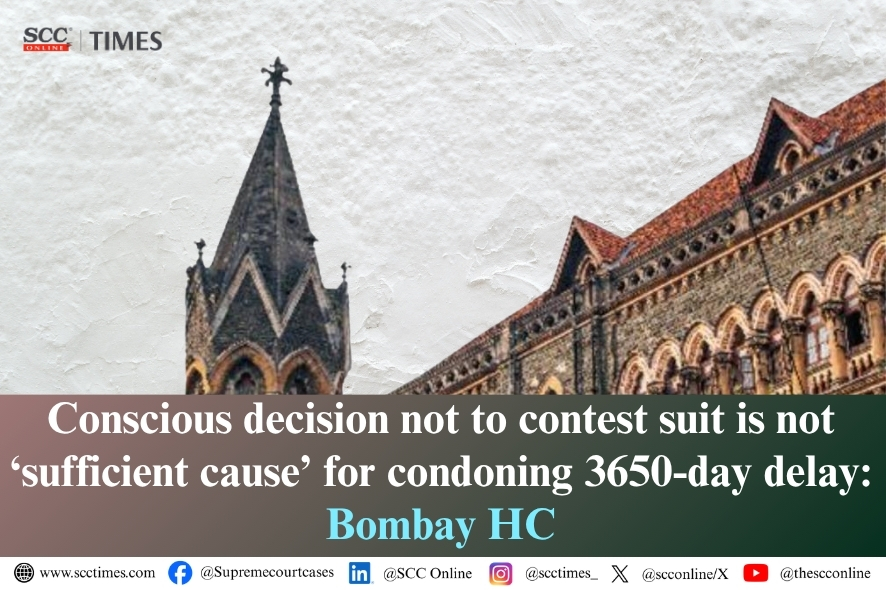
Bombay High Court: No Condonation of 3650-Day Delay Without Sufficient Cause
Summary
- The Bombay High Court held that a conscious decision not to contest a suit is not sufficient cause for condoning a delay of over three years.
- The court's judgment highlights the importance of timely participation in legal proceedings and clear communication between litigants, lawyers, and courts.
- Lawyers should be cautious when advising clients on seeking indulgence for prolonged delays, as a mere conscious decision not to contest a suit may not suffice.
- The Bombay High Court's ruling sets a precedent for future cases and demonstrates the court's commitment to upholding the principles of justice.
What Happened
A litigant cannot simply remain absent from proceedings for years and then seek leniency on the ground of a supposed bona fide misunderstanding.
In a recent ruling, the Bombay High Court made it clear that a conscious decision not to contest a suit is not sufficient cause for condoning a delay of over three years. The court's judgment came in response to an application by a litigant seeking indulgence for their prolonged absence from proceedings. According to the court, a litigant cannot simply remain absent from proceedings for years and then seek leniency on the ground of a supposed bona fide misunderstanding.
The court's decision highlights the importance of timely participation in legal proceedings. It serves as a reminder that lawyers and clients must be proactive in managing their cases and avoiding unnecessary delays. The ruling also underscores the need for clear communication between litigants, their lawyers, and the courts to prevent misunderstandings that can lead to prolonged absences from proceedings.
The Bombay High Court's judgment is significant not only because of its implications for the litigant involved but also because it sets a precedent for future cases. It demonstrates the court's commitment to upholding the principles of justice and ensuring that legal proceedings are conducted in a timely and efficient manner.
Legal Context
The Bombay High Court's decision is rooted in the principles of law governing condonation of delay. In India, courts have the discretion to condone delays if they consider it just and proper to do so. However, this discretion is not absolute, and courts must carefully consider the circumstances surrounding each case before making a decision.
In recent years, there has been an increasing trend towards stricter enforcement of time limits in legal proceedings. This shift reflects a growing recognition of the importance of timely justice and the need for litigants to be proactive in managing their cases. The Bombay High Court's ruling is consistent with this trend and reinforces the idea that courts will not condone delays without sufficient cause.
The court's decision also highlights the role of lawyers in advising clients on seeking indulgence for prolonged delays. Lawyers must carefully consider the merits of each case and advise their clients accordingly. A mere conscious decision not to contest a suit may not suffice, and lawyers should be cautious when advising clients on seeking indulgence for prolonged delays.
Why It Matters
The Bombay High Court's decision has significant implications for litigants, lawyers, and the broader legal community. It underscores the importance of timely participation in legal proceedings and highlights the need for clear communication between litigants, their lawyers, and the courts.
The ruling also serves as a reminder that lawyers should be cautious when advising clients on seeking indulgence for prolonged delays. A mere conscious decision not to contest a suit may not suffice, and lawyers must carefully consider the merits of each case before advising their clients.
In addition, the court's decision reinforces the idea that courts will not condone delays without sufficient cause. This sets a precedent for future cases and demonstrates the court's commitment to upholding the principles of justice and ensuring that legal proceedings are conducted in a timely and efficient manner.
Practical Implications
Lawyers should be cautious when advising clients on seeking indulgence for prolonged delays in court proceedings, as a mere conscious decision not to contest the suit may not suffice.
Source
Source: Original reporting via SCC Times
How does this affect you?
Get an AI analysis of this article grounded in your jurisdictions, practice areas, and any policy documents you've uploaded to Wansom.
Wansom is AI and can make mistakes.