
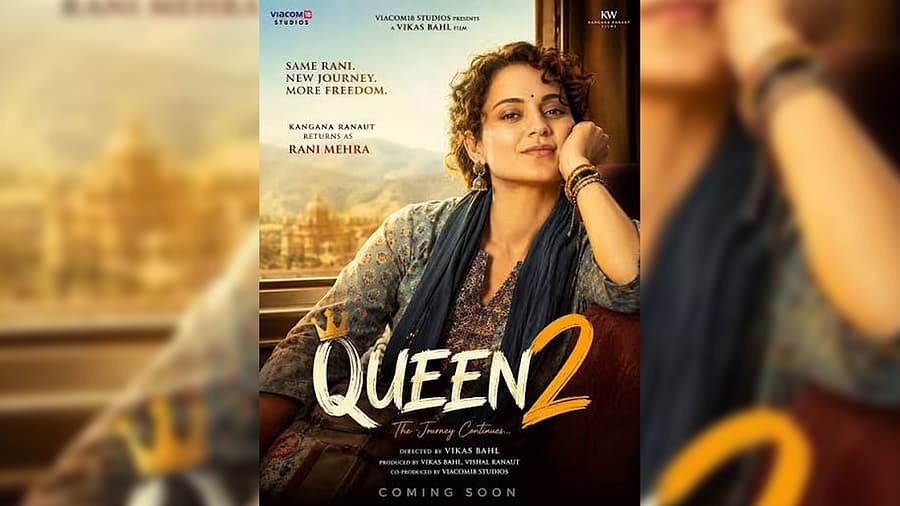
Bombay High Court: Declines JioStar Queen Forever Injunction
Summary
- The Bombay High Court refused to grant an interim injunction against JioStar's upcoming film, "Queen Forever."
- Phantom Studios alleged the film is an unauthorized sequel to their 2014 movie "Queen" and sued for ₹250 crore.
- Phantom claimed joint and equal ownership of intellectual property and derivative rights through a 2012 co-production agreement and a 2022 novation deed. JioStar (formed from the merger of Viacom18 and Disney Star) is claimed to be joint and equal owners.
- JioStar countered that the new film is not a continuation and that Phantom was aware of the project since April 2025.
- Justice Sandeep Marne's decision allows "Queen Forever" to proceed while the main lawsuit continues, with a detailed order still awaited.
Court Denies Injunction in Film Rights Dispute
The Bombay High Court's refusal to grant an interim injunction against JioStar's 'Queen Forever' underscores the stringent requirements for halting film projects amidst intellectual property disputes.
The Bombay High Court recently declined to issue an interim injunction against JioStar regarding its forthcoming movie, "Queen Forever." Justice Sandeep Marne presided over the matter, refusing the relief sought by Phantom Studios in the case of Phantom Studios v. JioStar India & Ors.
Phantom Studios had initiated a lawsuit against JioStar India, seeking ₹250 crore. The core of their claim was that "Queen Forever" constitutes an unauthorized sequel to the critically acclaimed 2014 film "Queen," which they co-produced. The court's decision means that, for now, the production and release of "Queen Forever" can proceed while the larger legal dispute unfolds.
Basis of the Intellectual Property Claim
Phantom Studios' legal challenge is rooted in allegations of a breach of contract, specifically referencing a 2012 co-production agreement and a subsequent 2022 deed of novation. According to Phantom, these agreements establish both Phantom and JioStar (formed from the merger of Viacom18 and Disney Star) as joint and equal owners of all intellectual property and derivative rights associated with the original "Queen" film.
In their interim application, Phantom Studios sought a court order to temporarily prevent the defendants from creating, releasing, or promoting any sequel or adaptation of the film, including "Queen Forever," without Phantom's explicit written consent. This injunction was intended to remain in effect until the primary lawsuit reached a final resolution.
JioStar's Defense and Judicial Consideration
JioStar, in its defense, categorically denied Phantom Studios' allegations, asserting that the new film, "Queen Forever," is not a direct continuation of the original 2014 movie. They further contended that Phantom Studios had been fully aware of the "Queen Forever" project since April 2025 and had engaged in prior correspondence with JioStar regarding the venture. Additionally, JioStar highlighted that the film is slated for release later this year, suggesting that a last-minute injunction would cause significant disruption.
After carefully considering the arguments presented by both parties, Justice Marne ultimately decided against granting the interim injunction. This decision allows the project to move forward, though a detailed order outlining the court's full reasoning is still pending. Senior advocates Darius J Khambatta and Sharan Jagtiani, alongside Rohan Dakshini from Rashmikant & Partners, represented Phantom Studios in these proceedings.
Implications for Film Derivative Rights in India
The Bombay High Court's refusal to grant an interim injunction against JioStar's 'Queen Forever' underscores the stringent requirements for halting film projects amidst intellectual property disputes. This ruling is significant for the film and entertainment industry in India, particularly concerning film derivative rights and co-production agreements. It highlights the high bar for obtaining such pre-emptive relief, especially when a substantial claim for damages, like the ₹250 crore sought by Phantom Studios, is already on the table.
This case serves as a crucial reminder for parties involved in co-production agreements and intellectual property film sequel projects about the importance of clear contractual terms regarding ownership and the precise scope of derivative rights. The court's decision, even before a detailed order is released, suggests that factors such as awareness of the project and the timing of seeking injunctive relief can heavily influence outcomes in complex intellectual property disputes.
Practical Implications
Lawyers advising clients in the film and entertainment industry should note this decision as it underscores the high bar for obtaining interim injunctions in intellectual property disputes, particularly concerning derivative works and co-production agreements. It highlights the importance of clear contractual terms regarding IP ownership and the potential impact of delays in asserting rights, even when a substantial claim for damages is made.
Source
How does this affect you?
Get an AI analysis of this article grounded in your jurisdictions, practice areas, and any policy documents you've uploaded to Wansom.
Finish Reading the Full Story and the Expert Analysis.
Get the latest legal & regulatory intelligence in India
Wansom is AI and can make mistakes.