
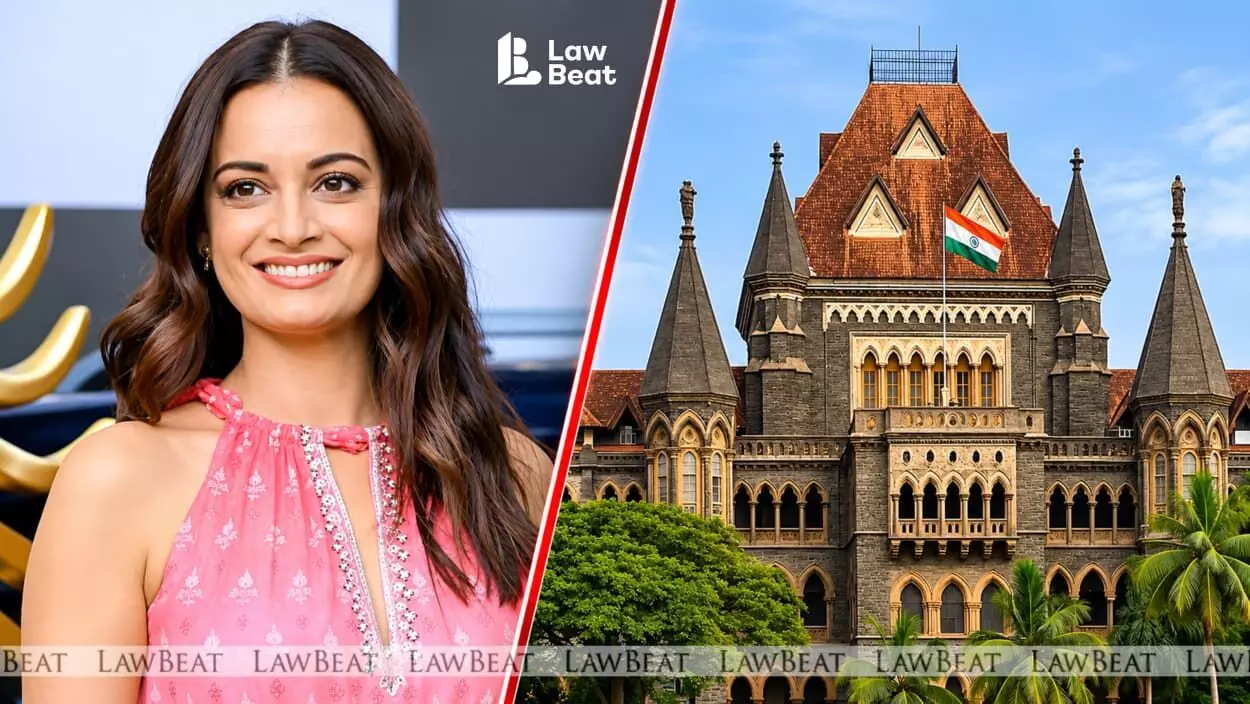
Bombay High Court: BMC Must Restore Dia Mirza Diwali Video
Summary
- The Bombay High Court ordered the BMC to re-upload Dia Mirza's Diwali awareness video, which was removed due to political objections.
- The court emphasized that India is a secular country and environmental issues should not be given a communal color.
- The campaign aimed to raise awareness about firecracker pollution for an environment-friendly Diwali.
- Political figures had objected to Mirza's participation, questioning her religious identity and perceived bias.
- The ruling reinforces the principle that all citizens have the right to participate in festivals and public awareness campaigns regardless of religion.
Court Orders Reinstatement of Diwali Video
The Bombay High Court underscored the principle that India operates as a secular nation, asserting that no individual should be prevented from participating in festival celebrations based solely on their religious identity.
The Bombay High Court has mandated the Brihanmumbai Municipal Corporation (BMC) to restore an awareness video featuring actor Dia Mirza, which had been removed from its social media platforms. The video, part of a broader campaign for an environment-friendly Diwali, was taken down following objections from political figures. A Division Bench comprising Justice Girish Kulkarni and Justice Neela Gokhale issued the directive on November 3, expressing significant disapproval over the controversy surrounding Mirza's involvement.
The court's order came after the BMC had initially removed the Dia Mirza Diwali video, while similar public service announcements featuring other celebrities, such as actor Madhuri Dixit and cricketer Ajinkya Rahane, remained accessible. The campaign aimed to sensitize citizens about the detrimental effects of firecrackers, specifically addressing air and noise pollution during the festive season. Mirza's contribution specifically encouraged celebrating Diwali with lights and avoiding noisy firecrackers on public thoroughfares.
Political objections to Mirza's participation were vocal, with Mumbai BJP chief Ameet Satam initiating the controversy. Mumbai Mayor Ritu Tawde subsequently labeled Mirza as holding an "anti-Hindu" and "anti-Hindutva" stance. Maharashtra Minister Nitesh Rane also criticized the actor, questioning why she advocated for an environment-friendly Diwali but did not issue similar appeals during Eid, Muharram, and Bakri Eid. The High Court expressed concern that a campaign designed for environmental awareness had been given an unwarranted communal dimension.
Secularism and Environmental Responsibility
The Bombay High Court underscored the principle that India operates as a secular nation, asserting that no individual should be prevented from participating in festival celebrations based solely on their religious identity. The bench orally remarked on the impropriety of objecting to someone's involvement due to their religious background, questioning the basis for such opposition in a secular country. This stance emerged during the court's ongoing suo motu proceedings, titled `In Re: Noise and Environmental Pollution`, which addresses noise and air pollution caused by firecrackers during various festivals.
The court had previously, on October 26, advised civic authorities to engage prominent personalities in awareness campaigns, without remuneration, to educate the public about the harmful impacts of bursting firecrackers. Following this suggestion, the BMC, Maharashtra Pollution Control Board, and police authorities collaborated to involve several celebrities, including Dia Mirza, in promoting an environmentally conscious Diwali. The High Court noted that the BMC Commissioner had taken appropriate steps by enlisting celebrities for this public awareness initiative.
Judges emphasized that environmental concerns should not be politicized or given a communal hue. They stated that the issue of environmental quality affects everyone, irrespective of their religion or caste, as all citizens breathe the same air. The court found no justification for mischaracterizing the initiative, which was purely focused on environmental protection, and expressed disturbance over comments made by politicians against celebrities who voluntarily contributed to a civic body's public awareness effort.
Why This Ruling Matters
This ruling by the Bombay High Court reinforces the critical legal principle of secularism in India, particularly as it pertains to public awareness campaigns. The court's strong disapproval of attempts to communalize an environmental initiative sends a clear message that such efforts should transcend religious boundaries and political motivations. By directing the re-upload of the Bombay High Court Dia Mirza Diwali video, the judiciary has affirmed that environmental issues are universal and should not be hijacked by divisive narratives.
The court's observation that Mumbai thrives on a spirit of togetherness and belonging, which should not be undermined by irresponsible comments, highlights the broader societal implications of such controversies. It serves as a reminder that public discourse, especially from political figures, must uphold constitutional values and avoid creating divisions based on religious identity in matters of public welfare. The decision ensures that public bodies can continue to engage diverse voices in campaigns without fear of politically motivated communal objections.
Ultimately, the judgment underscores that environmental protection is a collective responsibility, affecting everyone equally. The court's insistence that environmental issues should not be given a "different color" or be "hijacked" by other considerations reinforces the importance of focusing on the core objective of public health and ecological well-being, rather than allowing politically charged interpretations to derail beneficial initiatives.
Practical Implications
This ruling reinforces the legal principle of secularism in India, particularly regarding public awareness campaigns. Lawyers advising public bodies or organizations involved in such campaigns should ensure that content and participant selection are non-discriminatory and uphold constitutional secular values, as courts will intervene against politically motivated communal objections that undermine public initiatives.
Source
Source: Original reporting via Live Law
How does this affect you?
Get an AI analysis of this article grounded in your jurisdictions, practice areas, and any policy documents you've uploaded to Wansom.
Wansom is AI and can make mistakes.