
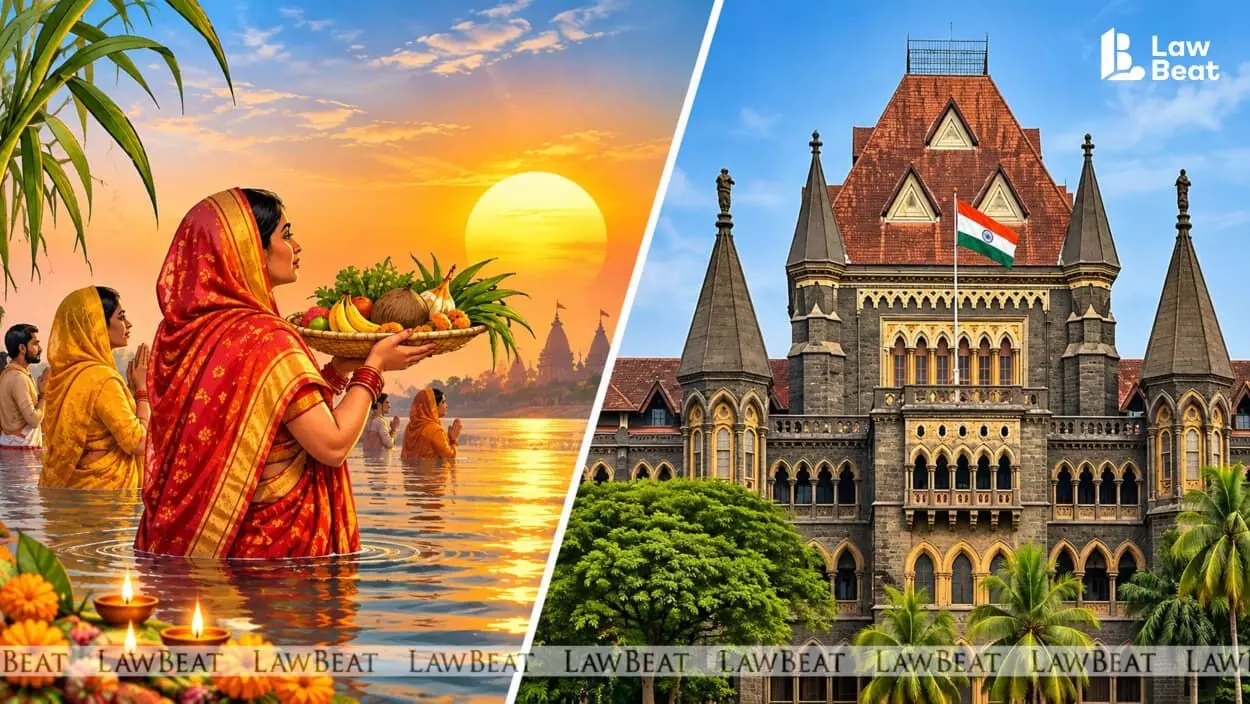
Bombay High Court: No Chhath Puja at Girgaon Chowpatty
Summary
- The Bombay High Court declined to permit Chhath Puja at Girgaon Chowpatty for November 15 and 16, 2026.
- The Mithila Chhath Puja Sangh failed to show compliance with prior court orders, specifically regarding permission from the Monitoring Committee.
- The DB Marg Police Station had previously refused permission, citing a High Power Committee's rules for Girgaon Chowpatty.
- Earlier High Court orders from 2018 in Adarsh Chowpatty Pragati Mandal mandated a Monitoring Committee as a necessary party for event permissions.
- The court reiterated that freedom of religion under Article 25 is subject to public order, morality, and health.
What Happened
Lawyers advising on such events must ensure strict compliance with existing court orders and regulatory frameworks, including obtaining necessary permissions from designated monitoring committees, as procedural adherence is paramount for successful event authorization.
The Bombay High Court recently declined to issue directives that would have permitted the Mithila Chhath Puja Sangh to organize Chhath Puja festivities at Mumbai's Girgaon Chowpatty on November 15 and 16, 2026. A division bench comprising Justices Ranjitsinha Raja Bhonsale and Advait M. Sethna issued this order on November 9, 2026, while addressing a petition filed by the Sangh against the State of Maharashtra. The court's decision stemmed from the organizers' inability to adequately demonstrate compliance with existing regulations governing public events at the beach, particularly the requirement to secure permission from the designated Monitoring Committee.
The Mithila Chhath Puja Sangh had initially sought permission from the DB Marg Police Station for the construction of a stage and other arrangements necessary for the religious observance. However, the police station, in a communication dated September 17, 2026, refused the request. This refusal was predicated on prior High Court proceedings that led to the establishment of a High Power Committee for Girgaon Chowpatty, which stipulated that only specific events—Ganeshotsav, Navratri Utsav, Ramlila, Krishnalila, and Christmas—were generally permitted, and that all events required prior departmental approval. Following this, the organizers also submitted a representation to the Maharashtra Chief Minister on October 7, 2026, requesting permission, but this appeal remained pending at the time of the High Court hearing.
Regulatory Framework and Procedural Lapses
During the proceedings, the State's counsel highlighted previous High Court directives from the 2018 case of Adarsh Chowpatty Pragati Mandal. These earlier orders established specific conditions for conducting events at Girgaon Chowpatty, including a restriction that certain functions be confined to a designated area measuring 300 x 150 square feet. Crucially, these directives also clarified that the Monitoring Committee, which had been appointed in the matter, was an indispensable party in any legal proceedings concerning permissions for functions or the erection of temporary structures and infrastructure on the beach.
When the bench directly questioned the petitioner's counsel regarding their compliance with these established directions, particularly concerning obtaining the necessary permission from the Monitoring Committee and impleading it as a party to the current petition, the counsel offered no response. This procedural oversight proved to be a significant factor in the court's decision, underscoring the importance of adhering to the regulatory framework specifically designed for public events at Girgaon Chowpatty.
Constitutional Rights and Public Order
The Bombay High Court also invoked Article 25 of the Constitution of India in its observations. While acknowledging the fundamental freedom of conscience and the right to freely profess, practice, and propagate religion, the court emphasized that this constitutional right is not absolute. Instead, it remains subject to considerations of public order, morality, and health. This judicial stance reinforces the principle that while religious practices are protected, they must be exercised within the bounds of established legal procedures and without infringing upon broader public welfare or existing regulatory mechanisms.
The court's observation on Article 25 served to contextualize its refusal, indicating that even deeply held religious freedoms must align with the procedural requirements and public order considerations that govern the use of public spaces. The Mithila Chhath Puja Sangh's failure to navigate these procedural requirements, particularly regarding the Monitoring Committee, was therefore viewed through the lens of these constitutional limitations.
Court's Final Stance and Implications
Ultimately, the Bombay High Court declined to issue any further orders at this stage regarding the Chhath Puja event at Girgaon Chowpatty. The court did not express an opinion on the Sangh's request for directions concerning an alternative venue, merely noting that the petitioner was free to pursue other legal remedies available to them. The matter has been directed to be listed again after the Diwali vacations.
This ruling serves as a critical reminder for organizers of public events, especially religious gatherings in regulated public spaces like Girgaon Chowpatty. It highlights that constitutional rights, such as the freedom of religion, are not unfettered and are subject to public order and established legal processes. Lawyers advising on such events must ensure strict compliance with existing court orders and regulatory frameworks, including obtaining necessary permissions from designated monitoring committees, as procedural adherence is paramount for successful event authorization.
Practical Implications
Lawyers advising on public events, especially religious gatherings in regulated public spaces, must ensure strict compliance with existing court orders and regulatory frameworks, including obtaining necessary permissions from designated monitoring committees. Failure to adhere to these procedural requirements, as seen in this case, can lead to denial of permission, underscoring that constitutional rights like freedom of religion are subject to public order and established legal processes.
Source
How does this affect you?
Get an AI analysis of this article grounded in your jurisdictions, practice areas, and any policy documents you've uploaded to Wansom.
Finish Reading the Full Story and the Expert Analysis.
Get the latest legal & regulatory intelligence in India
Wansom is AI and can make mistakes.