
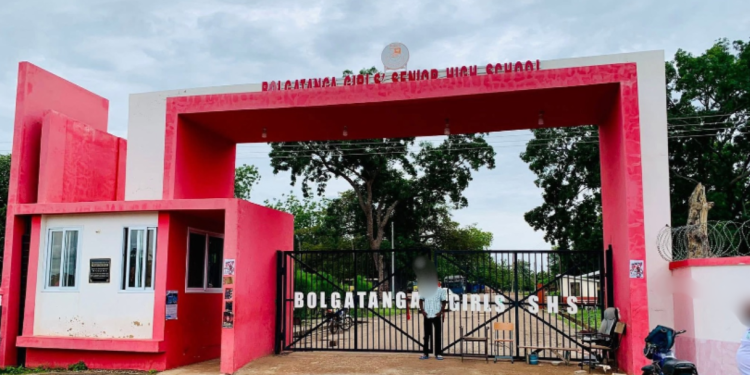
Bolgatanga Court: BOGISS Guards Defilement Trial Ghana Underway
Summary
- Two security guards from Bolgatanga Girls’ Senior High School are on trial for allegedly defiling a 14-year-old student with special needs.
- The prosecution claims Adams Nyaaba Iddrisu and Elvis Adongo lured the student with food, financial assistance, and a mobile phone.
- The alleged incidents, occurring between June and July 2026, were discovered after school authorities found an Itel keypad phone in the student's possession.
- Facing charges under Section 101 of Ghana's Criminal and Other Offences Act, 1960, both men have been granted bail of GH¢100,000 each by the Bolgatanga Circuit Court.
Allegations Emerge in BOGISS Defilement Trial
The prosecution's approach highlights the critical element of enticement, particularly in cases involving victims with special needs, where their capacity for consent or resistance may be compromised.
Two security personnel employed at Bolgatanga Girls’ Senior High School (BOGISS) are currently undergoing a defilement trial in Ghana, facing serious allegations concerning a student. The accused individuals, identified as 72-year-old Adams Nyaaba Iddrisu and 38-year-old Elvis Adongo, stand accused of sexually abusing a 14-year-old student who reportedly has special needs. Prosecutors assert that the student was enticed by the guards with offers of food, financial aid, and a mobile phone prior to the alleged incidents.
The alleged abuse came to light following the discovery of an Itel keypad phone in the possession of the first-year boarding student by school authorities. Subsequent questioning regarding the device led the student to disclose that both security guards had sexually abused her on multiple occasions. These alleged acts reportedly took place between June and July of 2026, occurring in various locations on school grounds, including the security room, an area behind the dining hall, and a classroom within the Unity Block after evening studies. Investigators have indicated that the accused exploited the student's inherent vulnerability.
The BOGISS Assistant Headmistress for Domestic Affairs, Celestina Atuora, formally reported the matter to the police on July 23, 2026, which led to the arrest of both Iddrisu and Adongo. The case is now proceeding at the Bolgatanga Circuit Court, presided over by Sumaila Nbache Ahmadu. Despite the gravity of the charges, both accused individuals have been granted bail, each set at GH¢100,000.
Legal Context and Prosecution's Strategy
The charges brought against Adams Nyaaba Iddrisu and Elvis Adongo fall under Section 101 of the Criminal and Other Offences Act, 1960 (Act 29), which specifically addresses defilement. This particular Ghana child defilement law is central to the prosecution's strategy, which emphasizes the alleged enticement tactics employed by the security guards. Prosecutors detailed to the Bolgatanga Circuit Court on September 2, 2026, how the provision of food, money, and a mobile phone was allegedly used to lure the vulnerable 14-year-old student.
The prosecution's approach highlights the critical element of enticement, particularly in cases involving victims with special needs, where their capacity for consent or resistance may be compromised. The investigators' assertion that the accused took advantage of the student's vulnerability underscores a key aspect of the legal argument. This focus on the methods of persuasion and the victim's state is crucial for establishing the elements of defilement under Ghanaian law, moving beyond mere physical acts to encompass the circumstances surrounding the alleged abuse.
Implications for School Security and Safeguarding
This BOGISS guards defilement trial in Ghana brings into sharp focus the critical importance of robust school security safeguarding Ghana protocols within educational institutions. The alleged incidents, occurring within the confines of a boarding school and involving personnel entrusted with student safety, raise significant concerns about the vetting and oversight of staff. The fact that the alleged abuse reportedly took place in multiple locations on campus, including a classroom and the security room, points to potential systemic vulnerabilities that require urgent review.
Educational institutions, particularly those housing vulnerable students, bear a profound responsibility to ensure a secure environment. The prompt reporting of the incident by the BOGISS Assistant Headmistress, Celestina Atuora, demonstrates a crucial step in addressing such allegations. However, the case underscores the need for continuous evaluation of staff conduct, comprehensive safeguarding training, and clear reporting mechanisms to prevent similar occurrences and protect students from harm. This trial serves as a stark reminder for all schools to reinforce their commitment to child protection.
Practical Implications
Lawyers practicing criminal law in Ghana should note the prosecution's strategy regarding evidence of enticement in defilement cases under Section 101 of Act 29, particularly concerning vulnerable victims. Compliance officers in educational institutions should review their safeguarding protocols and staff vetting processes to prevent similar incidents and ensure prompt reporting.
Source
How does this affect you?
Get an AI analysis of this article grounded in your jurisdictions, practice areas, and any policy documents you've uploaded to Wansom.
Finish Reading the Full Story and the Expert Analysis.
Wansom is AI and can make mistakes.