
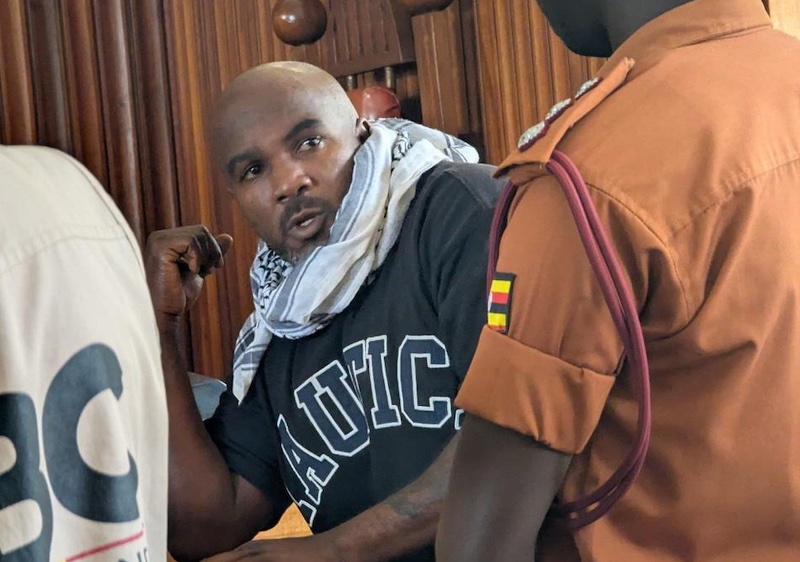
Masaka High Court: Bobi Wine Bodyguards Get Bail, Two Remain Detained
Summary
- On Wednesday, the Masaka High Court granted bail to four bodyguards of National Unity Platform president Robert Kyagulanyi, also known as Bobi Wine.
- Senior Resident Judge Victoria Nakintu Katamba presided over the bail application proceedings.
- Among those granted bail were Edward Ssebuwuufu (Eddie Mutwe), Achilleo Kivumbi, and Grace Wakabi.
- Despite the bail grant, two of the four bodyguards will remain in custody.
- Their continued detention is due to separate charges that are pending before a different court.
Masaka High Court Grants Bail to Bobi Wine's Security Detail
The inability of two of the bodyguards to secure immediate freedom, even after being granted bail by the Masaka High Court, underscores a critical aspect of Uganda's criminal procedure concerning concurrent legal proceedings.
On Wednesday, the Masaka High Court issued a significant ruling concerning members of the security detail for National Unity Platform (NUP) president Robert Kyagulanyi, widely known as Bobi Wine. Senior Resident Judge Victoria Nakintu Katamba presided over the proceedings, granting bail to four individuals associated with the prominent opposition figure. Among those named in the bail application were Edward Ssebuwuufu, also known as Eddie Mutwe, Achilleo Kivumbi, and Grace Wakabi, alongside a fourth unnamed individual.
This decision by Justice Katamba marked a partial victory for the NUP and the accused, as it addressed the immediate charges they faced in the Masaka jurisdiction. The granting of bail typically signifies a court's determination that an accused person can be released from custody while awaiting trial, under specific conditions, ensuring their appearance in court when required.
However, the relief for the NUP security detail was not absolute. Despite the Masaka High Court's order, two of the four bodyguards will not be immediately released from detention. Their continued incarceration stems from separate legal challenges, indicating a more complex judicial landscape at play beyond the specific Masaka High Court bail application.
Concurrent Charges Complicate Release for Two Individuals
The inability of two of the bodyguards to secure immediate freedom, even after being granted bail by the Masaka High Court, underscores a critical aspect of Uganda's criminal procedure concerning concurrent legal proceedings. These individuals face additional, distinct charges that are currently pending before a different judicial body. This situation means that a bail grant in one case does not automatically override or resolve other active legal matters.
In Uganda, as in many jurisdictions, an individual can be subject to multiple criminal complaints or indictments simultaneously. While the Masaka High Court, under Justice Victoria Nakintu Katamba, addressed the specific charges brought before it, the existence of other unresolved cases in a separate court effectively maintains the legal grounds for continued detention for some of the accused. This highlights the intricate nature of managing multiple legal battles, especially for high-profile political figures and their associates.
For legal practitioners, this scenario emphasizes the necessity of a comprehensive strategy when representing clients facing various accusations. Securing bail for one set of charges, such as those heard at the Masaka High Court, does not guarantee release if other courts have issued detention orders or if investigations into different alleged offenses are ongoing. The case of Eddie Mutwe and his colleagues illustrates that the path to full liberty can be protracted, even after a favorable bail ruling on specific charges.
Implications for Uganda's Legal and Political Landscape
This development offers a pertinent illustration of the nuanced application of bail conditions within the Ugandan legal system, particularly when political affiliations are involved. The fact that Robert Kyagulanyi’s security detail members were granted bail on certain charges but remain in custody due to others highlights the multifaceted legal challenges often encountered by individuals associated with opposition movements in Uganda.
This situation underscores that while the judiciary may act independently in specific instances, the cumulative effect of multiple charges across different courts can significantly impede the immediate freedom of accused persons. This can prolong their detention, regardless of individual bail grants, and adds layers of complexity to the legal defense strategy for those facing what are often perceived as politically motivated charges.
Ultimately, the case of the Bobi Wine bodyguards and their Masaka High Court bail application serves as a reminder of the intricate interplay between judicial decisions, ongoing investigations, and the broader political context in Uganda. It demonstrates that securing a bail order, while a crucial step, does not always translate into immediate physical release when other legal processes are simultaneously at play, requiring diligent and strategic legal representation to navigate these complexities.
Practical Implications
This development highlights the nuanced application of bail conditions and the impact of concurrent charges in Ugandan courts, particularly for high-profile political cases. Lawyers should be aware that a bail grant on one charge does not guarantee immediate release if other charges are pending, requiring careful strategic planning for client representation.
Source
How does this affect you?
Get an AI analysis of this article grounded in your jurisdictions, practice areas, and any policy documents you've uploaded to Wansom.
Finish Reading the Full Story and the Expert Analysis.
Get the latest legal & regulatory intelligence in Uganda
Wansom is AI and can make mistakes.