
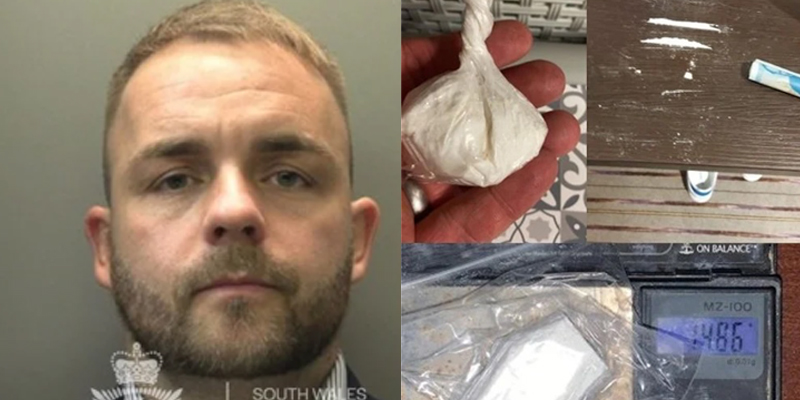
Ben Garvey Solicitor Jailed: Cocaine Supply and Perverting Justice
Summary
- Ben Garvey, a criminal defence solicitor, received a sentence of three years and six months in prison.
- He was convicted at Bristol Crown Court for offenses related to supplying cocaine and steroids, and for perverting the course of justice.
- South Wales Police uncovered Garvey's involvement in drug dealing during an investigation into one of his clients, Daniel Baker.
- Evidence included incriminating WhatsApp messages, footage of cocaine use, and steroids found at Garvey's residence.
- Garvey also facilitated criminal communications between his client and another individual while the client was in custody.
What Happened
This case serves as a critical reminder for legal professionals of the severe personal and professional consequences of engaging in criminal activity, particularly when it involves clients or compromises the integrity of the justice system.
A criminal defence solicitor, Ben Garvey, has been sentenced to three years and six months in prison following his conviction for drug supply offences and perverting the course of justice. The sentencing took place at Bristol Crown Court, marking a significant fall from grace for a legal professional. Garvey's illicit activities came to light during a broader drug investigation conducted by South Wales Police, which initially focused on one of his clients.
The police inquiry began with Daniel Baker, who was arrested in August 2021 on suspicion of cocaine supply. Garvey and his firm were representing Baker at the time. However, a detailed analysis of mobile phones and other digital devices uncovered Garvey's own deep involvement in drug distribution. Investigators discovered that Garvey was an active participant in a 17-person WhatsApp group between 2020 and 2021, where members openly discussed the sourcing and supply of cocaine. This group also contained incriminating media, including footage of cocaine use and images depicting wholesale quantities of the drug.
Further evidence emerged in September 2021 when a search of Garvey's home revealed additional mobile devices and steroids, classified as a Class C drug. Beyond his direct involvement in drug supply, police also found that Garvey had acted as a conduit for criminal communications. He facilitated messages between his client, Daniel Baker, and another individual, Jake Blackburn, while Baker was held in custody, thereby perverting the course of justice. Following a trial held in July and August, Garvey was found guilty of being concerned in the supply of cocaine and steroids, assisting or encouraging the supply of cocaine, and perverting the course of justice.
Legal Context
The conviction and sentencing of Ben Garvey underscore the severe repercussions for legal professionals who betray their ethical obligations. As a practicing criminal defence solicitor, Garvey was bound by a duty to uphold the law and the integrity of the criminal justice system. Instead, his actions demonstrated a profound abuse of this position, actively participating in the very criminality he was professionally tasked to challenge. The Bristol Crown Court heard evidence detailing his involvement over several years, from 2020 to 2021, highlighting a sustained period of misconduct.
Garvey's specific convictions included being concerned in the supply of both cocaine and steroids, as well as assisting or encouraging the supply of cocaine. Crucially, he was also found guilty of perverting the course of justice, a charge directly stemming from his role in relaying illicit messages between his client, Daniel Baker, and Jake Blackburn, while Baker was incarcerated. This particular aspect of his offending directly undermined the judicial process and his professional responsibilities.
The wider drug investigation also led to convictions for Daniel Baker and Jake Blackburn, both of whom were found guilty of offences related to cocaine supply and perverting the course of justice. Baker received a sentence of three years and four months, while Blackburn was handed a longer term of four years and ten months. These sentences, alongside Garvey's, reflect the collective seriousness with which the court viewed the organised drug supply operation and the attempts to obstruct justice.
Why It Matters
This case serves as a critical reminder for legal professionals of the severe personal and professional consequences of engaging in criminal activity, particularly when it involves clients or compromises the integrity of the justice system. The actions of Ben Garvey, a solicitor jailed for cocaine supply and perverting justice, represent a stark betrayal of the trust placed in legal practitioners. His conduct not only led to his own imprisonment but also cast a shadow on the ethical standards expected within the legal community.
Chief Inspector Russ Jenkins of South Wales Police emphasized the gravity of Garvey's misconduct, noting that as an officer of the court, Garvey had a clear duty to uphold the integrity of the criminal justice system. Jenkins highlighted that Garvey chose to abuse this position of trust by actively engaging in the very criminality he was professionally bound to challenge. This sentiment reinforces the unique responsibility legal professionals bear to maintain public confidence in the rule of law.
The sentences imposed by Bristol Crown Court, including the significant term for Ben Garvey, are intended to reflect the seriousness of these offences. Chief Inspector Jenkins stated that these outcomes should serve as a clear warning to others involved in organised drug supply, but they also send an unequivocal message to the legal profession about the paramount importance of upholding professional ethics and conduct rules. The case of this criminal defence solicitor misconduct underscores that such breaches can lead not only to disbarment but also to severe criminal prosecution.
Practical Implications
This case serves as a critical reminder for legal professionals of the severe personal and professional consequences of engaging in criminal activity, particularly when it involves clients or compromises the integrity of the justice system. It underscores the paramount importance of upholding professional ethics and conduct rules to avoid disbarment and criminal prosecution.
Source
How does this affect you?
Get an AI analysis of this article grounded in your jurisdictions, practice areas, and any policy documents you've uploaded to Wansom.
Finish Reading the Full Story and the Expert Analysis.
Get the latest legal & regulatory intelligence in United Kingdom
Wansom is AI and can make mistakes.