
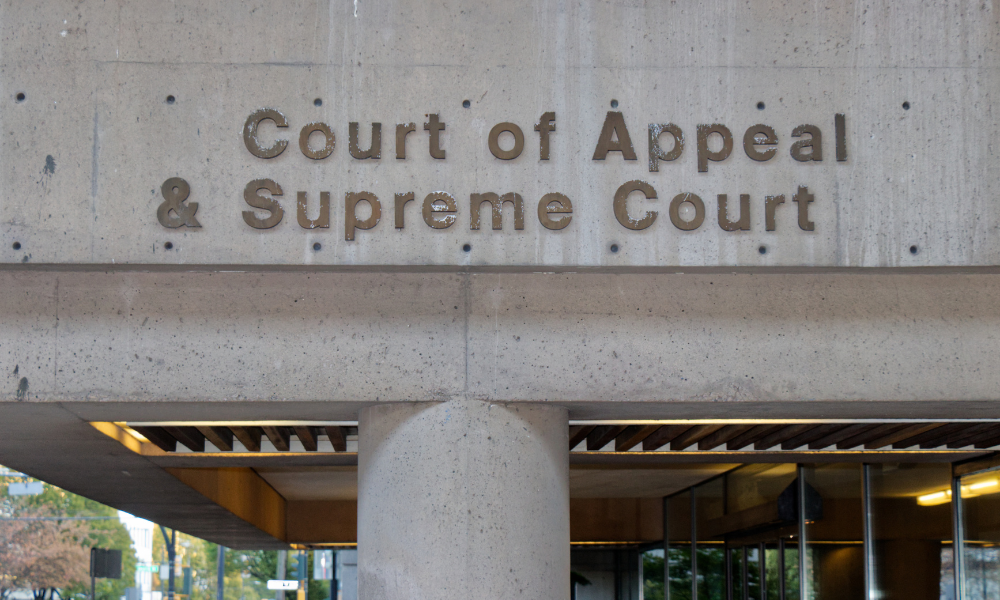
BCCA: Cadillac Fairview Biometric Data Class Action Denied Certification
Summary
- The British Columbia Court of Appeal ruled that a proposed class action against Cadillac Fairview over biometric data collection cannot proceed.
- The court found plaintiffs failed to prove an identifiable class, common issues, or that a class proceeding was the best way to resolve the dispute.
- This decision upholds a 2025 BC Supreme Court ruling that denied certification for the lawsuit.
- The case stemmed from a 2018 pilot project by Cadillac Fairview using cameras in mall directories to estimate visitor demographics, which privacy commissioners later deemed collected 'personal information'.
- The ruling emphasizes the high bar for class action certification under BC's Class Proceedings Act, especially for privacy claims.
BCCA Upholds Certification Denial for Biometric Data Lawsuit
This ruling by the British Columbia Court of Appeal class action sets a significant precedent, establishing a high bar for class action certification in British Columbia, particularly for cases involving biometric data privacy lawsuit Canada.
The British Columbia Court of Appeal (BCCA) has affirmed a lower court's decision, preventing a proposed class action against Cadillac Fairview, alleging the collection of shoppers' biometric data, from proceeding. In its August 21 ruling in `Cleaver v. The Cadillac Fairview Corporation Limited`, the appellate court concluded that the plaintiffs failed to satisfy crucial requirements for class action certification under British Columbia's `Class Proceedings Act`. This decision underscores the stringent criteria for initiating such lawsuits in the province, particularly concerning privacy-related claims.
The BCCA panel, led by Justice Andrew Mayer, found that the plaintiffs did not adequately demonstrate why a class proceeding would be the most effective method for resolving their concerns. Furthermore, they failed to establish the existence of an identifiable class comprising at least two individuals, nor could they prove that the claims of the proposed class shared common issues. These deficiencies meant the plaintiffs could not meet three of the five mandatory conditions necessary for certification, a prerequisite for any class action to advance.
Justice Mayer, writing for the three-justice panel, explicitly endorsed the BC Supreme Court's earlier reasoning, describing it as "cogent" and "unassailable." He noted that there was no clear evidence of damages resulting from Cadillac Fairview's actions, nor any apparent "systemic or social benefit" to pursuing a class proceeding. The lower court's rationale, according to Mayer, provided a robust foundation for concluding that a class proceeding was not proportional to the issues at hand, thereby upholding last year's decision by the BC Supreme Court to deny certification.
The Biometric Data Collection Pilot Project
The origins of the lawsuit trace back to a pilot project launched by Cadillac Fairview in 2018 across several of its busiest shopping centers, including prominent locations like Toronto Eaton Centre, Pacific Centre in Vancouver, Chinook Centre in Calgary, Carrefour Laval, and Polo Park in Winnipeg. The initiative aimed to gather demographic estimates, specifically the number, age, and gender of visitors, by utilizing cameras integrated into mall directories. These cameras were equipped with video analytics software designed to detect human faces and convert them into unique strings of numbers.
According to the BCCA's findings, Cadillac Fairview did not retain any of the facial images captured, nor did the company or the participating malls ever receive or directly utilize the collected data. The pilot project operated for approximately eight weeks before being discontinued. Its termination followed media reports and online discussions suggesting the involvement of facial recognition technology, prompting public concern.
Regulatory Scrutiny and Legal Challenges
Following the cessation of the pilot project, the privacy commissioners of Canada, Alberta, and British Columbia initiated a joint investigation later in 2018. Their findings, released in October 2020, confirmed that the video analytics software had indeed collected "personal information" as defined by their respective privacy statutes. This information included shoppers' biometric data, location details, and timestamps. However, the commissioners opted not to impose further penalties on Cadillac Fairview, acknowledging that the company had already disabled the software and deleted the collected data.
One month after the privacy commissioners' report, in November 2020, the plaintiffs filed their proposed class action. The lawsuit alleged various privacy breaches, violations of Quebec law, and claims of intrusion upon seclusion, negligence, and unjust enrichment. However, in its 2025 ruling, the BC Supreme Court declined to certify the case, citing the plaintiffs' inability to satisfy three of the five mandatory certification requirements under the `Class Proceedings Act`. Specifically, the lower court found that the plaintiffs could not prove that at least two individuals could self-identify as class members—defined as anyone who had viewed one of the participating mall directories—or that any facial images were actually recorded.
Implications for Privacy Class Actions in British Columbia
This ruling by the `British Columbia Court of Appeal class action` sets a significant precedent, establishing a high bar for class action certification in British Columbia, particularly for cases involving `biometric data privacy lawsuit Canada`. The decision highlights the challenges plaintiffs face in meeting the stringent requirements of the `BC Class Proceedings Act certification`, especially when dealing with privacy-related claims where direct, quantifiable damages or easily identifiable class members can be elusive.
The court's emphasis on the need to demonstrate an identifiable class of two or more people, common issues, and the proportionality of a class proceeding underscores the rigorous scrutiny applied to such applications. Even in instances where privacy commissioners have identified a breach, as was the case with `Cadillac Fairview biometric data class action BCCA`, this ruling indicates that proving the suitability of a class action as the "best way" to resolve concerns remains a substantial hurdle. Lawyers advising clients on potential privacy class actions in BC must carefully consider these heightened requirements, particularly the need to clearly articulate a defined class and common issues that warrant collective litigation, beyond the mere existence of a privacy infringement.
Practical Implications
This ruling sets a high bar for class action certification in British Columbia, particularly for privacy-related claims where proving an identifiable class, common issues, and actual damages can be challenging. Lawyers advising clients on potential privacy class actions in BC should note the stringent requirements under the Class Proceedings Act, especially the need to demonstrate a clear class of two or more people and common issues that warrant a class proceeding, even if privacy commissioners have found a breach.
Source
How does this affect you?
Get an AI analysis of this article grounded in your jurisdictions, practice areas, and any policy documents you've uploaded to Wansom.
Wansom is AI and can make mistakes.